Robbery Exam Technique
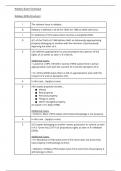
Robbery (IDEA Structure)
I The relevant issue is robbery.
D Robbery is defined in s8 of the Theft Act 1968 as theft with force.
I R v Robinson (1977) states there must be a completed theft.
D s(1) of the Theft Act 1968 defines theft as dishonestly appropriating
property belonging to another with the intention of permanently
depriving the other of it.
E s3(1) defines appropriation as any assumption by a person of the
rights of an owner as seen in R v Morris.
Additional Cases:
> Lawrence v MPC (1972)/R v Gomez (1993) states there is still an
appropriation even with the consent of V and the deception of D.
> R v Hinks (2000) states there is still an appropriation even with the
consent of V and no deception of D.
A In this case… (Apply to case).
E s4(1) states property includes…
● Money
● Real property
● Personal property
● Things in action
● Other intangible property.
As stated in R v Kelly (1998).
Additional Cases:
> Oxford v Moss (1979) states information/knowledge is not property.
A In this case… (Apply to case).
E s5(1) states belonging to another means possession or control as seen
in R v Turner No2 (1971) or proprietary rights as seen in R v Webster
(2006).
Additional Cases:
> R v Woodman (1974) states even if the victim does not know they
own property it still belongs to them.
> Williams v Phillips (1957) states even if the victim bins the property it
still belongs to them.
Robbery (IDEA Structure)
I The relevant issue is robbery.
D Robbery is defined in s8 of the Theft Act 1968 as theft with force.
I R v Robinson (1977) states there must be a completed theft.
D s(1) of the Theft Act 1968 defines theft as dishonestly appropriating
property belonging to another with the intention of permanently
depriving the other of it.
E s3(1) defines appropriation as any assumption by a person of the
rights of an owner as seen in R v Morris.
Additional Cases:
> Lawrence v MPC (1972)/R v Gomez (1993) states there is still an
appropriation even with the consent of V and the deception of D.
> R v Hinks (2000) states there is still an appropriation even with the
consent of V and no deception of D.
A In this case… (Apply to case).
E s4(1) states property includes…
● Money
● Real property
● Personal property
● Things in action
● Other intangible property.
As stated in R v Kelly (1998).
Additional Cases:
> Oxford v Moss (1979) states information/knowledge is not property.
A In this case… (Apply to case).
E s5(1) states belonging to another means possession or control as seen
in R v Turner No2 (1971) or proprietary rights as seen in R v Webster
(2006).
Additional Cases:
> R v Woodman (1974) states even if the victim does not know they
own property it still belongs to them.
> Williams v Phillips (1957) states even if the victim bins the property it
still belongs to them.