Photosynthesis Assignment
Photosynthesis is the process of producing chemical energy from light energy, used by most plants
and even some bacteria and animals. The process of photosynthesis is a series of chemical reactions
which occur in a specialised organelle called the chloroplast.
The chloroplast is made up of double membrane, containing the thylakoid membrane, folded to
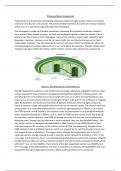
form stacks of discs, known as grana, the fluid surrounding the grana is called the stroma. Figure 1
below shows the structure of the chloroplast. Some of the reactions require light, called the ’light
dependent reactions’, whereas some do not require light and are therefore known as the ’light
independent reactions’. The light dependent reactions take place within the thylakoids, where the
chlorophyll pigment provides photons from to sun to facilitate the reactions. The light independent
reactions take place within the stroma, which contains enzymes that catalyse the reactions (1).
Figure 1: The Structure of a Chloroplast (1)
The light dependent reactions can be divided into two stages, photolysis and NADP reduction. Light
energy required for these reactions is trapped by photosynthetic pigments in photosystems. The
primary pigment is chlorophyll, but accessory pigments such as carotene and xanthophyll are also
important as the each absorb different wavelengths of light, making them more efficient at trapping
light. Photosystems are made up of hundreds of pigment molecules, they trap light energy and
funnel it towards a single chlorophyll molecule known as the reaction centre. The reaction centre of
photosystem I is a chlorophyll molecule with a maximum light absorption of 700nm, so it is called
the P700 reaction centre. Similarly, the reaction centre of photosystem II is a chlorophyll molecule
with a maximum absorption of 680nm, so it is called the P680 reaction centre. In the first stage of
the reactions, excited electrons from P680 are picked up by the first electron carrier and passed
along the chain. Energy from the electrons is used to pump H⁺ ions into the thylakoid lumen – this
part of the reaction is called photophosphorylation. Next, electrons from P680 fall back to their
unexcited state and fill vacancies in the reaction centre of P700. Simultaneously, the gaps in the
P680 reaction centre are filled by electrons which are released by the splitting of water into H⁺ ions
and oxygen, known as photolysis. The oxygen atoms released during photolysis join to form O₂
molecules and the energy released is used in reactions which catalyse the formation of ATP. In the
next stage of the reactions, the H⁺ ions released during photolysis are used in the reduction of NADP,
excited electrons taken are up by an electron acceptor and two at a time are passed to NADP, along
with the H⁺ ions, to form NADPH₂. The products of the light dependent reactions are NADPH₂ and
ATP. This stage of the photosynthesis reactions is essential as it produces ATP and NADPH which are
required for the light independent reactions, allowing photosynthesis to be carried out.
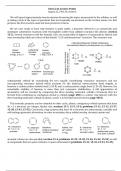
, Figure 2: The Light Dependent Reactions of Photosynthesis (2)
The light independent reactions are also known as the Calvin cycle. It takes place in the stroma and
does not require light directly, however, it does use the products of the light dependent reactions.
The reactions also require carbon dioxide to supply carbon for the production of large organic
molecules. Carbon dioxide diffuses through the open stomata on the outside of the leabes and
travels through the spongy mesophyll layer to the palisade mesophyll layer, where it diffuses across
the cell wall and membrane, into the stroma. During the light-independent reactions, CO₂ is
combined with ribulose bisphosphate (RuBP), which is a CO₂ acceptor. The enzyme ribulose
bisphosphate carboxylase-oxygenase (Rubisco) is carboxylated, fixing the CO₂ and producing two 3C
compounds, 3-phosphoglycerate (GP). GP is phosphorylated and reduced to another 3C compound
called glyceraldehyde 3-phosphate. ATP and NADPH which are produced in the light dependent
reactions are used here. ATP from the light-dependent reactions and five of the six triose phosphate
are used during phosphorylation, regenerating three molecules of RuBP. This process is cyclical, due
to the continuous conversion of CO₂ into triose and hexose phosphates. The Calvin cycle also creates
some side products, for example GP is used in the production of amino acids and fatty acids.
Isomerism of glucose produced can also produce fructose, and these two sugars can undergo a
condensation reaction to form sucrose. They can also form polymers such as starch and cellulose
which are used within the plants. Finally, lipids can be produced by converting TP into glycerol when
it reacts with fatty acids. The overall reaction of the Calvin cycle is shown in figure 3 below. This
stage of the reaction is essential to photosynthesis because it produces the final product of glucose,
which the plant relies on for energy, as well as the side products mentioned which are also essential
to the plant.
Photosynthesis is the process of producing chemical energy from light energy, used by most plants
and even some bacteria and animals. The process of photosynthesis is a series of chemical reactions
which occur in a specialised organelle called the chloroplast.
The chloroplast is made up of double membrane, containing the thylakoid membrane, folded to
form stacks of discs, known as grana, the fluid surrounding the grana is called the stroma. Figure 1
below shows the structure of the chloroplast. Some of the reactions require light, called the ’light
dependent reactions’, whereas some do not require light and are therefore known as the ’light
independent reactions’. The light dependent reactions take place within the thylakoids, where the
chlorophyll pigment provides photons from to sun to facilitate the reactions. The light independent
reactions take place within the stroma, which contains enzymes that catalyse the reactions (1).
Figure 1: The Structure of a Chloroplast (1)
The light dependent reactions can be divided into two stages, photolysis and NADP reduction. Light
energy required for these reactions is trapped by photosynthetic pigments in photosystems. The
primary pigment is chlorophyll, but accessory pigments such as carotene and xanthophyll are also
important as the each absorb different wavelengths of light, making them more efficient at trapping
light. Photosystems are made up of hundreds of pigment molecules, they trap light energy and
funnel it towards a single chlorophyll molecule known as the reaction centre. The reaction centre of
photosystem I is a chlorophyll molecule with a maximum light absorption of 700nm, so it is called
the P700 reaction centre. Similarly, the reaction centre of photosystem II is a chlorophyll molecule
with a maximum absorption of 680nm, so it is called the P680 reaction centre. In the first stage of
the reactions, excited electrons from P680 are picked up by the first electron carrier and passed
along the chain. Energy from the electrons is used to pump H⁺ ions into the thylakoid lumen – this
part of the reaction is called photophosphorylation. Next, electrons from P680 fall back to their
unexcited state and fill vacancies in the reaction centre of P700. Simultaneously, the gaps in the
P680 reaction centre are filled by electrons which are released by the splitting of water into H⁺ ions
and oxygen, known as photolysis. The oxygen atoms released during photolysis join to form O₂
molecules and the energy released is used in reactions which catalyse the formation of ATP. In the
next stage of the reactions, the H⁺ ions released during photolysis are used in the reduction of NADP,
excited electrons taken are up by an electron acceptor and two at a time are passed to NADP, along
with the H⁺ ions, to form NADPH₂. The products of the light dependent reactions are NADPH₂ and
ATP. This stage of the photosynthesis reactions is essential as it produces ATP and NADPH which are
required for the light independent reactions, allowing photosynthesis to be carried out.
, Figure 2: The Light Dependent Reactions of Photosynthesis (2)
The light independent reactions are also known as the Calvin cycle. It takes place in the stroma and
does not require light directly, however, it does use the products of the light dependent reactions.
The reactions also require carbon dioxide to supply carbon for the production of large organic
molecules. Carbon dioxide diffuses through the open stomata on the outside of the leabes and
travels through the spongy mesophyll layer to the palisade mesophyll layer, where it diffuses across
the cell wall and membrane, into the stroma. During the light-independent reactions, CO₂ is
combined with ribulose bisphosphate (RuBP), which is a CO₂ acceptor. The enzyme ribulose
bisphosphate carboxylase-oxygenase (Rubisco) is carboxylated, fixing the CO₂ and producing two 3C
compounds, 3-phosphoglycerate (GP). GP is phosphorylated and reduced to another 3C compound
called glyceraldehyde 3-phosphate. ATP and NADPH which are produced in the light dependent
reactions are used here. ATP from the light-dependent reactions and five of the six triose phosphate
are used during phosphorylation, regenerating three molecules of RuBP. This process is cyclical, due
to the continuous conversion of CO₂ into triose and hexose phosphates. The Calvin cycle also creates
some side products, for example GP is used in the production of amino acids and fatty acids.
Isomerism of glucose produced can also produce fructose, and these two sugars can undergo a
condensation reaction to form sucrose. They can also form polymers such as starch and cellulose
which are used within the plants. Finally, lipids can be produced by converting TP into glycerol when
it reacts with fatty acids. The overall reaction of the Calvin cycle is shown in figure 3 below. This
stage of the reaction is essential to photosynthesis because it produces the final product of glucose,
which the plant relies on for energy, as well as the side products mentioned which are also essential
to the plant.