Test Bank For Essentials of Nursing Research Appraising Evidence for Nursing Practice 10th Edition Polit | Complete
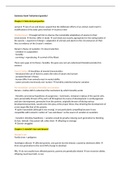
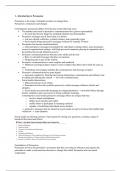
Test Bank For Essentials of Nursing Research Appraising Evidence for Nursing Practice 10th Edition Polit | Complete. A researcher wants to investigate the effect of patients' body position on blood pressure. The study would most likely be: A) Qualitative B) Quantitative C) Either quantitative or qualitative (researcher preference) D) Insufficient information to determine 17. A researcher wants to study the process by which people make decisions about seeking treatment for infertility. The researcher's paradigmatic orientation most likely is: A) Positivism B) Determinism C) Empiricism D) Naturalism Chapter 1 18. A researcher is studying the effect of massage on the alleviation of pain in cancer patients. The study would be described as: A) Descriptive B) Exploratory C) Applied D) Basic 19. Which of the following EBP-related purposes would not be addressed through cause-probing research? A) Intervention/treatment B) Prognosis C) Harm and etiology D) Diagnosis and assessment 20. Over a 20-year period, Wallace and colleagues conducted a series of studies on children's pain and nurses' pain management. This is an example of: A) A research program B) The scientific method C) Positivist research D) Basic research 21. Nurses have fully achieved an evidence-based practice, in that decisions are almost always based on solid research findings. A) True B) False 22. Journal clubs involve meetings to discuss and critically evaluate research studies. A) True B) False 23. Nursing research did not begin to achieve Chapter 1 important breakthroughs until the 1990s. A) True B) False 24. Throughout the history of nursing research, most studies have focused on clinical problems. A) True B) False 25. Most people would agree that nursing research began with Florence Nightingale. A) True B) False 26. The journal Nursing Research began publication during the 1950s. A) True B) False 27. The federal agency in the United States that currently offers support for nursing research is the National Center for Nursing Research. A) True B) False 28. The movement for evidence-based medicine originated in a Canadian university. A) True B) False 29. There are currently five or six journals that publish the results of nursing studies. A) True B) False Chapter 1 30. Nurse researchers work almost exclusively in universities and schools of nursing. A) True B) False 31. The annual NINR budget currently exceeds $100 million. A) True B) False 32. The trial-and-error approach to developing knowledge is an empirical one. A) True B) False 33. Benchmarking data is at the pinnacle of the evidence hierarchy. A) True B) False 34. A paradigm is a general perspective on the nature of the real world. A) True B) False 35. According to the positivist paradigm, there is an objective reality that can be understood by researchers. A) True B) False 36. The naturalistic paradigm is associated with structured, quantitative research. A) True B) False Chapter 1 37. Naturalistic researchers attempt to understand rather than control the context of the phenomena being studied. A) True B) False 38. Nursing leaders currently are suggesting that in-depth, process-oriented studies are more important than controlled quantitative studies for nursing practice. A) True B) False 39. Empirical evidence is information derived from introspective analysis of real-world phenomena. A) True B) False 40. The scientific method assumes that all phenomena have antecedent causes. A) True B) False 41. Quantitative researchers are more likely than qualitative researchers to pursue research with prediction and control as a purpose. A) True B) False 42. Quantitative researchers tend to emphasize the dynamic and holistic aspects of human experience. A) True B) False Chapter 1 43. Applied research is designed to solve immediate problems. A) True B) False 44. The question, “How prevalent is this phenomenon?” would be asked in a quantitative descriptive study. A) True B) False 45. The question “What is the meaning of this phenomenon?” would be asked by qualitative researchers. A) True B) False Chapter 1 Answer Key 1. C 2. B 3. C 4. D 5. C 6. A 7. D 8. C 9. C 10. B 11. A 12. D 13. C 14. B 15. A 16. B 17. D 18. C 19. D 20. A 21. B 22. A 23. B 24. B 25. A 26. A 27. B 28. A 29. B 30. B 31. A 32. A 33. B 34. A 35. A 36. B 37. A 38. B 39. B 40. A 41. A Chapter 1 42. B 43. A 44. A 45. A Chapter 2 Page 1 1. Research utilization is a process that begins with which of the following? A) A clinical problem that needs to be solved B) A problem-focused trigger C) A knowledge-focused trigger or research finding D) A well-worded clinical question 2. Which of the following is an example of a systematic review? A) An RCT study published in the journal Nursing Research B) A meta-analysis from the Cochrane database C) A synopsis published in Evidence-Based Nursing D) A clinical practice guideline from the National Guideline Clearinghouse 3. Most evidence hierarchies put which of the following at the pinnacle? A) Randomized clinical trials (RCTs) B) Systematic reviews of multiple studies C) Quality improvement projects D) It depends on the research question 4. Which of the following can be used to critically appraise clinical practice guidelines? A) A systematic review from the Cochrane Collaboration B) The Iowa model C) The AGREE instrument D) An evidence hierarchy 5. Which of the following models was explicitly developed with the idea that individual nurses could engage in RU-type activities? A) Iowa Model B) Johns Hopkins Model C) Cochrane Model D) Stetler Model 6. In the following clinical question, what is the Outcome (O component): What is the effect of relaxation therapy versus biofeedback on the functional ability of patients with rheumatoid arthritis? A) Functional ability B) Rheumatoid arthritis C) Biofeedback D) Relaxation therapy Page 2 7. In the following clinical question, what is the Intervention/influence/exposure (I component): Does taking antidepressants affect the risk of suicide in cognitively impaired adolescents? A) Adolescence B) Suicide C) Antidepressant use D) Cognitive impairment 8. In the following clinical question, what is the Population (P component): Do stress and depression affect dyspnea in patients with chronic obstructive pulmonary disease (COPD)? A) Patients who are stressed B) Patients who are depressed C) Patients who experience dyspnea D) Patients with COPD 9. In the following clinical question, what is the Comparison (C component): Does chronic stress affect inflammatory responses in older men with atherosclerotic disease? A) Chronic stress B) Inflammatory response C) Atherosclerotic disease D) There is no “C” component 10. In which of the following clinical questions is fatigue the “I” component? A) Does fatigue affect agitation in cognitively impaired elders? B) Does a physical activity intervention affect fatigue in patients undergoing cardiac rehabilitation? C) What is the meaning of fatigue among patients with sleep apnea? D) Does the level of depression of patients suffering from chronic fatigue improve by participating in an exercise intervention? 11. Which of the following is a question that would be asked as part of the process of appraising research evidence? A) What are the P, I, and O components? B) How rigorous and reliable is the evidence? C) What type of trigger should I use? D) Is a relevant systematic review available?
Gekoppeld boek
- 2013
- 9781451176803
- Onbekend
Geschreven voor
- Instelling
- Essentials of Nursing Research Appraising Evidence
- Vak
- Essentials of Nursing Research Appraising Evidence
Documentinformatie
- Geüpload op
- 31 mei 2023
- Aantal pagina's
- 131
- Geschreven in
- 2022/2023
- Type
- Tentamen (uitwerkingen)
- Bevat
- Vragen en antwoorden
Onderwerpen
-
r nursing practice
-
essentials of nursing research appraising evidence for nursing practice
-
essentials of nursing research appraising
-
test bank for essentials of nursing research appraising evidence fo