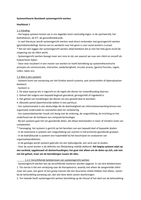
LAT Chapter 13: Research Methodology Exam 2023
What is the LD50 test? A) The dose of a substance tested on 50 animals B) The lowest dose of a substance that effects 50% of the animals tested C) The dose of a substance that kills 50% of the animals tested D) The longest duration that 50% of the animals are affected by the dose of a substance - ANSWER-C) What is the Draize test? A) A test to determine if a product will cause blindness if it gets in the eye B) A test to determine if a product will heal a wound C) Evaluation of allergens in a product D) An assessment of tissue irritation toxicity of a product - ANSWER-D) What species are most often used for acute toxicity tests? A) Mice and rabbits B) Rodents and dogs C) Mice and rats D) Primates and rabbits - ANSWER-A) What species are most often used for subchronic toxicity tests? A) Mice and rabbits B) Rodents and dogs C) Mice and rats D) Primates and rabbits - ANSWER-B) What type of test involves daily dosing of a substance over 13-26 weeks that would be administered to humans? A) Acute toxicity test B) Subchronic toxicity test C) Chronic testing D) Pyrogen testing - ANSWER-B) How are animals evaluated in subchronic toxicity testing? A) Daily observation B) Clinical chemistry and hematology C) Histopathology D) All of the above - ANSWER-D) What additional procedure is performed in chronic testing that is not part of the usual subchronic toxicity testing? A) Hemoglobin measurement B) Daily dosing C) Palpation for tumors D) Microscopic tissue examination - ANSWER-C) What is a teratogen? A) A substance that damages a developing fetus B) A mutated gene in an embryo C) A substance that causes cancer D) An animal that developed abnormally in utero - ANSWER-A) What is a pyrogen? A) A flammable substance B) A substance that produces a fever in an animal C) A substance that causes blistering when applied to the skin D) A substance that causes cancer - ANSWER-B) What does the Limulus amebocyte lysate test assay? A) Immunodeficiency B) Bacterial toxin C) Teratogens D) Blood from the horseshoe crab - ANSWER-B) The lack of which of the following enables tumor cells to grow in nude mice? A) Fur coat B) Transplant rejection C) Immunity D) Thyroid - ANSWER-B) What is the most common method for inducing immunodeficiency? A) Genetic manipulation B) Radiation C) Surgery D) Transgenics - ANSWER-A) What type of cells do nude mice lack? A) B-cells B) Tumor cells C) T-cells D) Lymphocytes - ANSWER-C) What other athymic species is available for research? A) Guinea pigs B) Dogs C) Chickens D) Hamsters - ANSWER-D) What does a B-cell defect result in? A) Hairlessness B) Lack of a spleen C) Lack of an antibody response D) Wasting disease - ANSWER-C) What animal lacks both B and T cells? A) Beige B) SCID C) XID D) CBA/N - ANSWER-B) What animal lacks NK cells? A) Beige B) SCID C) Xid D) CBA/N - ANSWER-A) What surgery induces immunodeficiency of T-cells? A) Thymectomy B) Skin graft C) Adrenalectomy D) Hypohisectomy - ANSWER-A) What side effects are associated with chemicals used to induce immunodeficiency? A) Loss of motor skills B) Hair loss C) High mortality D) Skin pustules - ANSWER-C) How does irradiation attack the immune system? A) It inhibits protein synthesis B) It kills B and T cells C) It breaks down antibodies D) It destroys the thyroid - ANSWER-A) What is the most common source of radiation for experimental purposes? A) Uranium irradiators B) Beta emitter C) Radiologic containers D) Gamma irradiators - ANSWER-D) What does it mean to be immuno-tolerant to a substance? A) The substance quickly causes an immune reaction B) Exposure to the substance will not result in an immune response C) The substance will not cause immunodeficiency D) Exposure to the substance causes an allergic reaction - ANSWER-B) What type of animal most easily becomes immuno-tolerant? A) Neonates B) Adults C) Immuno-compromised animals D) Rabbits - ANSWER-A) What do polyclonal antibodies react against? A) Multiple substrains of the same organism B) Multiple antigens C) Multiple unique areas on a particular antigen D) Multiple diseases - ANSWER-C) How is an animal's antibody titer raised after the initial injection? A) It is given a booster injection B) It is exposed to the disease C) It can't be raised after the initial injection D) The animal is given a drug that increases production of B cells - ANSWER-A) What is an adjuvant? A) A substance to relieve pain when inducing an antibody response B) A second antigen to make polyclonal antibodies C) A commercially available antigen D) A substance that enhances the immune response - ANSWER-D) What type of injection is recommended for an antigen / antibody mixture? A) Large single-site injection B) Small multiple-site injection C) IP D) In weight bearing areas - ANSWER-B) What ingredient does CFA contain that is responsible for many undesirable side effects? A) Mycobacteria cell wall B) HCI C) Teratogens D) Pyrogens - ANSWER-A) Which adjuvant has the reputation for the most consistent antibody production? A) CFA B) IFA C) Titer-Max D) RIBI - ANSWER-A)
Geschreven voor
- Instelling
- LAT
- Vak
- LAT
Documentinformatie
- Geüpload op
- 6 mei 2023
- Aantal pagina's
- 8
- Geschreven in
- 2022/2023
- Type
- Tentamen (uitwerkingen)
- Bevat
- Vragen en antwoorden
Onderwerpen
-
lat
-
lat chapter 13
-
lat chapter 13 research methodology exam 2023
-
what is the ld50 test
-
what is the draize test
-
what species are most often used for acute toxicity tests

Ook beschikbaar in voordeelbundel