APPLYING HEALTH, SPORT AND EXERCISE PSYCHOLOGY
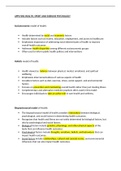
Socioeconomic model of health:
Health determined by social and economic factors
Includes factors such as income, education, employment, and access to healthcare
Emphasizes importance of addressing social determinants of health to improve
overall health outcomes
Addresses health disparities among different socioeconomic groups
Often used to inform public health policies and interventions
Holistic model of health:
Health viewed as balance between physical, mental, emotional, and spiritual
wellbeing
Emphasizes interconnectedness of various aspects of health
Considers factors such as diet, exercise, stress, social support, and environmental
factors
Focuses on prevention and maintaining overall health rather than just treating illness
Complementary and alternative medicine practices often used in this model
Encourages individuals to take an active role in own health and wellness.
Biopsychosocial model of Health:
The biopsychosocial model of health considers interactions between biological,
psychological, and social factors in determining health outcomes.
Recognizes that health and illness are not solely determined by biological factors, but
also by psychological and social factors.
Biological factors include genetics, physiology, and other physical aspects of the
body that can influence health outcomes.
Psychological factors include thoughts, emotions, beliefs, and behaviours that can
impact health outcomes.
Social factors include relationships, cultural and societal norms, and environmental
influences that can also impact health outcomes.
Socioeconomic model of health:
Health determined by social and economic factors
Includes factors such as income, education, employment, and access to healthcare
Emphasizes importance of addressing social determinants of health to improve
overall health outcomes
Addresses health disparities among different socioeconomic groups
Often used to inform public health policies and interventions
Holistic model of health:
Health viewed as balance between physical, mental, emotional, and spiritual
wellbeing
Emphasizes interconnectedness of various aspects of health
Considers factors such as diet, exercise, stress, social support, and environmental
factors
Focuses on prevention and maintaining overall health rather than just treating illness
Complementary and alternative medicine practices often used in this model
Encourages individuals to take an active role in own health and wellness.
Biopsychosocial model of Health:
The biopsychosocial model of health considers interactions between biological,
psychological, and social factors in determining health outcomes.
Recognizes that health and illness are not solely determined by biological factors, but
also by psychological and social factors.
Biological factors include genetics, physiology, and other physical aspects of the
body that can influence health outcomes.
Psychological factors include thoughts, emotions, beliefs, and behaviours that can
impact health outcomes.
Social factors include relationships, cultural and societal norms, and environmental
influences that can also impact health outcomes.