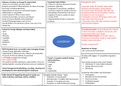
Influence of Culture on Change Cultural Web: Corporate Code of Ethics Management styles:
-Stories Core beliefs, pervasive beliefs -Values of a businesspurpose/mission
Routines and rituals What behaviour do these encourage, statement, objectives -Autocratic (Tells) manager makes all the
key rituals, training programmes -Employees recruitment, conditions decisions and instructions, always obeyed
Organisational structures mechanistic/organic, -Customer relations products/services -Persuasive (Sells) Manager still makes the
collaboration or competition -Shareholdersinvestment and return decisions but believes team members must be
Control systems What is most closely -Suppliersinvoices, quality of inputs motivated to carry out properly
monitored/controlled, reward or punishment -SocietyCSR -Participative (Consults) Manager confers with
Power structuresbeliefs of the leadership -Implementationcode is issued and team, takes views into account
Symbolslanguage/jargon used at work reviewed - Democratic (Joins) Leader and team members
OverallWhat is the dominant culture, how easy is it to make decisions together
change this
Context for change (Balogun and Hope Hailey) Transactional leaders give followers the rewards
-Time in return for loyalty, compliance and service, seek
-Scope improvement rather than change
-Diversity Transformational leaders see their roles as
-Capability inspiring and motivating, change an organisations
-Capacity mindset, values and culture
-Readiness LEADERSHIP
-Power Change management
POPIT Model Areas to consider when managing changes Resistance to change:
-People Need right skills, motivation -Job, social and personal factors
-Organisation Define job roles, effective communication
-Processes Must be defined, documented Strategic drift triggers competitive/regulatory
-IT Needs to support the changes Tucker’s 5-question model testing pressure
AKA 4 VIEWS MODEL ethical decisions:
Use model to identify weaknesses, opportunities, areas not -Profitable Overcoming resistance (Kurt Lewin Model) :
working together, ensuring all business areas are considered -Legal Unfreezing create initial motivation
-Fair Change the process itself
Talent Management identifying, recruiting, retaining and -Right Refreezing
developing the most talented/superior employees -Sustainable
Leadership styles (Kotter and Schlesinger):
Public Interest Supporting the good of society as a Managing strategic change – types: Participation
whole (collective well-being, welfare, stability) Adaptation slow/gradual Education and communication
Reconstruction sudden external pressures Power/correction
Evolution changing over time Facilitation/support
Revolution rapid fundamental change Manipulation
, Growth StrategiesAnsoff Matrix Achieving International Growth tailoring 3 Levels of Strategic Planning:
products or selling standard products Corporate, business and functional
Existing products New products
Existing markets Market Penetration Product develop Strategy evaluation: Johnson, Scholes and Whittington model of strategic
New markets Market develop. Diversification -Sustainabilityare options adequate planning: (requires re-evaluation and assessment)
-Acceptabilitymeeting firms objectives
Market penetration New use improved competitive -Feasibilityavailability of resources -Strategic position threats, opportunities, PESTEL
strategy, e.g changing mix, increasing sales force -Strategic choice internal/external development,
Product developmentR&D, joint venture, new porter generic competitive strategies, Ansoff
products/features -Implementationstructure and resource planning
Market developmentNew segments, needs new
external analysis (PESTEL), reposition products Strategic Drift pace of development may overtake,
Diversificationnew product for new customer changes in internal/external environment = company
fails to keep up
Conglomeratemoves into unrelated markets 1. Incremental change
Horizontal diversificationsynergy 2. Strategic drift
Vertical integration forward (to cust) or backward STRATEGY 3. Flux
4. Transformation change
Sustainable competitive advantage
Strategic steps to protect competitive position:
-Price based strategies PESTELPolitical Economic Social Technological
-Differentiation Environmental Legal
-Differentiation through innovation
Porters 5 Forces:
Strategic choice close the gap between where the Porters Value Chain -Buyer power
organisation is at the moment and where it wants to be -Which activities within the value chain are -Competitive Rivalry
in the future contributing to competitive advantage -Supplier power
-Primary activitiesInbound/outbound logistics, -New entrants External
Strategic Options: operations, marketing sales, service -Substitutes
-Cost leadership cut costs of production -Secondary activitiesFirm infrastructure, HR,
-Differentiationproduct that can’t be matched by procurement, technology development Porters Diamond Determinants of competitive
rivals and offer a premium price -Linkages between activities, competitive advantage:
-Focus position in one particular market niche advantage, processes, -Factor conditions
-Demand conditions
Strategic Clock: SWOT Strengths Weaknesses Opportunity Threats -Relating and supporting industries
-No frillscommodity products/price sensitive Internal Env/Ind. Structure -Firm strategy, structure and rivalry
Low pricewithout sacrificing quality Analyse explain importance prioritising, linkages
Hybrid strategyDifferentiation Drivers of change
Differentiation Offering better products/services Strategic Capabilities Resources and Impacts on the organisation
Focused differentiationhigher benefits/price competences Critical success factors
-Stories Core beliefs, pervasive beliefs -Values of a businesspurpose/mission
Routines and rituals What behaviour do these encourage, statement, objectives -Autocratic (Tells) manager makes all the
key rituals, training programmes -Employees recruitment, conditions decisions and instructions, always obeyed
Organisational structures mechanistic/organic, -Customer relations products/services -Persuasive (Sells) Manager still makes the
collaboration or competition -Shareholdersinvestment and return decisions but believes team members must be
Control systems What is most closely -Suppliersinvoices, quality of inputs motivated to carry out properly
monitored/controlled, reward or punishment -SocietyCSR -Participative (Consults) Manager confers with
Power structuresbeliefs of the leadership -Implementationcode is issued and team, takes views into account
Symbolslanguage/jargon used at work reviewed - Democratic (Joins) Leader and team members
OverallWhat is the dominant culture, how easy is it to make decisions together
change this
Context for change (Balogun and Hope Hailey) Transactional leaders give followers the rewards
-Time in return for loyalty, compliance and service, seek
-Scope improvement rather than change
-Diversity Transformational leaders see their roles as
-Capability inspiring and motivating, change an organisations
-Capacity mindset, values and culture
-Readiness LEADERSHIP
-Power Change management
POPIT Model Areas to consider when managing changes Resistance to change:
-People Need right skills, motivation -Job, social and personal factors
-Organisation Define job roles, effective communication
-Processes Must be defined, documented Strategic drift triggers competitive/regulatory
-IT Needs to support the changes Tucker’s 5-question model testing pressure
AKA 4 VIEWS MODEL ethical decisions:
Use model to identify weaknesses, opportunities, areas not -Profitable Overcoming resistance (Kurt Lewin Model) :
working together, ensuring all business areas are considered -Legal Unfreezing create initial motivation
-Fair Change the process itself
Talent Management identifying, recruiting, retaining and -Right Refreezing
developing the most talented/superior employees -Sustainable
Leadership styles (Kotter and Schlesinger):
Public Interest Supporting the good of society as a Managing strategic change – types: Participation
whole (collective well-being, welfare, stability) Adaptation slow/gradual Education and communication
Reconstruction sudden external pressures Power/correction
Evolution changing over time Facilitation/support
Revolution rapid fundamental change Manipulation
, Growth StrategiesAnsoff Matrix Achieving International Growth tailoring 3 Levels of Strategic Planning:
products or selling standard products Corporate, business and functional
Existing products New products
Existing markets Market Penetration Product develop Strategy evaluation: Johnson, Scholes and Whittington model of strategic
New markets Market develop. Diversification -Sustainabilityare options adequate planning: (requires re-evaluation and assessment)
-Acceptabilitymeeting firms objectives
Market penetration New use improved competitive -Feasibilityavailability of resources -Strategic position threats, opportunities, PESTEL
strategy, e.g changing mix, increasing sales force -Strategic choice internal/external development,
Product developmentR&D, joint venture, new porter generic competitive strategies, Ansoff
products/features -Implementationstructure and resource planning
Market developmentNew segments, needs new
external analysis (PESTEL), reposition products Strategic Drift pace of development may overtake,
Diversificationnew product for new customer changes in internal/external environment = company
fails to keep up
Conglomeratemoves into unrelated markets 1. Incremental change
Horizontal diversificationsynergy 2. Strategic drift
Vertical integration forward (to cust) or backward STRATEGY 3. Flux
4. Transformation change
Sustainable competitive advantage
Strategic steps to protect competitive position:
-Price based strategies PESTELPolitical Economic Social Technological
-Differentiation Environmental Legal
-Differentiation through innovation
Porters 5 Forces:
Strategic choice close the gap between where the Porters Value Chain -Buyer power
organisation is at the moment and where it wants to be -Which activities within the value chain are -Competitive Rivalry
in the future contributing to competitive advantage -Supplier power
-Primary activitiesInbound/outbound logistics, -New entrants External
Strategic Options: operations, marketing sales, service -Substitutes
-Cost leadership cut costs of production -Secondary activitiesFirm infrastructure, HR,
-Differentiationproduct that can’t be matched by procurement, technology development Porters Diamond Determinants of competitive
rivals and offer a premium price -Linkages between activities, competitive advantage:
-Focus position in one particular market niche advantage, processes, -Factor conditions
-Demand conditions
Strategic Clock: SWOT Strengths Weaknesses Opportunity Threats -Relating and supporting industries
-No frillscommodity products/price sensitive Internal Env/Ind. Structure -Firm strategy, structure and rivalry
Low pricewithout sacrificing quality Analyse explain importance prioritising, linkages
Hybrid strategyDifferentiation Drivers of change
Differentiation Offering better products/services Strategic Capabilities Resources and Impacts on the organisation
Focused differentiationhigher benefits/price competences Critical success factors