NR-503 Epidemiology Final
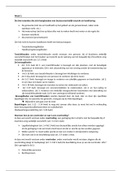
Cultural Awareness
:Self-examination of one's own prejudices and biases toward other cultures. An in-depth
exploration of one's own cultural/ethnic background.
Cultural competence in nursing consists of four principles.
Care is designed for the specific client.
Care is based on the uniqueness of the person's culture and includes cultural norms
and values.
Care includes self-employment strategies to facilitate client decision making to improve
health behaviors.
Care is provided with sensitivity and is based on the cultural uniqueness of clients.
The APN may also use the Kleinman Explanatory Model of Illness (1978). Below
are the questions that can be utilized.
What do you call your problem?
What do you think caused your problem?
Why do you think it started when it did?
What does your sickness do to you?
What do you fear most about your sickness?
What are the chief problems your sickness has caused you?
What kind of treatment do you think you should receive?
What is the most important result you hope to receive from the treatment?
According to Giger and Davidhizer (2000), although cultures differ, they all have
the same basic organizing factors that must be assessed in order to provide care
for culturally diverse patients. These factors include
communication (verbal and nonverbal);
personal space;
social organization;
time perception;
environmental control; and
biological variations.
The NCCC uses four major approaches to fulfill its mission, including
Web-based technical assistance, (2) knowledge development and dissemination, (3)
supporting a community of learners, and (4) collaboration and partnerships with diverse
groups.
Epidemiological Triad:
host, agent, environment
Genetics
The study of individual genes and their impact on relatively rare single gene disorders
Absolute risk
is the probability of an event, such as illness, injury, or death. Gives no indication of how
its magnitude compares with others
The odds ratio
closely approximates the relative risk if the disease is rare.
Odds ratio and the relative risk are used
,to assess the strength of association between risk factor and outcome.
How is Attributible risk used
is used to make risk-based decisions for individuals.
Population-attributable risk measures
are used to form public health decisions
EGAPP:
Evaluation of Genomic Applications in Practice and Prevention
GAPPNet
Genomic Applications in Practice and Prevention Network (established in 2009) is a
collaborative initiative involving partners from across the public health sector working
together to realize the promise of genomics in health care and disease prevention.
GEDDI
Genetics Early Disease Detection Intervention project (GEDDI) (established in 2009)
developed a model strategy for using clinical, genetic, and family history information to
reduce the risk of disease, death, and disability in affected individuals, family members,
and populations.
HuGENet
Human Genome Epidemiology Network (HuGENet) (established in 1998) helps
translate genetic research findings into opportunities for preventive medicines and
public health by advancing the synthesis, interpretation, and dissemination of
population-based data on human genetic variation in health and disease. HuGENet
reviews are systematic, peer-reviewed synopses of the epidemiologic aspects of human
genes, including prevalence of allelic variants in different populations, population-based
information on disease risk, evidence for gene-environment interaction and quantitative
data on genetic tests and services carried out according to specific guidelines.
NHANES III
DC's Office of Public Health Genomics (established in 2002) formed a multidisciplinary
working group with members from across CDC. It developed a proposal to measure the
prevalence of selected genetic variants of public health significance in a representative
sample of the U.S. population and to examine the association between the selected
genetic variants and disease outcomes available in NHANES III data.
The World Health Organization defines a pandemic
as a global epidemic that spreads to more than one continent (WHO, 2009). One of the
more recent pandemics that you might be familiar with is the H1N1 influenza outbreak
of 2009.
Outbreak
the occurrence of disease within persons in excess of what would normally be expected
in a clearly defined community, location, or time of year. An outbreak may only last for a
matter of days or weeks, but may last for years
Quarantine
the separation and restriction of the movement of people who were or are exposed to a
contagious disease for a set period of time, to see whether they become ill
Antigenic drift
is a term describing the changes that occur within virus's ribonucleic acid that changes
the virus. Typically, these changes create seasonal changes or new strains of a virus
WHO Pandemic Phases
, Phase 1—None of the current viruses circulating in animals have been reported to
cause infection in humans.
Phase 2—An animal-based influenza virus is known to have caused infection in humans
and is considered a potential pandemic threat.
Phase 3—An animal- or human-animal-based virus has caused some clusters of cases
in people, but has not caused human-to-human transmission that is significant enough
to cause community-level outbreaks.
Phase 4—Human-to-human transmission of an animal or human-animal virus is causing
community outbreaks and sustained disease. This is a significant shift in risk and any
country with such an outbreak should consult with WHO.
Phase 5—There is human-to-human spread of the virus in at least two countries. This
phase means that pandemic is imminent and that community action and implementation
of planned mitigation procedures is needed.
Phase 6—This is the pandemic phase, characterized by outbreaks in more than one
WHO defined region in addition to all Phase 5 criteria (WHO, 2009)
Phase 1
None of the current viruses circulating in animals have been reported to cause infection
in humans.
Phase 2
An animal-based influenza virus is known to have caused infection in humans and is
considered a potential pandemic threat.
Phase 3
An animal- or human-animal-based virus has caused some clusters of cases in people,
but has not caused human-to-human transmission that is significant enough to cause
community-level outbreaks.
Phase 4
Human-to-human transmission of an animal or human-animal virus is causing
community outbreaks and sustained disease. This is a significant shift in risk and any
country with such an outbreak should consult with WHO.
Phase 5
There is human-to-human spread of the virus in at least two countries. This phase
means that pandemic is imminent and that community action and implementation of
planned mitigation procedures is needed.
Phase 6
This is the pandemic phase, characterized by outbreaks in more than one WHO defined
region in addition to all Phase 5 criteria (WHO, 2009).
Pandemic Severity Index
Category 1—case fatality ratio of less than 0.1% and fewer than 90,000 U.S. deaths
Category 2—0.1%-0.5% case fatality ratio and 90,000-450,000 U.S. deaths
Category 3- 0.5%—1% case fatality ratio and 450,000-900,000 U.S. deaths
Category 4—1-2% case fatality ratio and 900,000-1.8 million U.S. deaths
Category 5—greater than 2% case fatality ratio and more than 1.8 million U.S. deaths
(CDC, 2014).
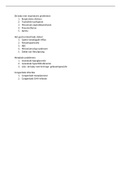
SDG's
- No poverty
- Zero hunger
Cultural Awareness
:Self-examination of one's own prejudices and biases toward other cultures. An in-depth
exploration of one's own cultural/ethnic background.
Cultural competence in nursing consists of four principles.
Care is designed for the specific client.
Care is based on the uniqueness of the person's culture and includes cultural norms
and values.
Care includes self-employment strategies to facilitate client decision making to improve
health behaviors.
Care is provided with sensitivity and is based on the cultural uniqueness of clients.
The APN may also use the Kleinman Explanatory Model of Illness (1978). Below
are the questions that can be utilized.
What do you call your problem?
What do you think caused your problem?
Why do you think it started when it did?
What does your sickness do to you?
What do you fear most about your sickness?
What are the chief problems your sickness has caused you?
What kind of treatment do you think you should receive?
What is the most important result you hope to receive from the treatment?
According to Giger and Davidhizer (2000), although cultures differ, they all have
the same basic organizing factors that must be assessed in order to provide care
for culturally diverse patients. These factors include
communication (verbal and nonverbal);
personal space;
social organization;
time perception;
environmental control; and
biological variations.
The NCCC uses four major approaches to fulfill its mission, including
Web-based technical assistance, (2) knowledge development and dissemination, (3)
supporting a community of learners, and (4) collaboration and partnerships with diverse
groups.
Epidemiological Triad:
host, agent, environment
Genetics
The study of individual genes and their impact on relatively rare single gene disorders
Absolute risk
is the probability of an event, such as illness, injury, or death. Gives no indication of how
its magnitude compares with others
The odds ratio
closely approximates the relative risk if the disease is rare.
Odds ratio and the relative risk are used
,to assess the strength of association between risk factor and outcome.
How is Attributible risk used
is used to make risk-based decisions for individuals.
Population-attributable risk measures
are used to form public health decisions
EGAPP:
Evaluation of Genomic Applications in Practice and Prevention
GAPPNet
Genomic Applications in Practice and Prevention Network (established in 2009) is a
collaborative initiative involving partners from across the public health sector working
together to realize the promise of genomics in health care and disease prevention.
GEDDI
Genetics Early Disease Detection Intervention project (GEDDI) (established in 2009)
developed a model strategy for using clinical, genetic, and family history information to
reduce the risk of disease, death, and disability in affected individuals, family members,
and populations.
HuGENet
Human Genome Epidemiology Network (HuGENet) (established in 1998) helps
translate genetic research findings into opportunities for preventive medicines and
public health by advancing the synthesis, interpretation, and dissemination of
population-based data on human genetic variation in health and disease. HuGENet
reviews are systematic, peer-reviewed synopses of the epidemiologic aspects of human
genes, including prevalence of allelic variants in different populations, population-based
information on disease risk, evidence for gene-environment interaction and quantitative
data on genetic tests and services carried out according to specific guidelines.
NHANES III
DC's Office of Public Health Genomics (established in 2002) formed a multidisciplinary
working group with members from across CDC. It developed a proposal to measure the
prevalence of selected genetic variants of public health significance in a representative
sample of the U.S. population and to examine the association between the selected
genetic variants and disease outcomes available in NHANES III data.
The World Health Organization defines a pandemic
as a global epidemic that spreads to more than one continent (WHO, 2009). One of the
more recent pandemics that you might be familiar with is the H1N1 influenza outbreak
of 2009.
Outbreak
the occurrence of disease within persons in excess of what would normally be expected
in a clearly defined community, location, or time of year. An outbreak may only last for a
matter of days or weeks, but may last for years
Quarantine
the separation and restriction of the movement of people who were or are exposed to a
contagious disease for a set period of time, to see whether they become ill
Antigenic drift
is a term describing the changes that occur within virus's ribonucleic acid that changes
the virus. Typically, these changes create seasonal changes or new strains of a virus
WHO Pandemic Phases
, Phase 1—None of the current viruses circulating in animals have been reported to
cause infection in humans.
Phase 2—An animal-based influenza virus is known to have caused infection in humans
and is considered a potential pandemic threat.
Phase 3—An animal- or human-animal-based virus has caused some clusters of cases
in people, but has not caused human-to-human transmission that is significant enough
to cause community-level outbreaks.
Phase 4—Human-to-human transmission of an animal or human-animal virus is causing
community outbreaks and sustained disease. This is a significant shift in risk and any
country with such an outbreak should consult with WHO.
Phase 5—There is human-to-human spread of the virus in at least two countries. This
phase means that pandemic is imminent and that community action and implementation
of planned mitigation procedures is needed.
Phase 6—This is the pandemic phase, characterized by outbreaks in more than one
WHO defined region in addition to all Phase 5 criteria (WHO, 2009)
Phase 1
None of the current viruses circulating in animals have been reported to cause infection
in humans.
Phase 2
An animal-based influenza virus is known to have caused infection in humans and is
considered a potential pandemic threat.
Phase 3
An animal- or human-animal-based virus has caused some clusters of cases in people,
but has not caused human-to-human transmission that is significant enough to cause
community-level outbreaks.
Phase 4
Human-to-human transmission of an animal or human-animal virus is causing
community outbreaks and sustained disease. This is a significant shift in risk and any
country with such an outbreak should consult with WHO.
Phase 5
There is human-to-human spread of the virus in at least two countries. This phase
means that pandemic is imminent and that community action and implementation of
planned mitigation procedures is needed.
Phase 6
This is the pandemic phase, characterized by outbreaks in more than one WHO defined
region in addition to all Phase 5 criteria (WHO, 2009).
Pandemic Severity Index
Category 1—case fatality ratio of less than 0.1% and fewer than 90,000 U.S. deaths
Category 2—0.1%-0.5% case fatality ratio and 90,000-450,000 U.S. deaths
Category 3- 0.5%—1% case fatality ratio and 450,000-900,000 U.S. deaths
Category 4—1-2% case fatality ratio and 900,000-1.8 million U.S. deaths
Category 5—greater than 2% case fatality ratio and more than 1.8 million U.S. deaths
(CDC, 2014).
SDG's
- No poverty
- Zero hunger