C. Bervoets
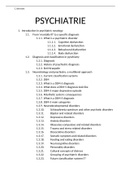
PSYCHIATRIE
1. Introduction in psychiatric nosology
1.1. From ‘mantally ill’ to a specific diagnosis
1.1.1. What is a psychiatric disorder
1.1.1.1. Cognitive dysfunction
1.1.1.2. Emotional dysfunction
1.1.1.3. Behavioural dysfunction
1.1.1.4. Body dysfunction
1.2. Diagnosis and classification in pyschiatry
1.2.1. Diagnosis
1.2.2. History of psychiatric diagnosis
1.2.3. Emil Kraepelin
1.3. Neurobiology and psychiatry: a multilevel approach
1.3.1. Current classification systems
1.3.2. DSM
1.3.3. What is a DSM-5 diagnosis
1.3.4. What does a DSM-5 diagnosis look like
1.3.5. DSM-5 major depressive episode
1.3.6. Polythetic system: consequences
1.3.7. What is a DSM-5 diagnosis
1.3.8. DSM-5 main categories
1.3.9. Neurodevelopmental disorders
1.3.10. Schizophrenia spectrum and other psychotic disorders
1.3.11. Bipolar and related disorders
1.3.12. Depressive disorders
1.3.13. Anxiety disorders
1.3.14. Obsessive-compulsive and related disorders
1.3.15. Trauma and stress related disorders
1.3.16. Dissociative disorders
1.3.17. Somatic symptom and related disorders
1.3.18. Feeding and eating disorders
1.3.19. Neurocognitive disorders
1.3.20. Personality disorders
1.3.21. Cultural concepts of distress
1.3.22. Grouping of psychiatric disorders
1.3.23. Future classification systems??
, C. Bervoets
1.4. A multilevel approach
1.4.1. Levels of organization (1)
1.4.2. Levels of organization (2)
1.4.3. Levels of organization (3)
1.4.4. Levels of organization (4)
1.4.5. Major depression at the genetic/epigenetic level
1.4.6. Major depression at the protein level
1.4.7. Major depression at the neurophysiology level
1.4.8. Major depression at the neurocircuitry level
1.4.9. The use of “endophenotypes”
1.4.10. Multiple layers
PSYCHIATRIE
1. Introduction in psychiatric nosology
1.1. From ‘mantally ill’ to a specific diagnosis
1.1.1. What is a psychiatric disorder
1.1.1.1. Cognitive dysfunction
1.1.1.2. Emotional dysfunction
1.1.1.3. Behavioural dysfunction
1.1.1.4. Body dysfunction
1.2. Diagnosis and classification in pyschiatry
1.2.1. Diagnosis
1.2.2. History of psychiatric diagnosis
1.2.3. Emil Kraepelin
1.3. Neurobiology and psychiatry: a multilevel approach
1.3.1. Current classification systems
1.3.2. DSM
1.3.3. What is a DSM-5 diagnosis
1.3.4. What does a DSM-5 diagnosis look like
1.3.5. DSM-5 major depressive episode
1.3.6. Polythetic system: consequences
1.3.7. What is a DSM-5 diagnosis
1.3.8. DSM-5 main categories
1.3.9. Neurodevelopmental disorders
1.3.10. Schizophrenia spectrum and other psychotic disorders
1.3.11. Bipolar and related disorders
1.3.12. Depressive disorders
1.3.13. Anxiety disorders
1.3.14. Obsessive-compulsive and related disorders
1.3.15. Trauma and stress related disorders
1.3.16. Dissociative disorders
1.3.17. Somatic symptom and related disorders
1.3.18. Feeding and eating disorders
1.3.19. Neurocognitive disorders
1.3.20. Personality disorders
1.3.21. Cultural concepts of distress
1.3.22. Grouping of psychiatric disorders
1.3.23. Future classification systems??
, C. Bervoets
1.4. A multilevel approach
1.4.1. Levels of organization (1)
1.4.2. Levels of organization (2)
1.4.3. Levels of organization (3)
1.4.4. Levels of organization (4)
1.4.5. Major depression at the genetic/epigenetic level
1.4.6. Major depression at the protein level
1.4.7. Major depression at the neurophysiology level
1.4.8. Major depression at the neurocircuitry level
1.4.9. The use of “endophenotypes”
1.4.10. Multiple layers