Summary –
Microbiology of
Aquatic
Ecosystems
Radboud University - MSc
Ilona de Weert
26-10-2022
,Table of Contents
Lecture 1 – Prior knowledge...................................................................................................................2
Lecture 2 – Aquatic Ecosystems.............................................................................................................4
Streams & Rivers................................................................................................................................5
Lakes...................................................................................................................................................5
Wetlands (bogs & fens)......................................................................................................................8
(Salt) Marshes.....................................................................................................................................9
Ocean.................................................................................................................................................9
Coastal ecosystems / oceans............................................................................................................12
Ditches..............................................................................................................................................14
Rice paddies......................................................................................................................................14
Estuaries...........................................................................................................................................14
Lecture 3 – Methods in Aquatic Microbial Ecology...............................................................................14
1. Culturing and isolation (bioreactors, plates, flow cytometry).......................................................20
2. Microscopy & FISH........................................................................................................................22
3. PCR-based methods (qPCR & 16S/ amplicon sequencing)............................................................23
4. Metagenomics..............................................................................................................................24
5. Meta ‘omics’ beyond metagenomics: metabolomics, transcriptomics, proteomics.....................25
6. Using isotope tracers. Stable vs radio isotopes and activity assay vs SIP......................................25
Lecture 4 – Carbon Cycle......................................................................................................................25
Lecture 5 – Aquatic CH4 cycle...............................................................................................................28
Lecture 6 – Anthropogenic impact on the N cycle................................................................................31
Lecture 7 – Sulfur Cycle........................................................................................................................38
Lecture 8 – Iron cycle............................................................................................................................42
,Lecture 1 – Prior knowledge
Microorganism: a microorganism is a microscopic organism consisting of a single cell, a cell cluster,
or a virus. Microorganisms are 50% of the total biomass. Microorganisms have different life styles,
most important are differences in energy metabolism (catabolism) and carbon metabolism (organic
or inorganic C-use)
The micro-world is different:
- Limit being big: nutrient uptake
- Limit being small: housing of biomolecules
- Advantage of being small: large surface/volume ratio = more nutrient uptake per volume =
grow faster
- Metabolism is proportional to ¾ power of body mass and this hold for all organisms.
Energy metabolism: phototrophs vs. chemotrophs
Redox (oxidation-reduction) reactions drive microbial metabolism
- Cells conserve energy in energy-rich compounds such as ATP
- Oxidation-reduction chemistry is required to release enough energy
- Oxidation: removal of an electron, or electrons, from a substance
- Reduction: addition of electrons to a substance
- Redox reactions occur in pairs → practice during the redox tutorial
- The substance that is being oxidized is the e--donor
- The substance that is being reduced is the e--acceptor
- Loss of electron = oxidation, gain of electron = reduction (LEO says GER)
, Microbes have a wide diversity in energy metabolism
Oxygenic photosynthesis: e-acceptor is NADP+. With anoxygenic photosynthesis: e-acceptor is cyclic
(reducing power from oxidation of inorganic compounds) -> microbes such as green and purple sulfur
bacteria.
- Oxygen, nitrite, nitrate, manganese 4+, iron 3+, sulfate and carbon dioxide are electron
acceptors.
- Organic carbon, hydrogen, methane, ammonium, iron 2+ and manganese 2+ are electron
donors.
Fermentation
There is no external electron acceptor. The substrate is partly oxidized, partly reduced and the
products are organic acids, ethanol.
Synthrophy:
The cooperation of two or more organisms to anaerobically degrade a substance. Neither can
degrade alone ethanol to acetate, is not energetically favorable (delta G = +) = will not grow. But
together the overall reaction is exergonic and both grow (concentration effect, reaction equilibrium).
Surface and biofilms
- Biofilm: assemblage of bacterial cells attached to a surface and enclosed in a matrix (mixture
of polysaccharides, proteins, nucleic acids)
- Microbial mats: layered microbial communities / extremely thick biofilms
o Microbial mats, like stromatolites are based on cyanobacterial carbonate
precipitation. Mostly are present in warm coasts/salt lakes
- Biofilm default mode of growth in natural environments
Microbiology of
Aquatic
Ecosystems
Radboud University - MSc
Ilona de Weert
26-10-2022
,Table of Contents
Lecture 1 – Prior knowledge...................................................................................................................2
Lecture 2 – Aquatic Ecosystems.............................................................................................................4
Streams & Rivers................................................................................................................................5
Lakes...................................................................................................................................................5
Wetlands (bogs & fens)......................................................................................................................8
(Salt) Marshes.....................................................................................................................................9
Ocean.................................................................................................................................................9
Coastal ecosystems / oceans............................................................................................................12
Ditches..............................................................................................................................................14
Rice paddies......................................................................................................................................14
Estuaries...........................................................................................................................................14
Lecture 3 – Methods in Aquatic Microbial Ecology...............................................................................14
1. Culturing and isolation (bioreactors, plates, flow cytometry).......................................................20
2. Microscopy & FISH........................................................................................................................22
3. PCR-based methods (qPCR & 16S/ amplicon sequencing)............................................................23
4. Metagenomics..............................................................................................................................24
5. Meta ‘omics’ beyond metagenomics: metabolomics, transcriptomics, proteomics.....................25
6. Using isotope tracers. Stable vs radio isotopes and activity assay vs SIP......................................25
Lecture 4 – Carbon Cycle......................................................................................................................25
Lecture 5 – Aquatic CH4 cycle...............................................................................................................28
Lecture 6 – Anthropogenic impact on the N cycle................................................................................31
Lecture 7 – Sulfur Cycle........................................................................................................................38
Lecture 8 – Iron cycle............................................................................................................................42
,Lecture 1 – Prior knowledge
Microorganism: a microorganism is a microscopic organism consisting of a single cell, a cell cluster,
or a virus. Microorganisms are 50% of the total biomass. Microorganisms have different life styles,
most important are differences in energy metabolism (catabolism) and carbon metabolism (organic
or inorganic C-use)
The micro-world is different:
- Limit being big: nutrient uptake
- Limit being small: housing of biomolecules
- Advantage of being small: large surface/volume ratio = more nutrient uptake per volume =
grow faster
- Metabolism is proportional to ¾ power of body mass and this hold for all organisms.
Energy metabolism: phototrophs vs. chemotrophs
Redox (oxidation-reduction) reactions drive microbial metabolism
- Cells conserve energy in energy-rich compounds such as ATP
- Oxidation-reduction chemistry is required to release enough energy
- Oxidation: removal of an electron, or electrons, from a substance
- Reduction: addition of electrons to a substance
- Redox reactions occur in pairs → practice during the redox tutorial
- The substance that is being oxidized is the e--donor
- The substance that is being reduced is the e--acceptor
- Loss of electron = oxidation, gain of electron = reduction (LEO says GER)
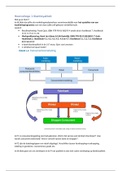
, Microbes have a wide diversity in energy metabolism
Oxygenic photosynthesis: e-acceptor is NADP+. With anoxygenic photosynthesis: e-acceptor is cyclic
(reducing power from oxidation of inorganic compounds) -> microbes such as green and purple sulfur
bacteria.
- Oxygen, nitrite, nitrate, manganese 4+, iron 3+, sulfate and carbon dioxide are electron
acceptors.
- Organic carbon, hydrogen, methane, ammonium, iron 2+ and manganese 2+ are electron
donors.
Fermentation
There is no external electron acceptor. The substrate is partly oxidized, partly reduced and the
products are organic acids, ethanol.
Synthrophy:
The cooperation of two or more organisms to anaerobically degrade a substance. Neither can
degrade alone ethanol to acetate, is not energetically favorable (delta G = +) = will not grow. But
together the overall reaction is exergonic and both grow (concentration effect, reaction equilibrium).
Surface and biofilms
- Biofilm: assemblage of bacterial cells attached to a surface and enclosed in a matrix (mixture
of polysaccharides, proteins, nucleic acids)
- Microbial mats: layered microbial communities / extremely thick biofilms
o Microbial mats, like stromatolites are based on cyanobacterial carbonate
precipitation. Mostly are present in warm coasts/salt lakes
- Biofilm default mode of growth in natural environments