Hybridisation
Define: denaturation and renaturation of dsDNA, hypochromic and hyperchromic effect, melting temperature
DNA denaturation: unfolding (melting) into a random coil
DNA renaturation: opposite of denaturation, get ssDNA back to dsDNA in its native state
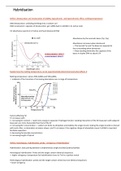
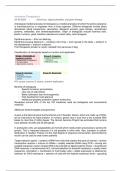
UV absorbance spectrum of native and heat denatured DNA
Absorbance by the aromatic bases (Tyr,Trp)
Absorbance increases when denatured
→ The burried Tyr and Trp bases are exposed to
the surrounding when denatured
→ Base stacking diminishes the capacity of the
bases in duplex DNA to absorb UV
Explain how the melting temperature can be experimentally determined and what affects it
Melting temperature: where 50% dsDNA and 50%ssDNA
→ midpoint of the transition of increasing absorption over a range of temperature
Factors affecting Tm
Tm increases with
1. increasing GC content → need more energy to separate 3 hydrogen bonds / stacking interaction of the GC base pairs with adjacent
base pairs are more favourable than that of the AT
2. increasing Na+ concentration → sodium ion binds to phosphate and stabilise the single strand, making the single strands to interact
with each other, so absorption increases slower, and Tm increases / the negative charge of phosphate cause 2 ssDNA to repel and
facilitate separation
3. decreasing formamide concentration
4. increasing length of hybrid
Define: homologous, hybridisation, probe, 'stringency of hybridisation'
Hybridisation: base pairing between complementary single-stranded polynucleotides
Homologous hybridisation: Probe and the target contain identical sequences
→ higher stringency: temperature for hybridisation closer to Tm for a perfect match
Heterologous hybridisation: probe and the target contain similar but non-identical sequences
→lower stringency
Define: denaturation and renaturation of dsDNA, hypochromic and hyperchromic effect, melting temperature
DNA denaturation: unfolding (melting) into a random coil
DNA renaturation: opposite of denaturation, get ssDNA back to dsDNA in its native state
UV absorbance spectrum of native and heat denatured DNA
Absorbance by the aromatic bases (Tyr,Trp)
Absorbance increases when denatured
→ The burried Tyr and Trp bases are exposed to
the surrounding when denatured
→ Base stacking diminishes the capacity of the
bases in duplex DNA to absorb UV
Explain how the melting temperature can be experimentally determined and what affects it
Melting temperature: where 50% dsDNA and 50%ssDNA
→ midpoint of the transition of increasing absorption over a range of temperature
Factors affecting Tm
Tm increases with
1. increasing GC content → need more energy to separate 3 hydrogen bonds / stacking interaction of the GC base pairs with adjacent
base pairs are more favourable than that of the AT
2. increasing Na+ concentration → sodium ion binds to phosphate and stabilise the single strand, making the single strands to interact
with each other, so absorption increases slower, and Tm increases / the negative charge of phosphate cause 2 ssDNA to repel and
facilitate separation
3. decreasing formamide concentration
4. increasing length of hybrid
Define: homologous, hybridisation, probe, 'stringency of hybridisation'
Hybridisation: base pairing between complementary single-stranded polynucleotides
Homologous hybridisation: Probe and the target contain identical sequences
→ higher stringency: temperature for hybridisation closer to Tm for a perfect match
Heterologous hybridisation: probe and the target contain similar but non-identical sequences
→lower stringency