Social studies summary chapter 1 Rule of Law
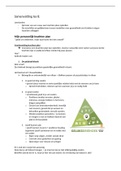
§1 Definitions of the Rule of Law
Rule of Law- society where laws govern the way we live (no naked power (kings/ tyrants) and no
religious laws (priests and religious authorities))
Rule of Law in society
- should ensure safety for all its citizens
- should ensure citizens the freedom to live their lives, free from the arbitrary power of
the authorities (government can’t act like he or she wishes without consideration for the
harm it could do to others)
- should ensure a form of government that is legal (approved by the people)
Rule of Law prerequisites (conditions, always forfilled)
- performing tasks fast and well while still following the rules (government’s right to rule)
(once elected, government can rule without fear of other powers within the state: not: fe
Pakistan, Turkey 20th century: government overthrown by military leaders)
- government is checked by government and people to prevent corruption (not: fe china,
no independent judicial system: citizens can be arrested if defying authories -> failure of
the restraining (in bedwang houden) of government power)
- crimes should be punished by government, not the people (protection from the
government) (not: fe South America, authorities powerless (gangs))
if all followed: governmental – and citizen tyranny should not be possible. Neither should a form
of extra-governmental tyranny be possible (eg military controlling elected government)
§2 History of the Rule of Law
Rule of Law system – legal system where judges and courts are not answerable to Kings, tyrants,
priests nor elites stand above the law. Judges also don’t stand above the law, are accountable to
the written laws
Ancient Greece:
earliest example of emergence RoL first example of a political system where the powers that
make the laws (legislature) are separated from the powers that carry out and enforce the laws
(executive) or judge on violations of the laws (judicial) ((Laws of Solon (io Draco) -> milder and
humane (only murder punished by death)))
Citizens were expected to participate in the legal system (jury duty or act as magistrates
(rechter)) -> judges could be charged and held accountable by other citizens (fe if they didn’t
uphold the laws properly)
Different form RoL -> inequality amongst population (laws applied different to adult male
citizens from the way it was applied to women, children and slaves)
Ancient Rome:
+ codified laws (written laws)
- Lex Regia -> legal code that justified autocratic rule for the Roman emperors legitimacy for
the emperors (=justification)
Age of the Emperor Justinian (483 – 565 AD) -> codification (writing down) of all Roman laws into
one consistent and comprehensive body of laws, the Justinian code first introduced into the
Western Empire via Italy, later spread to other parts of Eastern and Western Europe still the
basis of legal code of many modern states
, Middle Ages / absolutism:
Last era of political power in which the legal system is based on birth and privilege
+ constitution rule, but very oppressive so laid foundation for popular uprising (French
Revolution)
- absolute monarchs (fe Louis XIV of France, Philip II of Spain) ruled with absolute power
After the age of absolutism -> rise of the constitutional systems and the Rule of Law in early
modern Europe slow process of introducing laws based on a social contract began (those
in power have to be elected to rule) values of freedom and equality replaced absolute
authority of one man as the basis of law
Constitutional development NL:
- once elected, government has the right to rule
- clear, written laws about what the government can’t do
- laws protecting citizens from each other
- laws that regulate relations between citizens and government (fe citizens can
challenge government without fear of punishment (eg free speech and press -> in
early Dutch Republic, pamphlets were used to criticize powerful and wealthy men
who ruled the Republic) -> can take government to court as a private person. Also
have the right to protest in the street as an act of political oppression)
-
When Spain occupied NL, Philip II of Spain ruled with absolute power -> William of Orange
(led States General) was the leader of the Dutch rebellion for a basic type of Rule of Law
meant to replace absolutism
Rule of Law in NL defined by higher values from the Enlightenment: individual freedom and
equality
A fully-fledged Rule of Law system in NL not until 20th century -> new laws to ensure rights to
a minimum standard and quality of life (welfare state -> laws relating to health care,
education, income support) -> eg Samuel van Houten (abolished child labour (1874))
Magna Carta (1215) – first document to specify rights and duties of an English King -> specify
rights and duties of nobility and duties, but actually drawn up for the benefit of the nobility
and the protection of their privileges. Nonetheless, Magna Carta was a first step in the
evolution of a formal delegation (afvaardiging) of political powers and the right to rule
World freedom:
- free: high degree of political and civil freedom
- partly free: some restrictions on political rights and civil liberties (corruption, weak RoL,
ethnic strife, civil war
- not free: political process strictly controlled and basic freedoms are denied
Bruegels’ Justitia: punishment of criminals as a public spectacle (humiliation and education
public) -> no RoL
§1 Definitions of the Rule of Law
Rule of Law- society where laws govern the way we live (no naked power (kings/ tyrants) and no
religious laws (priests and religious authorities))
Rule of Law in society
- should ensure safety for all its citizens
- should ensure citizens the freedom to live their lives, free from the arbitrary power of
the authorities (government can’t act like he or she wishes without consideration for the
harm it could do to others)
- should ensure a form of government that is legal (approved by the people)
Rule of Law prerequisites (conditions, always forfilled)
- performing tasks fast and well while still following the rules (government’s right to rule)
(once elected, government can rule without fear of other powers within the state: not: fe
Pakistan, Turkey 20th century: government overthrown by military leaders)
- government is checked by government and people to prevent corruption (not: fe china,
no independent judicial system: citizens can be arrested if defying authories -> failure of
the restraining (in bedwang houden) of government power)
- crimes should be punished by government, not the people (protection from the
government) (not: fe South America, authorities powerless (gangs))
if all followed: governmental – and citizen tyranny should not be possible. Neither should a form
of extra-governmental tyranny be possible (eg military controlling elected government)
§2 History of the Rule of Law
Rule of Law system – legal system where judges and courts are not answerable to Kings, tyrants,
priests nor elites stand above the law. Judges also don’t stand above the law, are accountable to
the written laws
Ancient Greece:
earliest example of emergence RoL first example of a political system where the powers that
make the laws (legislature) are separated from the powers that carry out and enforce the laws
(executive) or judge on violations of the laws (judicial) ((Laws of Solon (io Draco) -> milder and
humane (only murder punished by death)))
Citizens were expected to participate in the legal system (jury duty or act as magistrates
(rechter)) -> judges could be charged and held accountable by other citizens (fe if they didn’t
uphold the laws properly)
Different form RoL -> inequality amongst population (laws applied different to adult male
citizens from the way it was applied to women, children and slaves)
Ancient Rome:
+ codified laws (written laws)
- Lex Regia -> legal code that justified autocratic rule for the Roman emperors legitimacy for
the emperors (=justification)
Age of the Emperor Justinian (483 – 565 AD) -> codification (writing down) of all Roman laws into
one consistent and comprehensive body of laws, the Justinian code first introduced into the
Western Empire via Italy, later spread to other parts of Eastern and Western Europe still the
basis of legal code of many modern states
, Middle Ages / absolutism:
Last era of political power in which the legal system is based on birth and privilege
+ constitution rule, but very oppressive so laid foundation for popular uprising (French
Revolution)
- absolute monarchs (fe Louis XIV of France, Philip II of Spain) ruled with absolute power
After the age of absolutism -> rise of the constitutional systems and the Rule of Law in early
modern Europe slow process of introducing laws based on a social contract began (those
in power have to be elected to rule) values of freedom and equality replaced absolute
authority of one man as the basis of law
Constitutional development NL:
- once elected, government has the right to rule
- clear, written laws about what the government can’t do
- laws protecting citizens from each other
- laws that regulate relations between citizens and government (fe citizens can
challenge government without fear of punishment (eg free speech and press -> in
early Dutch Republic, pamphlets were used to criticize powerful and wealthy men
who ruled the Republic) -> can take government to court as a private person. Also
have the right to protest in the street as an act of political oppression)
-
When Spain occupied NL, Philip II of Spain ruled with absolute power -> William of Orange
(led States General) was the leader of the Dutch rebellion for a basic type of Rule of Law
meant to replace absolutism
Rule of Law in NL defined by higher values from the Enlightenment: individual freedom and
equality
A fully-fledged Rule of Law system in NL not until 20th century -> new laws to ensure rights to
a minimum standard and quality of life (welfare state -> laws relating to health care,
education, income support) -> eg Samuel van Houten (abolished child labour (1874))
Magna Carta (1215) – first document to specify rights and duties of an English King -> specify
rights and duties of nobility and duties, but actually drawn up for the benefit of the nobility
and the protection of their privileges. Nonetheless, Magna Carta was a first step in the
evolution of a formal delegation (afvaardiging) of political powers and the right to rule
World freedom:
- free: high degree of political and civil freedom
- partly free: some restrictions on political rights and civil liberties (corruption, weak RoL,
ethnic strife, civil war
- not free: political process strictly controlled and basic freedoms are denied
Bruegels’ Justitia: punishment of criminals as a public spectacle (humiliation and education
public) -> no RoL