Biological Explanations: Atavistic Form
An historical approach to offending
1876, Cesare Lombroso, an Italian physician wrote a book called L’Huomo Delinquente in
which he suggested that criminals were “genetic throwbacks”- a primitive sub-species who
were biologically different from non-criminals.
Although he is credited as moving criminology into a more rigorous and scientific realm as
his ideas may have laid the foundation for offender profiling; his theory would be seen as
naïve and speculative.
Offenders were seen as savage and untamed and lacked evolutionary development and
hence would not be able to adjust to a civilized society and turn to crime.
Criminal behavior was a natural tendency rooted in the genealogy of those who engage in it.
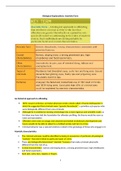
Atavistic characteristics
The criminal sub-type could be identified as being in possession of particular physiological
“markers” that were linked to particular types of crime.
These are biologically determined “atavistic” features that make criminals physically
different from the rest of us.
Cranial characteristics- narrow and sloping brow, a strong prominent jaw, high cheekbones
and facial asymmetry.
Dark skin, extra toes, nipples or fingers.
1
An historical approach to offending
1876, Cesare Lombroso, an Italian physician wrote a book called L’Huomo Delinquente in
which he suggested that criminals were “genetic throwbacks”- a primitive sub-species who
were biologically different from non-criminals.
Although he is credited as moving criminology into a more rigorous and scientific realm as
his ideas may have laid the foundation for offender profiling; his theory would be seen as
naïve and speculative.
Offenders were seen as savage and untamed and lacked evolutionary development and
hence would not be able to adjust to a civilized society and turn to crime.
Criminal behavior was a natural tendency rooted in the genealogy of those who engage in it.
Atavistic characteristics
The criminal sub-type could be identified as being in possession of particular physiological
“markers” that were linked to particular types of crime.
These are biologically determined “atavistic” features that make criminals physically
different from the rest of us.
Cranial characteristics- narrow and sloping brow, a strong prominent jaw, high cheekbones
and facial asymmetry.
Dark skin, extra toes, nipples or fingers.
1