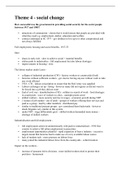
Theme 4 - social change
How successful was the government in providing social security for the soviet people
between 1917 and 1985?
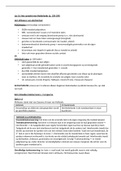
attractions of communism - claims that it would ensure that people are provided with
what they need e.g. employment, shelter, education and welfare
contract enshrined in SC 1977 - gov abilities to live up to it often compromised and
not always fulfilled
Full employment, housing and social benefits- 1917-53
Intro
chaos in early rule - slow to achieve social + material benefits
stalins push to industrailise - full employment but also labour shortages
improvements in housing - slow
The labour market under Lenin -
collapse of industrial production (CW) - factory workers to countryside (food)
factories without sufficient workers - gov decree forcing anyone without work to take
any work offerred
1918 - CW - labour conscription to ensure that the Red Army was supplied
Labour exchanges set up - hiring - however many did not register as did not want to
be forced into a job they did not want
End of civil war - demobilisation of RA - soldiers in search of work - food shortages
in countryside - wave of workers to cities - unemployment sored
skilled workers - more security and rise in wages - economic growth during NEP
1 feature of job market - use of arteli - groups of workers offering their services and
paid as a group - lead by older members - distributed pay
similar to traditional peasant groups - gov considered them backwards - however
shock brigades very similar to this system
under NEP - wage differentials grew - skilled workers demanded more money -
shortage of skilled workers
Industrialisation and full employment -
full employment acheived unintentionally with push to industrialised - 1930 first
country to acheive full urban employment in peacetime
employment opportunities plentiful - rapid expansion of heavy industry - excessive
targets meant that factories had to make use of every available labour source
lack of modern tech - more pressure on labour force
many joined the industrial labour force from the countryside - collectivisation
Impact on the workers -
increase of peasants led to divisions - more skilled workers tried to protect their
postition - harrasment
, restrictions placed on trade unions - werent allowed to fight for improved conditions -
conditions poor - no regard for health and safety
october 1930 - unemployment benefit cancelled - trade unions left to act as providers
of social insurance
vast numbers of jobs but productivity low - lagged behind west - to meet production
targets workers had to work long hours - night and day shifts
labour shortages fear for managers - had to meet pts - unhappy workers constantly
changed their employment - passport system introduced and food rations distributed
through the workplace - partly successful
1931 - wage differences between skilled and unskilled workers increased - rewarded
skilled workers and discouraged them from moving - better rations + bonuses also
added
1934 - use of piecework expanded - allowed the skilled sections opportunity to earn
higher wages
gov used honours and medals to motivate the workforce - encouraged to work like
Alexei Stakhanov - Komsomal used to form shock brigades - instilled socialist values
into workforce - rewards for model workers - new flat, bigger rations
consequence of restrictions on workers changing jobs - increase of absences - harsh
punishments introduced for absent workers - 1939 made a criminal offence - not
always enforced as demand for labour was high
pressure on labour intense during WW2 - women employed more - demobalisation
saw a return of men to the workforce
labour camp inmates rose and formed a key part of the labour force
Housing
slow to make an impact on provision of housing
1917 - confiscated big houses from the rich and gave them to families of workers
distributed according to rank in communist party
not enough housing to meet the needs of all
enormous growth of towns under 5YP - strain on housing - low priority
industrial centres lacked facilities - poor living conditions for workers
blocks of apartments bulit - communal living promoted - modern apartments were
onlt for those who showed impressive commitment to fulfilling the plan
most rented housing consisted of one room/part of one room - many lived in kitchens,
corridors or dormitories - cost very low
improvements on rural housing - even slower - peasants on collectives expected to
provide for their own housing
exacerbated by the damage caused during WW2 - cities badly hit - housing remained
low priority under 4th and 5th 5YP
Social benefits -
workplace source of some social benefits e.g. 1930's - cheap food in canteens, free
work clothes
also provided by trade unions - organised leisure trips
two weeks paid holidays - state resorts
sick pay organised through trade unions
unions an important aspect of workers lives
How successful was the government in providing social security for the soviet people
between 1917 and 1985?
attractions of communism - claims that it would ensure that people are provided with
what they need e.g. employment, shelter, education and welfare
contract enshrined in SC 1977 - gov abilities to live up to it often compromised and
not always fulfilled
Full employment, housing and social benefits- 1917-53
Intro
chaos in early rule - slow to achieve social + material benefits
stalins push to industrailise - full employment but also labour shortages
improvements in housing - slow
The labour market under Lenin -
collapse of industrial production (CW) - factory workers to countryside (food)
factories without sufficient workers - gov decree forcing anyone without work to take
any work offerred
1918 - CW - labour conscription to ensure that the Red Army was supplied
Labour exchanges set up - hiring - however many did not register as did not want to
be forced into a job they did not want
End of civil war - demobilisation of RA - soldiers in search of work - food shortages
in countryside - wave of workers to cities - unemployment sored
skilled workers - more security and rise in wages - economic growth during NEP
1 feature of job market - use of arteli - groups of workers offering their services and
paid as a group - lead by older members - distributed pay
similar to traditional peasant groups - gov considered them backwards - however
shock brigades very similar to this system
under NEP - wage differentials grew - skilled workers demanded more money -
shortage of skilled workers
Industrialisation and full employment -
full employment acheived unintentionally with push to industrialised - 1930 first
country to acheive full urban employment in peacetime
employment opportunities plentiful - rapid expansion of heavy industry - excessive
targets meant that factories had to make use of every available labour source
lack of modern tech - more pressure on labour force
many joined the industrial labour force from the countryside - collectivisation
Impact on the workers -
increase of peasants led to divisions - more skilled workers tried to protect their
postition - harrasment
, restrictions placed on trade unions - werent allowed to fight for improved conditions -
conditions poor - no regard for health and safety
october 1930 - unemployment benefit cancelled - trade unions left to act as providers
of social insurance
vast numbers of jobs but productivity low - lagged behind west - to meet production
targets workers had to work long hours - night and day shifts
labour shortages fear for managers - had to meet pts - unhappy workers constantly
changed their employment - passport system introduced and food rations distributed
through the workplace - partly successful
1931 - wage differences between skilled and unskilled workers increased - rewarded
skilled workers and discouraged them from moving - better rations + bonuses also
added
1934 - use of piecework expanded - allowed the skilled sections opportunity to earn
higher wages
gov used honours and medals to motivate the workforce - encouraged to work like
Alexei Stakhanov - Komsomal used to form shock brigades - instilled socialist values
into workforce - rewards for model workers - new flat, bigger rations
consequence of restrictions on workers changing jobs - increase of absences - harsh
punishments introduced for absent workers - 1939 made a criminal offence - not
always enforced as demand for labour was high
pressure on labour intense during WW2 - women employed more - demobalisation
saw a return of men to the workforce
labour camp inmates rose and formed a key part of the labour force
Housing
slow to make an impact on provision of housing
1917 - confiscated big houses from the rich and gave them to families of workers
distributed according to rank in communist party
not enough housing to meet the needs of all
enormous growth of towns under 5YP - strain on housing - low priority
industrial centres lacked facilities - poor living conditions for workers
blocks of apartments bulit - communal living promoted - modern apartments were
onlt for those who showed impressive commitment to fulfilling the plan
most rented housing consisted of one room/part of one room - many lived in kitchens,
corridors or dormitories - cost very low
improvements on rural housing - even slower - peasants on collectives expected to
provide for their own housing
exacerbated by the damage caused during WW2 - cities badly hit - housing remained
low priority under 4th and 5th 5YP
Social benefits -
workplace source of some social benefits e.g. 1930's - cheap food in canteens, free
work clothes
also provided by trade unions - organised leisure trips
two weeks paid holidays - state resorts
sick pay organised through trade unions
unions an important aspect of workers lives