Sarah hathaway
Student Number: 734590 Unit 12
In this research, I'll look at why people may have additional needs, how to deal with
the issues that people with additional needs encounter on a daily basis and taking a
look in current practise in terms of providing for people with additional needs.
P1
When diagnosing and determining an individual’s additional needs and learning
disabilities they are differentiated in to 4 main sectors mild, moderate, severe and
profound. By doing so you can uncover the severity of their learning disabilities thus
making it easier to identity the right support needed to aid them. It must be stressed
that the description attached to their learning disability (mild, moderate, severe and
profound) is not a representation of them as a person, therefore generic terms
should not be used when describing an individual.
Mild learning disabilities
Individuals with mild learning disabilities are able to talk but difficulties are
more apparent when it comes to understanding & explaining new information.
Most of the time individuals with mild learning difficulties need more time
when trying to comprehend new complex ideas.
Moderate learning disabilities
Day to day living activities and tasks such as dressing yourself and making
food your self is found to be very stressful and confusing for individuals with
moderate learning disabilities. They also have basic language skills and
vocabulary when it comes to expressing themselves, feeling and what they
want.
Severe and profound learning disabilities
Individual with serve and profound learning disabilities are found to mostly
communicate with hand gestures, reason being their language skills and
vocabulary are found to be very basic, so hand gestures are found to be a
perfect suit. They have high levels of support and usually have more than one
disability that needs support.
Diagnostic procedures – ‘techniques used to identify a specific illness or
medical condition’
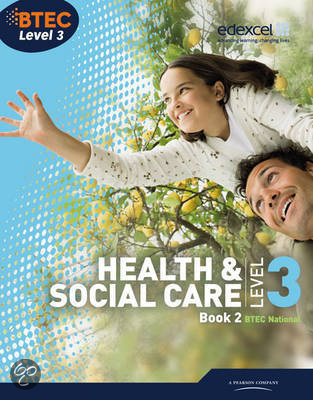
definition found in the (health & social care level 3, Pearson BTEC national,
student book 2) Each illness will require different diagnostic techniques to
identify what type of disability an individual has.
Case study one, Rebecca brown (child study) :
Rebecca is an 8-year-old girl who has severe disability that has stopped her
from moving her body beyond her spine. The main reason she lacks the
capacity to do so is due to a traffic collision, and her condition will not improve
over time given the severity of it. Rebecca also needs extensive assistance
, Sarah hathaway
Student Number: 734590 Unit 12
with daily routines; in school, she has a designated teaching assistant and
carer who helps her with her personal hygiene.
Because Rebecca is in a wheelchair, any institutions she accesses must be
accessible. Unfortunately, Rebecca's home is not accessible as it is too small,
and her parents have been unable to move to a home that meets her needs.
When it comes down to diagnosing, doctors and nurses must utilise at least
one of the following diagnostic procedures to discover her problem while
diagnosing her condition.
To begin, the healthcare providers at the hospital may use x-rays. This allows
them to inspect Rebecca and view her vertebrae within her spine, as well as
take x-rays to detect whether there are any irregular abnormalities within the
bone’s movements.
Second, CT scans can be used by health service providers. The
healthcare providers use x-rays and a computer to create 2D images of
Rebecca's spine; occasionally a dye is injected into the individual's
bloodstream, and other times it is not; this is usually done if the
healthcare providers need to analyse the bone structure of the spine.
Finally, MRI images can be used by healthcare providers. An MRI scan uses
a magnetic field and radiofrequency waves to get a comprehensive picture of
the soft tissue of the spinal cord. The benefit of an MRI scan is that it allows
service users to view the injury that has been imposed on the ligaments,
allowing them to appropriately diagnose the individual.
A neurosurgeon is the specialist for disorders involving the spinal cord. Before
working with people who have spinal problems, neurosurgeons must have
specific qualifications, which include a high level of voluntary movements,
perfect hand-eye coordination, 20/20 vision, special awareness, confidence,
and caution, good organisation skills, good communication skills, and enough
stamina to be capable of moving around with the person and make a
diagnosis correctly without making mistakes.
Given Rebecca age it is most likely a paediatric nurse will be in attendance
assisting the doctor (neurosurgeon). A paediatric nurse is nurse that works
with children, “They help paediatricians and other medical specialists
diagnose, observe, test, and treat young patients throughout the entire cycle
of paediatric care” (some information found
herehttps://www.allaboutcareers.com/job-profile/paediatric-nurse/). Before
working as a fully qualified paediatric nurse, you must have specfic academic
qualification (degree in child nursing) alongside certain skills, good
communication, interpersonal skills as well as strong judgement, being able to
teach advise and manage people.
Case study two, Ben Grace (Adult Study)
Student Number: 734590 Unit 12
In this research, I'll look at why people may have additional needs, how to deal with
the issues that people with additional needs encounter on a daily basis and taking a
look in current practise in terms of providing for people with additional needs.
P1
When diagnosing and determining an individual’s additional needs and learning
disabilities they are differentiated in to 4 main sectors mild, moderate, severe and
profound. By doing so you can uncover the severity of their learning disabilities thus
making it easier to identity the right support needed to aid them. It must be stressed
that the description attached to their learning disability (mild, moderate, severe and
profound) is not a representation of them as a person, therefore generic terms
should not be used when describing an individual.
Mild learning disabilities
Individuals with mild learning disabilities are able to talk but difficulties are
more apparent when it comes to understanding & explaining new information.
Most of the time individuals with mild learning difficulties need more time
when trying to comprehend new complex ideas.
Moderate learning disabilities
Day to day living activities and tasks such as dressing yourself and making
food your self is found to be very stressful and confusing for individuals with
moderate learning disabilities. They also have basic language skills and
vocabulary when it comes to expressing themselves, feeling and what they
want.
Severe and profound learning disabilities
Individual with serve and profound learning disabilities are found to mostly
communicate with hand gestures, reason being their language skills and
vocabulary are found to be very basic, so hand gestures are found to be a
perfect suit. They have high levels of support and usually have more than one
disability that needs support.
Diagnostic procedures – ‘techniques used to identify a specific illness or
medical condition’
definition found in the (health & social care level 3, Pearson BTEC national,
student book 2) Each illness will require different diagnostic techniques to
identify what type of disability an individual has.
Case study one, Rebecca brown (child study) :
Rebecca is an 8-year-old girl who has severe disability that has stopped her
from moving her body beyond her spine. The main reason she lacks the
capacity to do so is due to a traffic collision, and her condition will not improve
over time given the severity of it. Rebecca also needs extensive assistance
, Sarah hathaway
Student Number: 734590 Unit 12
with daily routines; in school, she has a designated teaching assistant and
carer who helps her with her personal hygiene.
Because Rebecca is in a wheelchair, any institutions she accesses must be
accessible. Unfortunately, Rebecca's home is not accessible as it is too small,
and her parents have been unable to move to a home that meets her needs.
When it comes down to diagnosing, doctors and nurses must utilise at least
one of the following diagnostic procedures to discover her problem while
diagnosing her condition.
To begin, the healthcare providers at the hospital may use x-rays. This allows
them to inspect Rebecca and view her vertebrae within her spine, as well as
take x-rays to detect whether there are any irregular abnormalities within the
bone’s movements.
Second, CT scans can be used by health service providers. The
healthcare providers use x-rays and a computer to create 2D images of
Rebecca's spine; occasionally a dye is injected into the individual's
bloodstream, and other times it is not; this is usually done if the
healthcare providers need to analyse the bone structure of the spine.
Finally, MRI images can be used by healthcare providers. An MRI scan uses
a magnetic field and radiofrequency waves to get a comprehensive picture of
the soft tissue of the spinal cord. The benefit of an MRI scan is that it allows
service users to view the injury that has been imposed on the ligaments,
allowing them to appropriately diagnose the individual.
A neurosurgeon is the specialist for disorders involving the spinal cord. Before
working with people who have spinal problems, neurosurgeons must have
specific qualifications, which include a high level of voluntary movements,
perfect hand-eye coordination, 20/20 vision, special awareness, confidence,
and caution, good organisation skills, good communication skills, and enough
stamina to be capable of moving around with the person and make a
diagnosis correctly without making mistakes.
Given Rebecca age it is most likely a paediatric nurse will be in attendance
assisting the doctor (neurosurgeon). A paediatric nurse is nurse that works
with children, “They help paediatricians and other medical specialists
diagnose, observe, test, and treat young patients throughout the entire cycle
of paediatric care” (some information found
herehttps://www.allaboutcareers.com/job-profile/paediatric-nurse/). Before
working as a fully qualified paediatric nurse, you must have specfic academic
qualification (degree in child nursing) alongside certain skills, good
communication, interpersonal skills as well as strong judgement, being able to
teach advise and manage people.
Case study two, Ben Grace (Adult Study)