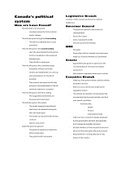
Canada’s political Legislative Branch
Consists of HOC, Senate, and Governor General
system Makes laws
How are Laws Passed? Governor General
- The bill needs to be proposed
- The governor general is the monarch’s
- Usually proposed by Prime minister
representative
and/or Cabinet
- Serves for 5 years
- The bill then goes through the first reading
- Gives royal assent to bills
- The bill is not debated, but it is just
- Chosen by the Prime Minister
presented
HOC
- Then the bill goes to the second reading
- 336 seats
- Here the ideas behind the bill and the
- Place where bills are studied, and voted upon
merit to Canadians is discussed and
- Made up of elected members of parliament
debated upon
Senate
- Then the bill is voted upon
- Appointed by the governor general on the
- Then the bill goes to the committee stage
“recommendation” of the prime minister
- Parliament officials work with
- Works till 75
citizens and stakeholders to come up
- New senate is appointed when spot is vacant
with amendments for the bill (if
Executive Branch
possible)
- Made up of the prime minister, and the cabinet,
- They cannot vote upon the bill, they
and public services
just give a recommendation if the bill
- Role is to carry out the laws made by the
should be rejected or accepted
Legislative branch
- Then the bill goes to the third reading
- The cabinet are members of parliament that
- The suggested amendments are
are appointed by the prime minister and look
discussed and voted upon
over specific portfolios
- The bill then goes to the senate
- Portfolios like:
- The senate suggests amendments
- Health
that have to be debated among the
- Finance
HOC and voted upon
- International trade
- The senate can block the bill but they
- Public services consists of people employed
rarely do
by the government and their jobs generally
- Have to vote on bill
don’t change during/after elections
- Signed by governor general
- Elected members of the executive branch are
- The governor general can block the
all part of the same party, the party in power.
bill but rarely does
- Responsible for running daily day-to-day
- They give the bill royal assent
duties of the country
Consists of HOC, Senate, and Governor General
system Makes laws
How are Laws Passed? Governor General
- The bill needs to be proposed
- The governor general is the monarch’s
- Usually proposed by Prime minister
representative
and/or Cabinet
- Serves for 5 years
- The bill then goes through the first reading
- Gives royal assent to bills
- The bill is not debated, but it is just
- Chosen by the Prime Minister
presented
HOC
- Then the bill goes to the second reading
- 336 seats
- Here the ideas behind the bill and the
- Place where bills are studied, and voted upon
merit to Canadians is discussed and
- Made up of elected members of parliament
debated upon
Senate
- Then the bill is voted upon
- Appointed by the governor general on the
- Then the bill goes to the committee stage
“recommendation” of the prime minister
- Parliament officials work with
- Works till 75
citizens and stakeholders to come up
- New senate is appointed when spot is vacant
with amendments for the bill (if
Executive Branch
possible)
- Made up of the prime minister, and the cabinet,
- They cannot vote upon the bill, they
and public services
just give a recommendation if the bill
- Role is to carry out the laws made by the
should be rejected or accepted
Legislative branch
- Then the bill goes to the third reading
- The cabinet are members of parliament that
- The suggested amendments are
are appointed by the prime minister and look
discussed and voted upon
over specific portfolios
- The bill then goes to the senate
- Portfolios like:
- The senate suggests amendments
- Health
that have to be debated among the
- Finance
HOC and voted upon
- International trade
- The senate can block the bill but they
- Public services consists of people employed
rarely do
by the government and their jobs generally
- Have to vote on bill
don’t change during/after elections
- Signed by governor general
- Elected members of the executive branch are
- The governor general can block the
all part of the same party, the party in power.
bill but rarely does
- Responsible for running daily day-to-day
- They give the bill royal assent
duties of the country