Designing Persuasive Texts
Chapter 1: Convincing documents
There are three types of documents, namely:
• Informative documents: goal to inform;
• Instructive documents: goal to instruct;
• Persuasive documents: goal to convince —> the course will focus on these documents.
—> Content, structure and style of a text can influence the effectiveness of each document type.
How to get people to do something, so how to change their behavior through having…
• No freedom, via threat of violence;
• Very limited freedom, via legal provisions;
• Considerable freedom, via transfer of information, which the course will focus on.
Persuasion: ‘the successful intentional effort at influencing another’s mental state through
communication in a circumstance in which the persuades has some measure of freedom.’
—> Intentional: indicates that it was the speaker’s intention to change the interlocutor’s mind since
it is also possible to change someone’s opinions unintentionally.
—> A mental state, as in the definition of persuasion, can be equated with attitude, which is a
psychological tendency expressed by evaluating an entity with some degree of favour or disfavor.
—> Attitude change precedes behavior change, which is the goal of persuasion; information
transfer affects people’s mental state before it influences their behavior.
—> An entity can be an individual or agency, behavior, policy, or a product.
—> Persuasion can only be said to have occurred if the persuadee had an alternative (i.e. if you
tell people to sleep everyday and observe they do so it is not persuasion, since they have no other
choice in doing so).
Persuasive documents are designed with the aim of influencing readers’ attitudes through the
transfer of information, with the readers having a certain degree of freedom.
—> A persuasive document, whether it is a text or a poster, has a clear intent.
—> The term ‘successful’ is omitted here since many persuasive documents are unsuccessful.
1
,Goal of the course: to understand how persuasion communication processes work so we can
intentionally influence people’s behavior by purposefully and meaningfully applying theory on
persuasive communication in an evidence-based way.
—> Persuasive communication is aimed at influencing people’s attitudes, which often have an
underlying goal of influencing people’s behavior.
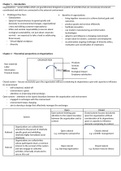
—> The simplified persuasion communication process, with our focus being highlighted:
Non-directive communication is informative and directive communication persuasive (which
leads to the target group drawing a particular conclusion).
When should you chose for a legislation and when for communication?
—> This depends on the urgency of the situation and the enforcement of the burden (whether you
can make a personal responsibility appeal).
—> Three dimensions play a role when a situation is less urgent, namely the measurability of the
behavior, the structure of target group (size and heterogeneity), and the costs for the target group.
—> The more the instrument appeals to citizen’s personal responsibility, the lighter the
government’s enforcement burden.
2
,If people cannot be convinced of the advantages of the promoted behavior, communication is
pointless: in that case, other instruments are needed, such as legislation or financial incentives.
Noar (2006) believes campaigns can influence people’s knowledge, attitudes and behavior: this
depends on the scope of the ad and the differences in quality between the campaigns.
—> Steps that should be taken to develop an effective communication campaign: conducting
formative research, using theory, segmenting the target group, using an appropriate message
design (new and creative), choosing appropriate channels, controlling the process, and conducting
good evaluation research.
Step 4, to use an appropriate message design: what is the influence of the content, structure,
style and illustrations of a message on the persuasion process?
—> In general, they found that the effects caused by these message properties on persuasion
processes are small.
Main limitations of the book:
—> Many of the included studies include only one or just a few sample documents.
However, research in which the persuasiveness of a document property is studied by including a
single document can still be relevant, if it provides an understanding of how the effect is produced.
—> The effect of one message property may depend on another; i.e. the consequences of the
choice of illustrations, for example, can depend on the choices made concerning content or style.
—> Lastly, the book only focuses on written documents and looks at every type of document.
3
, Chapter 2: Determinants of behavior
An attitude is a psychological tendency that is expressed by evaluating a particular entity with
some degree of favor or disfavor.
—> Evaluation: the feelings evoked by a particular attitude object ‘wrapped around our thoughts’
about that object.
—> Attitudes cannot be neutral, since they always have valence (feelings can be positive or
negative) and intensity (e.g. to like vs. to love).
—> Attitudes provide us with mental templates that guide our behavior, which makes our responses
predictable.
—> In general, our attitudes match our behavior, but that is not always the case.
—> Other characteristics of attitudes: they are directed at an attitude object, such as a person,
idea, policy, event, product… They can also be held in memory or formed on the spot. They are not
permanent, so attitudes change over time (but not as fleetingly as moods). We are not born with
attitudes, but they may have a biological basis. Lastly, attitudes shape perception.
Functions of attitudes:
• Instrumental: obtain rewards and avoid punishments.
—> e.g. having a positive attitude towards a difficult course, to increase our chances of doing
well in that course.
—> Is much more linked to behavior.
• Knowledge: create mental shortcuts and make sense of terrible events.
—> e.g. religious attitudes serve as knowledge that helps us make sense of a loss of a loved one.
—> Is much more linked to behavior.
• Ego-defensive: feel good about ourselves, also better than others (has to do with prejudice).
—> e.g. getting fired and developing negative emotions to avoid feeling embarrassment.
—> Has more to do with social interaction.
• Value-expressive: express our values to others.
—> e.g. wearing a particular brand because it is ecologically-minded.
—> Has more to do with social interaction.
4
Chapter 1: Convincing documents
There are three types of documents, namely:
• Informative documents: goal to inform;
• Instructive documents: goal to instruct;
• Persuasive documents: goal to convince —> the course will focus on these documents.
—> Content, structure and style of a text can influence the effectiveness of each document type.
How to get people to do something, so how to change their behavior through having…
• No freedom, via threat of violence;
• Very limited freedom, via legal provisions;
• Considerable freedom, via transfer of information, which the course will focus on.
Persuasion: ‘the successful intentional effort at influencing another’s mental state through
communication in a circumstance in which the persuades has some measure of freedom.’
—> Intentional: indicates that it was the speaker’s intention to change the interlocutor’s mind since
it is also possible to change someone’s opinions unintentionally.
—> A mental state, as in the definition of persuasion, can be equated with attitude, which is a
psychological tendency expressed by evaluating an entity with some degree of favour or disfavor.
—> Attitude change precedes behavior change, which is the goal of persuasion; information
transfer affects people’s mental state before it influences their behavior.
—> An entity can be an individual or agency, behavior, policy, or a product.
—> Persuasion can only be said to have occurred if the persuadee had an alternative (i.e. if you
tell people to sleep everyday and observe they do so it is not persuasion, since they have no other
choice in doing so).
Persuasive documents are designed with the aim of influencing readers’ attitudes through the
transfer of information, with the readers having a certain degree of freedom.
—> A persuasive document, whether it is a text or a poster, has a clear intent.
—> The term ‘successful’ is omitted here since many persuasive documents are unsuccessful.
1
,Goal of the course: to understand how persuasion communication processes work so we can
intentionally influence people’s behavior by purposefully and meaningfully applying theory on
persuasive communication in an evidence-based way.
—> Persuasive communication is aimed at influencing people’s attitudes, which often have an
underlying goal of influencing people’s behavior.
—> The simplified persuasion communication process, with our focus being highlighted:
Non-directive communication is informative and directive communication persuasive (which
leads to the target group drawing a particular conclusion).
When should you chose for a legislation and when for communication?
—> This depends on the urgency of the situation and the enforcement of the burden (whether you
can make a personal responsibility appeal).
—> Three dimensions play a role when a situation is less urgent, namely the measurability of the
behavior, the structure of target group (size and heterogeneity), and the costs for the target group.
—> The more the instrument appeals to citizen’s personal responsibility, the lighter the
government’s enforcement burden.
2
,If people cannot be convinced of the advantages of the promoted behavior, communication is
pointless: in that case, other instruments are needed, such as legislation or financial incentives.
Noar (2006) believes campaigns can influence people’s knowledge, attitudes and behavior: this
depends on the scope of the ad and the differences in quality between the campaigns.
—> Steps that should be taken to develop an effective communication campaign: conducting
formative research, using theory, segmenting the target group, using an appropriate message
design (new and creative), choosing appropriate channels, controlling the process, and conducting
good evaluation research.
Step 4, to use an appropriate message design: what is the influence of the content, structure,
style and illustrations of a message on the persuasion process?
—> In general, they found that the effects caused by these message properties on persuasion
processes are small.
Main limitations of the book:
—> Many of the included studies include only one or just a few sample documents.
However, research in which the persuasiveness of a document property is studied by including a
single document can still be relevant, if it provides an understanding of how the effect is produced.
—> The effect of one message property may depend on another; i.e. the consequences of the
choice of illustrations, for example, can depend on the choices made concerning content or style.
—> Lastly, the book only focuses on written documents and looks at every type of document.
3
, Chapter 2: Determinants of behavior
An attitude is a psychological tendency that is expressed by evaluating a particular entity with
some degree of favor or disfavor.
—> Evaluation: the feelings evoked by a particular attitude object ‘wrapped around our thoughts’
about that object.
—> Attitudes cannot be neutral, since they always have valence (feelings can be positive or
negative) and intensity (e.g. to like vs. to love).
—> Attitudes provide us with mental templates that guide our behavior, which makes our responses
predictable.
—> In general, our attitudes match our behavior, but that is not always the case.
—> Other characteristics of attitudes: they are directed at an attitude object, such as a person,
idea, policy, event, product… They can also be held in memory or formed on the spot. They are not
permanent, so attitudes change over time (but not as fleetingly as moods). We are not born with
attitudes, but they may have a biological basis. Lastly, attitudes shape perception.
Functions of attitudes:
• Instrumental: obtain rewards and avoid punishments.
—> e.g. having a positive attitude towards a difficult course, to increase our chances of doing
well in that course.
—> Is much more linked to behavior.
• Knowledge: create mental shortcuts and make sense of terrible events.
—> e.g. religious attitudes serve as knowledge that helps us make sense of a loss of a loved one.
—> Is much more linked to behavior.
• Ego-defensive: feel good about ourselves, also better than others (has to do with prejudice).
—> e.g. getting fired and developing negative emotions to avoid feeling embarrassment.
—> Has more to do with social interaction.
• Value-expressive: express our values to others.
—> e.g. wearing a particular brand because it is ecologically-minded.
—> Has more to do with social interaction.
4