BIOD 152 A&P 2 Lab 6 Exam (Graded A+)
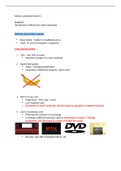
BIOD 152 A&P 2 Lab 6 Exam (Graded A+). A&P 2 Lab 6- Histology of Body Systems LOOKING AT THE LIVER UNDER THE MICROSCOPE Liver is made up of a lot of cylinders called Hepatic lobules. The hepatic lobules are made up of sheets of liver cells called Hepatocytes There is a center vein that passes through the middle of the hepatic lobules that drain the blood from the microscopic structures and then eventually the liver itself. The interior of the liver under the microscope- think of spreading open a book cover to cover o The whole represents the central vein o Each page of the book represents a sheet of the hepatocyte In between each sheet of hepatocyte there are channels called Sinusoids. o Sinusoids are blood channels that lead away from the central vein in the hepatic lobules. o Sinusoids contain some phagocytic cells (can’t see under the microscope) Kupffer Cells- work to clean the blood and remove any debris from the blood in the liver Hepatic Lobule under the microscope at the lowest power: o The white dot in the center of the lobule is the central vein (will eventually drain into the hepatic vein) o Increasing the magnification: The red-ish areas are the hepatocytes. The white lines in between the red areas are the sinusoids. LOOKING AT THE PANCREAS UNDER THE MICROSCOPE Pancreas is a gland in the digestive system and considered endocrine and exocrine glands. o The endocrine portion- secretes hormones like insulin and glucagon to control the blood sugar levels in our body o The exocrine portion- secretes digestive enzymes and juices that help to complete the digestive process. o lowest power: can see several oddly shaped lobules. Each lobule has a boundary of a white line around it. o Higher magnification: Some of the cells are different colors. The darker cells that are stained a dark pink- Acini Cells (digestive cells) 98-99% of the pancreas is made up of the acini cells; they make up the exocrine portion of the gland They secrete the pancreatic juices and enzymes that help with digestive The lighter color larger pink cell is called the Islets of Langerhan. It’s the endocrine portion of the gland that will produce insulin and glucagon hormones to regulate our blood sugar levels. LOOKING AT THE SMALL INTESTINE UNDER THE MICROSCOPE The small intestine absorbs all of our nutrients and passes them into the bloodstream. Has 4 tunics (layers) of tissue: o Serosa- outer most layer. A very thin layer that covers the organs in the digestive tract. o Muscularis externa- next layer in. It’s a relatively thick layer (solid dark pink). Make up of longitudinal and circular layers. o Submucosa- contains Brunner's glands which secrete a bi-carbonate substance that will help to neutralize the material in the stomach. It softens the acidity in the stomach. Also see some lymphocytes (b-cells and t-cells) that will help to intercept and destroy any pathogens in the intestinal tract before it enters the blood stream) o Mucosa- inner most layer. Made up of Villi (finger like projections). They help to increase the surface area so there is an increased area for absorption. Also see Plicae Circulares- microscopic structures; intestinal/circular folds in the wall that serve to increase the surface area to allow for increased absorption o o SEROSA o MUSCULARIS EXTERNA o SUBMUCOSA o MUCOSA AND THE VILLI
Geschreven voor
- Instelling
- Portage Learning
- Vak
- BIOD 152 A&P II (BIOD152)
Documentinformatie
- Geüpload op
- 16 maart 2022
- Aantal pagina's
- 13
- Geschreven in
- 2021/2022
- Type
- Tentamen (uitwerkingen)
- Bevat
- Vragen en antwoorden
Onderwerpen
-
biod 152
-
biod
-
biod 152 a and p ii
-
histology of body systems
-
biod 152 a and p 2 lab 6 exam graded a

Ook beschikbaar in voordeelbundel