SECTION: Human Nervous System
6 BIOPSYCHOLOGY
TOPIC:
KEY IDEAS (K/U)
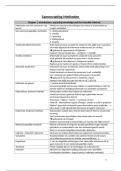
1. Biopsychology studies how emotions, thoughts and behaviours are affected by the brain, the nervous system
and hormones.
2. The Nervous System – a network of cells using electrical impulses to collect, process and respond to
information in the environment, it also coordinates organs within the body. It’s divided into sub-categories:
3. CENTRAL NERVOUS SYSTEM = made up of the brain and spinal cord, controlling commands and decisions.
BRAIN – the centre of awareness, divided into two hemispheres each specialised in particular behaviour,
it sorts and organises information before sending commands (slower reactions.)
SPINAL CORD – an extension of the brain, transporting messages to and from the peripheral system.
4. PERIPHERAL NERVOUS SYSTEM = transmits messages via neurons to and from the CNS – responsible for
communication between vital organs.
SOMATIC – responsible for voluntary functions such as muscle movement, it receives information from
sensory organs and transmits to CNS – information is received back from CNS to govern movement.
AUTONOMIC – responsible for involuntary functions within the body such as heart rate, digestion and
breathing. It is also divided into two sub-systems itself, they work in parallel with the endocrine system…
o Sympathetic – involved in preparing the body for fight or flight through increased impulses and
increasing bodily activities.
o Parasympathetic – relaxes the body, returns it to resting state (rest and digest) by decreasing the
bodily activities.
5.
6 BIOPSYCHOLOGY
TOPIC:
KEY IDEAS (K/U)
1. Biopsychology studies how emotions, thoughts and behaviours are affected by the brain, the nervous system
and hormones.
2. The Nervous System – a network of cells using electrical impulses to collect, process and respond to
information in the environment, it also coordinates organs within the body. It’s divided into sub-categories:
3. CENTRAL NERVOUS SYSTEM = made up of the brain and spinal cord, controlling commands and decisions.
BRAIN – the centre of awareness, divided into two hemispheres each specialised in particular behaviour,
it sorts and organises information before sending commands (slower reactions.)
SPINAL CORD – an extension of the brain, transporting messages to and from the peripheral system.
4. PERIPHERAL NERVOUS SYSTEM = transmits messages via neurons to and from the CNS – responsible for
communication between vital organs.
SOMATIC – responsible for voluntary functions such as muscle movement, it receives information from
sensory organs and transmits to CNS – information is received back from CNS to govern movement.
AUTONOMIC – responsible for involuntary functions within the body such as heart rate, digestion and
breathing. It is also divided into two sub-systems itself, they work in parallel with the endocrine system…
o Sympathetic – involved in preparing the body for fight or flight through increased impulses and
increasing bodily activities.
o Parasympathetic – relaxes the body, returns it to resting state (rest and digest) by decreasing the
bodily activities.
5.