Problematic and Beneficial Effects of Media Use
Lecture 1: Moral Panics and Intro
Moral Panics:
➔ Moral panics is termed by Cohen (1972):
• Accusations against new sub-culture (young British working-class) —> threat of
social order or values
• Pursued by establishment, “right-thinking people” (traditionally high social standing)
and self-proclaimed “experts”
• Moral condemnation
• Publicized through mass media
• Claims based on anecdotal urban myths rather than quantifiable evidence (experts
often have little direct experience
3 core characteristics of moral panics:
1. Uncertainty
• New behavior, no normative convention yet
• Unknown effects
2. Normative
• Strong moral judgments
• Judges are from establishment (politicians, parents, older people)
• Self-proclaimed experts
3. Often focused on ostensibly vulnerable groups
• Children, adolescents, the „youth“ (early adopters)
• Women
• Working class
Moral, media, technology panics: Why? (Sociological Explanation)
1. Uncertainty
2. Elites wanting to conserve status quo, «stay in power»
3. Cultural elites concerned about upbringing of children (weakening of cognitive skills,
unleashed impulses)
→ good vs. bad taste or high vs. low culture
→ 3 core answers from science (Always good to remember!)
1. Prevalence (how big is the problem really?)
• How many people involved or affected
• How often do symptoms occur?
2. Causality
• Media use → X?
• X → media use?
• Other factors affecting X?
3. Effect size
• How strong is media use <> X effect?
,3 stages in research
If a new medium is on the rise in society, the research scientists conduct often goes in three
stages!
1. Crime & time – related research: Is it (the effect) there?
→ This is often research about the negative effects of the new medium (time: are
people spending too much time with the medium. Crime: are people getting more
aggressive from this new medium?)
• Prevalence
• Simple effects (e.g., exposure —> effect and reporting of effect sizes)
2. Complex causal analyses and theory-building: When and how does it work?
• Moderation analyses —> Who? —> Risk-groups
• Mediation analyses —> Why? —> Process
3. Cumulated evidence: Can we be sure?
• Literature reviews
• Meta-analyses
→ Problem with science: this process of conducting research will take years before we
actually know true effects of new media. Often times it is not as relevant anymore.
Biased researchers?
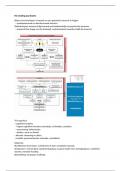
Ferguson (2008, p. 31): « Moral panic wheel »
→ The fears of moral panics also trigger research. Therefore we can state that researchers
are biased. The moral panics set the scientific agenda (this is due to the fact that there will
be more funding for research on topics that are lively in society).
The wheel of moral panic:
→ Starts with social beliefs
→ Leads to:
• Research Called for and Produced in line with Societal Expectations and
• Media Reports on Potential Adverse Effects
→ Which starts the cycle (wheel) of moral panic
,Science‘s role in maintaining the panic
Orben (2020): The Sisyphean Cycle of
Technology Panics
→ Another cycle of panics
→ Starts with new technology
, Lecture 2: Internet & Wellbeing: Loneliness
Sisyphean cycle of technology panics
→ Current cycle: social media
Today we focus on the steps:
1. Panic creation
2. Political Outsourcing
Today, the question people/scientists are talking about is the fact that social media is hurting
adolescents.
Mental health: “a state of well-being in which every individual realizes his or her own
potential, can cope with the normal stresses of life, can work productively and fruitfully, and
is able to make a contribution to her or his community”
Well-being: “how well individuals are doing in life, including social, health, material, and
subjective dimensions of well-being”
• As read in Meier & Reinecke (2020)
• Mental health contains the following aspects
o Anxiety
o Depression
o Suicidal ideation
o Self-esteem
o Loneliness (more on that later)
• Well-being is about subjective feelings
o Life satisfaction
o Happiness
→ As read in Meier & Reinecke (2020)
Why does social media affect adolescents’ mental health?
• Time [spent away from other “good” activities like doing homework]
• Less face-to-face interactions
• Phubbing
• Cyberbullying
• Self-harm information
• Social comparisons (we’ll talk about that next week)
• Sleep disturbances
• Loneliness (more on that later)
• Possibly more…
Lecture 1: Moral Panics and Intro
Moral Panics:
➔ Moral panics is termed by Cohen (1972):
• Accusations against new sub-culture (young British working-class) —> threat of
social order or values
• Pursued by establishment, “right-thinking people” (traditionally high social standing)
and self-proclaimed “experts”
• Moral condemnation
• Publicized through mass media
• Claims based on anecdotal urban myths rather than quantifiable evidence (experts
often have little direct experience
3 core characteristics of moral panics:
1. Uncertainty
• New behavior, no normative convention yet
• Unknown effects
2. Normative
• Strong moral judgments
• Judges are from establishment (politicians, parents, older people)
• Self-proclaimed experts
3. Often focused on ostensibly vulnerable groups
• Children, adolescents, the „youth“ (early adopters)
• Women
• Working class
Moral, media, technology panics: Why? (Sociological Explanation)
1. Uncertainty
2. Elites wanting to conserve status quo, «stay in power»
3. Cultural elites concerned about upbringing of children (weakening of cognitive skills,
unleashed impulses)
→ good vs. bad taste or high vs. low culture
→ 3 core answers from science (Always good to remember!)
1. Prevalence (how big is the problem really?)
• How many people involved or affected
• How often do symptoms occur?
2. Causality
• Media use → X?
• X → media use?
• Other factors affecting X?
3. Effect size
• How strong is media use <> X effect?
,3 stages in research
If a new medium is on the rise in society, the research scientists conduct often goes in three
stages!
1. Crime & time – related research: Is it (the effect) there?
→ This is often research about the negative effects of the new medium (time: are
people spending too much time with the medium. Crime: are people getting more
aggressive from this new medium?)
• Prevalence
• Simple effects (e.g., exposure —> effect and reporting of effect sizes)
2. Complex causal analyses and theory-building: When and how does it work?
• Moderation analyses —> Who? —> Risk-groups
• Mediation analyses —> Why? —> Process
3. Cumulated evidence: Can we be sure?
• Literature reviews
• Meta-analyses
→ Problem with science: this process of conducting research will take years before we
actually know true effects of new media. Often times it is not as relevant anymore.
Biased researchers?
Ferguson (2008, p. 31): « Moral panic wheel »
→ The fears of moral panics also trigger research. Therefore we can state that researchers
are biased. The moral panics set the scientific agenda (this is due to the fact that there will
be more funding for research on topics that are lively in society).
The wheel of moral panic:
→ Starts with social beliefs
→ Leads to:
• Research Called for and Produced in line with Societal Expectations and
• Media Reports on Potential Adverse Effects
→ Which starts the cycle (wheel) of moral panic
,Science‘s role in maintaining the panic
Orben (2020): The Sisyphean Cycle of
Technology Panics
→ Another cycle of panics
→ Starts with new technology
, Lecture 2: Internet & Wellbeing: Loneliness
Sisyphean cycle of technology panics
→ Current cycle: social media
Today we focus on the steps:
1. Panic creation
2. Political Outsourcing
Today, the question people/scientists are talking about is the fact that social media is hurting
adolescents.
Mental health: “a state of well-being in which every individual realizes his or her own
potential, can cope with the normal stresses of life, can work productively and fruitfully, and
is able to make a contribution to her or his community”
Well-being: “how well individuals are doing in life, including social, health, material, and
subjective dimensions of well-being”
• As read in Meier & Reinecke (2020)
• Mental health contains the following aspects
o Anxiety
o Depression
o Suicidal ideation
o Self-esteem
o Loneliness (more on that later)
• Well-being is about subjective feelings
o Life satisfaction
o Happiness
→ As read in Meier & Reinecke (2020)
Why does social media affect adolescents’ mental health?
• Time [spent away from other “good” activities like doing homework]
• Less face-to-face interactions
• Phubbing
• Cyberbullying
• Self-harm information
• Social comparisons (we’ll talk about that next week)
• Sleep disturbances
• Loneliness (more on that later)
• Possibly more…