CONTENTS
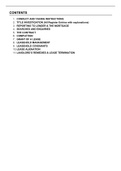
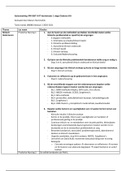
1. CONDUCT AND TAKING INSTRUCTIONS
2. TITLE INVESTIGATION (All Register Entries with explanations)
3. REPORTING TO LENDER & THE MORTGAGE
4. SEARCHES AND ENQUIRIES
5. THE CONTRACT
6. COMPLETION
7. GRANT OF A LEASE
8. LEASEHOLD MANAGEMENT
9. LEASEHOLD COVENANTS
10. LEASE ALIENATION
11. LANDLORD’S REMEDIES & LEASE TERMINATION
, CONDUCT AND TAKING INSTRUCTIONS
Typical Conveyancing Transaction
Pre-contract stage Assuming that matters proceed smoothly, the pre-contract stage of a residential
transaction may take 4 – 6 weeks from the date when instructions are first received
Post-contract (or pre-
Often no longer than 2 weeks
completion) stage
Post-completion stage Tidying up after transaction e.g. submitting SDLT and application to HMLR
CONDUCT ISSUES RELEVANT TO CONVEYANCING
Exam structure: (1) identify the relevant principles and paragraphs of the code; (2) apply to the facts; (3)
advise.
ACTING FOR BUYER AND SELLER
Why might parties want this?
Cheaper and quicker when using one firm.
Existing client relationship with firm – firm understands clients and their needs well.
Relevant principle:
Principle 7: acting in best interests of client
Relevant paragraphs of code:
Principle 7, para 6.2 –subject to certain exceptions, a solicitor or firm cannot act if the solicitor or firm has a
conflict of interest or a significant risk of such a conflict
Decision as to whether acting for buyer and seller does or is likely to involve a conflict of interest rests with the
solicitor and the firm
Factors to take into account when determining whether a conflict of interest exists, or is likely to arise, include:
(1) The complexity of the matter and length of the conveyancing chain involved. The more complex
the transaction, the greater the risk of a conflict of interest;
(2) The likelihood of negotiations having to take place. In higher value or complex transactions, there
is a greater likelihood of substantial contract negotiations, increasing the risk of a conflict;
(3) The bargaining power of the parties and any particular vulnerability of either party.
IF there is a conflict or significant risk of one, the solicitor or firm can only act for both parties if one of the two
exceptions contained in para 6.2 applies
IF a decision is made at the outset of the transaction that there is no conflict of interest under para 6.2 then it is
advisable to:
(1) Inform clients in writing of the risks should a conflict arise and the firm have to cease acting;
(2) Obtain the client’s consent for the firm acting;
(3) Record the factors considered in reaching a decision to act;
(4) Ensure that each party is represented by a different fee earner within the firm
Should the firm act for both?
Higher value at stake – more risk of greater conflict.
If conflict arises later, both parties will have to find other solicitors to represent them the current firm would
cease to act.
Likely re-negotiation would occur later in the transaction - para 6.2(a): buyer’s interest is different from the
sellers.
Conclude: do not act for both.
Which party should be told to go find other legal representation?
, Apply to the facts: does the firm to that type of work already for a client? Which client has the most value to the
firm?
Mention issues of confidentiality if firm has acted for both clients previously. May not be an issue, however, and
likely to be mentioned in buyer’s due diligence.
Do we need more information?
ACTING FOR JOINT BUYERS
Usually acceptable to act for joint buyers provided that no conflict of interest exists or is likely to arise
May be necessary to advise residential buyers about their rights in the property, particularly when joint
buyers not married
ACTING FOR BORROWER AND LENDER
If a solicitor receives instructions to act for the lender, he is acting for both parties in one transaction
and owes a duty to both clients – Mortgage Express v Bowerman & Partners (A Firm)
Relevant principle:
Principle 7: best interests of the client.
Relevant paragraphs of code:
Para 6.2: conflict of interest/significant risk of one.
Has a (re)negotiation taken place on the facts?
If so, the firm can act for both as there is a substantially common interest.
If it still needs to be carried out, more likely to be a conflict.
Solution:
Lender asks borrower to act for both when doing searches; get independent advice when negotiating.
Good title = common interest; due diligence;
Negotiating terms = different interests.
ACTING FOR JOINT BORROWERS – UNDUE INFLUENCE
General Provided no conflict of interest exists or is likely to exist, there is no rule of law or conduct
that prevents the same solicitor acting for joint borrowers.
Scenario However, problems can exist if (typical scenario)
Husband needs to borrow money for his business and uses matrimonial home (in
joint names) as security
If wife agrees to a mortgage over the house for her husband’s business, but the
husband defaults, the bank may seek to enforce its security to the wife’s detriment
Wife may seek to have the mortgage set aside on basis of undue influence
Presumptions There is no presumption of undue influence for husband / wife (but there is a rebuttable
presumption of UI for solicitor / client etc.)
Therefore a) If the transaction is not to the borrower’s advantage, the lender is put on enquiry –
Royal Bank of Scotland v Etridge
b) Lender must take reasonable steps to satisfy itself that the person has been
conducted without undue influence.
, c) Lender will normally rely on the solicitor’s confirmation that they have advised both
borrowers properly. The solicitor should:
Explain the purpose for which he is involved
Explain that the lender will rely on their involvement to counter any
assertions of undue influence or that the wife has not understood the nature
of the transaction
Obtain confirmation that she wishes the solicitor to act in the transaction
d) Discussion should:
Be face to face (without the other borrower present)
Use non-technical language
Give reasoned advice as to the disadvantages of the transaction
Get express authority from person to write to the lender confirming the
steps have been taken
If it is obvious the person has been wronged, decline to act
CONFIDETIALITY
Para 6.3 SRA Codes – solicitor must keep the affairs of clients confidential unless disclosure is required or
permitted by law or the client consents
Ch. 5.12 – problems arise when the solicitor has been acting for borrower and lender and has information that
the lender would consider relevant to granting the loan but the borrower does not want the solicitor to tell the
lender
CONTRACT RACES
Occurs where a seller enters into the conveyancing process with 2 or more prospective buyers at the same
time. The buyers are competing with each other and the winner of the race is the buyer who is ready to
exchange contracts first.
Solicitor and firm required to comply with para 1.2 and must not abuse their position by taking unfair
advantage of clients or others
Under para 1.4 the solicitor and firm must not mislead others, either by their own acts or omissions or
allowing or being complicit in the acts or omissions of the seller
Warnings to give to seller:
Danger of losing all the prospective buyers if a race is commenced
Ensure they are aware that solicitor required to comply with para 1.2 and 1.3
Warnings to give buyer:
Can you reassure a client that they will not lose out to another buyer in the case of contract races?
You are under a duty to tell the client this is a possibility
Para 1.4: should not mislead client, the court or others. Make aware that it is possible that they will
lose out to another buyer
…cannot entirely reassure a client.
Safeguards: It is the seller’s obligation and they should tell the buyer’s solicitor if the contract race is
ongoing.
UNDERTAKINGS
Should the solicitor give an undertaking?
NB: personal liability attaches to a solicitor if you give an undertaking.
Para 1.3 of both Codes: must perform all undertakings within a reasonable time.
A solicitor is not obliged to give one, but if you do, then if you breach it, then you are breaching your
professional contract.
,TEST: is the undertaking something that is personally out of your control? Is the undertaking ambiguous? Is the
timescale achievable?
If breached: solicitor personally liable. Also, a breach of professional conduct and can be disciplined by SRA.
You cannot perform an undertaking within the ‘reasonable time’ and you should not give an undertaking.
, VAT
General VAT is chargeable in respect of a supply of goods or services made in the course of a
business
Depending on the circumstances, supplies can be (for reference only)
Exempt (not subject to tax)
Zero-rated (taxable, but subject to VAT at 0%)
Standard-rated (20%)
What type of E.g. this is an old freehold commercial property
property is it and Old = completed more than three years prior to the sale
why?
What does this Seller has the choice as to whether or not to opt to tax
mean for the Can only recover some or all of the VAT it has paid to builders and such during the
seller? renovation works (from the output tax chargeable on the sale price) if it opts to tax
What does this Will not be an impact if the buyer / tenant makes standard-rated or zero-rated
mean for the supplies, as they can recover the VAT
buyer (are they BUT will affect VAT sensitive buyers (banks, building societies, insurance
VAT sensitive)? companies)
Opting to tax means that VAT would be charged on the PP of the sale and
the buyer:
Would not be able to recover any of this as it doesn't make
VATable supplies in the course of its business
May face cash flow problems
The buyer may therefore
Object to opting to tax; or
Seek a reduction in the PP to compensate
What Client will have to weigh up the benefit of recovering the refurbishment VAT
considerations against the potential loss of sale proceeds or even the sale itself
will client need to
make?
, EXAM STRUCTURE ON VAT IN A PROPERTY CONTEXT
How is the sale of an OLD freehold commercial building treated for VAT purposes?
VAT is chargeable in respect of the supply of goods or services made in the course of business.
Primarily a consumer tax
*Residential property = No VAT payable*
*for the purposes of VAT, an OLD freehold Commercial property is one that was completed more than 3 years
prior to the sale. If the commercial property is < 3 years old i.e. NEW, its sale will be subject to VAT at 20%.
Option to tax: seller has a choice whether to opt to charge VAT on the sale in addition to the purchase price. All
this means is we write a letter to HMRC to say ‘I want to recover VAT paid in respect of this property’
Why might a Seller elect to charge VAT on a sale?
If a seller did not opt to tax, the sale or supply of the property would be exempt (non VATable). This is
DIFFERENT to a 0 rated supply, which is subject to tax but at a rate of 0%.
Exempt supplies are not subject to tax so any input tax (VAT paid out by the seller) connected to the property
cannot be recovered.
If the seller opts to charge VAT on the sale it can recover any input tax it has incurred in connection with the
property (e.g. refurbishment costs).
Why are some Buyers more reluctant than others to pay VAT on a purchase?
It makes the property expensive
A buyer who makes taxable supplies in the course of their business will be able to recover that VAT (no adverse
effect)
HOWEVER a VAT sensitive buyer (e.g. a bank which makes exempt supplies) will not be able to recover VAT
VAT sensitive buyer may seek a reduction in the purchase price
, TITLE INVESTIGATION
COVENANTS
INDIRECT ENFORCEMENT OF COVENANTS
Chain of Unless otherwise provided, the person who originally gives a covenant remains liable in
indemnity contract for breach of that covenant forever, even after he has parted with the burdened
covenants land
On disposing of the property the new owner should obtain an indemnity from its successor
in turn – this develops a chain of indemnity covenants
Deed of This is the most commonly used way of making the burden of positive covenants run on
covenant land that is registered or subject to compulsory first registration
protected by a To secure that obligation, the covenantor registers a restriction on the burdened land
restriction Other ways to secure the performance of positive covenants:
(1) Reserving a rentcharge annexed to a right of entry
(2) Reserving a freehold right of re-entry
(3) One owner to offer the other owner a long lease rather than transfer the
freehold title as the burden of positive covenants DOES RUN with leasehold
land
, Clause X in the PROPERTY register.
This reveals that…
What will it look like? Describe the entry Explain why it is an issue Action to take
‘Together with the right for Cross easement The use of drains comes with the Client must be informed of the
the purchaser to drain Benefit of the cost of maintenance buyer will obligation – may affect their decision to
water and soil from the easement of have to pay proceed
property subject to the drainage with Will run due to Halsall v Brizell as Where are they located?
payment of xxxxxx’ corresponding receiving benefit so must submit to What condition are they in?
burden of an burden
Cost of maintenance?
easement / positive
covenant
‘Purchaser shall not No right to easement Could be a problem with the Identify precise location of the land with
become entitled to… any of air / light etc. buyer’s use and enjoyment of the the benefit, its owner and likelihood of
easement or right to air property in the future, as they have development that would block light / air
which would interfere or no easement to prevent
Inform client of outcome
Write to the person with the benefit –
restrict free use of development nearby removing light
will they negotiate to give up their right
adjoining property’ / air
May block air or light to the
offices, reducing their value
‘All mines and minerals Mines and minerals Will not own the mines Make enquiries using CON29M to find
under said land..hereby not included in sale Mining seems to have out more about future and previous
conveyed and also the occurred on the land. mining operations
Raise enquiries with the seller as to
right to work and carry Risk of subsidence – damage to
any previous works and any damage
away’ the property. caused to the property
The property’s value might consequentially
decrease Who can exercise this right and has it
If works are re-opened there may ever been exercised?
be disruption Ask client to get a surveyor to look at
the condition of these things +
subsidence
Ask seller whether any disputes during
period of ownership
Ask seller to confirm any mining during
period of ownership
SIM search to see if any mines and
minerals registered with their own title
number
Mining search
Insurance policy
‘The land is subject to the Land has benefit These covenants are unknown and Apply for a copy of the conveyance
covenants contained in a and / or burden of may interfere with intended use referred to and then inform the client
covenants – referred of what is contained therein
conveyance of 1910 Liability for breach
between A and B’
to in a conveyance, Could reduce price due to this clause?
not in the bundle Check if seller has got a copy of the
conveyance
Consider insurance for defective title if
“no copy filed”
‘The land is subject to a Land is burdened by Another person has a right over Make enquiries about the exercise of the
right of entry…’ a right of entry the land which could interfere right and as to whether and disputes
with the buyer’s intended use have arise in respect of it
Inform the client and ask if this right will
cause concern
‘Right of way to pass over Benefit of Have benefit of the land but it is a How much is maintenance and what
hatched land… subject to easement over cross easement does it include?
owners of neighbouring hatched area This means the neighbours What is fair and
reasonable?
property having similar Burden of also have access over their
Is there an alternative route of
rights… also subject to easement in land access?
purchaser paying a fair and favour of Although this is a positive Who carries out the
reasonable proportion of neighbour covenant, will fall under Halsall v maintenance?
costs’ Positive covenant to Brizell as they are receiving the What is the condition of the alley
pay towards costs benefit of the easement so must (survey it)
also submit to the burden *See (2) Title investigation entry 2
‘The land is subject to a Land is Another person has a right over Make enquiries about the exercise of
right of entry…’ burdened by a the land which could interfere with this right as to whether any disputes
right of entry the buyer’s intended use have arisen in respect of it
Inform the client and ask if this right will
cause concern
, Clause X in the PROPRIETORSHIP register.
What will it look like? Describe the entry Explain why it is an issue? Action to take
‘No disposition by Tenants in common Unless authorised by the Raise requisition with seller as
a sole proprietor of Tenant in common restriction court, all registered owners to the other party
the registered indicates that the beneficial must be party to the sale, a If the tenant in common is alive,
estate (except a interest in the property is held as single proprietor may not they must be party to the
trust corporation) TIC and not as JT. sell contract
under which capital The buyer cannot be If dead, we will need to see a
money arises is to The buyer will want the beneficial registered as new legal death certificate and then either
be registered interest of the deceased co-owner owner without the appoint a second trustee to
unless authorised to be overreached. restriction being complied overreach the beneficial
by an order of the with. This forces interest of that person now or
court’ In order to overreach equitable overreaching which works make the contract conditional
If not in proprietorship beneficial interest, the PP of the in the buyers favour. You on such an appointment
register, it indicates a property has to be paid to all of do this by having 2 legal
joint tenancy the trustees or a trust corporation owners selling.
and there must be a minimum of Are all proprietors party to
2 trustees. the SPA?
‘The deed contains a This is evidence of a chain of There is a chain of If no indemnity covenant, look in
covenant to perform indemnity. indemnity covenants and the charges register + see who
the covenants the seller will inevitably conveyance between which
referred to in the want one from the buyer to contains covenants in the first
register and of avoid being sued. Seller will place. If seller, this starts
indemnity in respect be liable to any breaches of indemnity chain.
of those’ the covenants in the charges Inform the client and explain
register – not only during the consequences for breach of
‘The transfer to the This tells us that when the their own ownership but also the covenants.
proprietor contains a proprietor bought the property when they sell the property. Remember he will be liable for
covenant to observe they themselves gave an If the chain is unbroken, breach of both positive and
and perform the indemnity covenant on the terms SCPC 6.6.4 says the buyer negative covenants
covenants referred to of [ENTRY] to their seller must give an indemnity to Positive covenants do not run
in the Charges the seller with the land, but buyer is
Register and of bound if there is an indemnity
indemnity in respect covenant
thereof’
‘Caution… in favour Caution There is a dispute over an Ask the seller to warn off the
of…’ interest or right in the land caution. He does this by
In practice, no NEW cautions – the proprietor disputes contacting Land Registry and
can be registered but you may the interest of the person requesting procedure.
see OLD ones. These have who has entered the Cautioner has 15 days to justify
been replaced by unilateral caution on the register. his claim or the caution will be
notices on the Charges Sale cannot be made while removed
Register. this remains
‘No disposition of Restriction on disposition The named lender must Inform lender of intended
the registered (mortgage) give consent to any transaction and request
estate… without disposition in writing consent
written consent of Raise enquiries with seller to
the lender who owns ensure this has been done and
the charge over the that the charge will be removed
land’
‘No disposition of Compulsory renewed Cannot dispose of the Need to see the clause that it
the reg. estate… is to covenant supported by a property without a refers to
be reg. without a restriction certificate signed by the Enquire whether the terms are
certificate signed by current proprietor of the still valid
the proprietor… of neighbouring property Negotiate its removal
the estate reg. under Inform client and take further
title number XXX instructions
If an entry lists two Legal title is held as Both owners should be Inform client
proprietors but the beneficial joint tenants parties to the contract Request contract is amended
draft contract only (Check attendance note to to include both owners
names one of them ensure both are alive)
1. CONDUCT AND TAKING INSTRUCTIONS
2. TITLE INVESTIGATION (All Register Entries with explanations)
3. REPORTING TO LENDER & THE MORTGAGE
4. SEARCHES AND ENQUIRIES
5. THE CONTRACT
6. COMPLETION
7. GRANT OF A LEASE
8. LEASEHOLD MANAGEMENT
9. LEASEHOLD COVENANTS
10. LEASE ALIENATION
11. LANDLORD’S REMEDIES & LEASE TERMINATION
, CONDUCT AND TAKING INSTRUCTIONS
Typical Conveyancing Transaction
Pre-contract stage Assuming that matters proceed smoothly, the pre-contract stage of a residential
transaction may take 4 – 6 weeks from the date when instructions are first received
Post-contract (or pre-
Often no longer than 2 weeks
completion) stage
Post-completion stage Tidying up after transaction e.g. submitting SDLT and application to HMLR
CONDUCT ISSUES RELEVANT TO CONVEYANCING
Exam structure: (1) identify the relevant principles and paragraphs of the code; (2) apply to the facts; (3)
advise.
ACTING FOR BUYER AND SELLER
Why might parties want this?
Cheaper and quicker when using one firm.
Existing client relationship with firm – firm understands clients and their needs well.
Relevant principle:
Principle 7: acting in best interests of client
Relevant paragraphs of code:
Principle 7, para 6.2 –subject to certain exceptions, a solicitor or firm cannot act if the solicitor or firm has a
conflict of interest or a significant risk of such a conflict
Decision as to whether acting for buyer and seller does or is likely to involve a conflict of interest rests with the
solicitor and the firm
Factors to take into account when determining whether a conflict of interest exists, or is likely to arise, include:
(1) The complexity of the matter and length of the conveyancing chain involved. The more complex
the transaction, the greater the risk of a conflict of interest;
(2) The likelihood of negotiations having to take place. In higher value or complex transactions, there
is a greater likelihood of substantial contract negotiations, increasing the risk of a conflict;
(3) The bargaining power of the parties and any particular vulnerability of either party.
IF there is a conflict or significant risk of one, the solicitor or firm can only act for both parties if one of the two
exceptions contained in para 6.2 applies
IF a decision is made at the outset of the transaction that there is no conflict of interest under para 6.2 then it is
advisable to:
(1) Inform clients in writing of the risks should a conflict arise and the firm have to cease acting;
(2) Obtain the client’s consent for the firm acting;
(3) Record the factors considered in reaching a decision to act;
(4) Ensure that each party is represented by a different fee earner within the firm
Should the firm act for both?
Higher value at stake – more risk of greater conflict.
If conflict arises later, both parties will have to find other solicitors to represent them the current firm would
cease to act.
Likely re-negotiation would occur later in the transaction - para 6.2(a): buyer’s interest is different from the
sellers.
Conclude: do not act for both.
Which party should be told to go find other legal representation?
, Apply to the facts: does the firm to that type of work already for a client? Which client has the most value to the
firm?
Mention issues of confidentiality if firm has acted for both clients previously. May not be an issue, however, and
likely to be mentioned in buyer’s due diligence.
Do we need more information?
ACTING FOR JOINT BUYERS
Usually acceptable to act for joint buyers provided that no conflict of interest exists or is likely to arise
May be necessary to advise residential buyers about their rights in the property, particularly when joint
buyers not married
ACTING FOR BORROWER AND LENDER
If a solicitor receives instructions to act for the lender, he is acting for both parties in one transaction
and owes a duty to both clients – Mortgage Express v Bowerman & Partners (A Firm)
Relevant principle:
Principle 7: best interests of the client.
Relevant paragraphs of code:
Para 6.2: conflict of interest/significant risk of one.
Has a (re)negotiation taken place on the facts?
If so, the firm can act for both as there is a substantially common interest.
If it still needs to be carried out, more likely to be a conflict.
Solution:
Lender asks borrower to act for both when doing searches; get independent advice when negotiating.
Good title = common interest; due diligence;
Negotiating terms = different interests.
ACTING FOR JOINT BORROWERS – UNDUE INFLUENCE
General Provided no conflict of interest exists or is likely to exist, there is no rule of law or conduct
that prevents the same solicitor acting for joint borrowers.
Scenario However, problems can exist if (typical scenario)
Husband needs to borrow money for his business and uses matrimonial home (in
joint names) as security
If wife agrees to a mortgage over the house for her husband’s business, but the
husband defaults, the bank may seek to enforce its security to the wife’s detriment
Wife may seek to have the mortgage set aside on basis of undue influence
Presumptions There is no presumption of undue influence for husband / wife (but there is a rebuttable
presumption of UI for solicitor / client etc.)
Therefore a) If the transaction is not to the borrower’s advantage, the lender is put on enquiry –
Royal Bank of Scotland v Etridge
b) Lender must take reasonable steps to satisfy itself that the person has been
conducted without undue influence.
, c) Lender will normally rely on the solicitor’s confirmation that they have advised both
borrowers properly. The solicitor should:
Explain the purpose for which he is involved
Explain that the lender will rely on their involvement to counter any
assertions of undue influence or that the wife has not understood the nature
of the transaction
Obtain confirmation that she wishes the solicitor to act in the transaction
d) Discussion should:
Be face to face (without the other borrower present)
Use non-technical language
Give reasoned advice as to the disadvantages of the transaction
Get express authority from person to write to the lender confirming the
steps have been taken
If it is obvious the person has been wronged, decline to act
CONFIDETIALITY
Para 6.3 SRA Codes – solicitor must keep the affairs of clients confidential unless disclosure is required or
permitted by law or the client consents
Ch. 5.12 – problems arise when the solicitor has been acting for borrower and lender and has information that
the lender would consider relevant to granting the loan but the borrower does not want the solicitor to tell the
lender
CONTRACT RACES
Occurs where a seller enters into the conveyancing process with 2 or more prospective buyers at the same
time. The buyers are competing with each other and the winner of the race is the buyer who is ready to
exchange contracts first.
Solicitor and firm required to comply with para 1.2 and must not abuse their position by taking unfair
advantage of clients or others
Under para 1.4 the solicitor and firm must not mislead others, either by their own acts or omissions or
allowing or being complicit in the acts or omissions of the seller
Warnings to give to seller:
Danger of losing all the prospective buyers if a race is commenced
Ensure they are aware that solicitor required to comply with para 1.2 and 1.3
Warnings to give buyer:
Can you reassure a client that they will not lose out to another buyer in the case of contract races?
You are under a duty to tell the client this is a possibility
Para 1.4: should not mislead client, the court or others. Make aware that it is possible that they will
lose out to another buyer
…cannot entirely reassure a client.
Safeguards: It is the seller’s obligation and they should tell the buyer’s solicitor if the contract race is
ongoing.
UNDERTAKINGS
Should the solicitor give an undertaking?
NB: personal liability attaches to a solicitor if you give an undertaking.
Para 1.3 of both Codes: must perform all undertakings within a reasonable time.
A solicitor is not obliged to give one, but if you do, then if you breach it, then you are breaching your
professional contract.
,TEST: is the undertaking something that is personally out of your control? Is the undertaking ambiguous? Is the
timescale achievable?
If breached: solicitor personally liable. Also, a breach of professional conduct and can be disciplined by SRA.
You cannot perform an undertaking within the ‘reasonable time’ and you should not give an undertaking.
, VAT
General VAT is chargeable in respect of a supply of goods or services made in the course of a
business
Depending on the circumstances, supplies can be (for reference only)
Exempt (not subject to tax)
Zero-rated (taxable, but subject to VAT at 0%)
Standard-rated (20%)
What type of E.g. this is an old freehold commercial property
property is it and Old = completed more than three years prior to the sale
why?
What does this Seller has the choice as to whether or not to opt to tax
mean for the Can only recover some or all of the VAT it has paid to builders and such during the
seller? renovation works (from the output tax chargeable on the sale price) if it opts to tax
What does this Will not be an impact if the buyer / tenant makes standard-rated or zero-rated
mean for the supplies, as they can recover the VAT
buyer (are they BUT will affect VAT sensitive buyers (banks, building societies, insurance
VAT sensitive)? companies)
Opting to tax means that VAT would be charged on the PP of the sale and
the buyer:
Would not be able to recover any of this as it doesn't make
VATable supplies in the course of its business
May face cash flow problems
The buyer may therefore
Object to opting to tax; or
Seek a reduction in the PP to compensate
What Client will have to weigh up the benefit of recovering the refurbishment VAT
considerations against the potential loss of sale proceeds or even the sale itself
will client need to
make?
, EXAM STRUCTURE ON VAT IN A PROPERTY CONTEXT
How is the sale of an OLD freehold commercial building treated for VAT purposes?
VAT is chargeable in respect of the supply of goods or services made in the course of business.
Primarily a consumer tax
*Residential property = No VAT payable*
*for the purposes of VAT, an OLD freehold Commercial property is one that was completed more than 3 years
prior to the sale. If the commercial property is < 3 years old i.e. NEW, its sale will be subject to VAT at 20%.
Option to tax: seller has a choice whether to opt to charge VAT on the sale in addition to the purchase price. All
this means is we write a letter to HMRC to say ‘I want to recover VAT paid in respect of this property’
Why might a Seller elect to charge VAT on a sale?
If a seller did not opt to tax, the sale or supply of the property would be exempt (non VATable). This is
DIFFERENT to a 0 rated supply, which is subject to tax but at a rate of 0%.
Exempt supplies are not subject to tax so any input tax (VAT paid out by the seller) connected to the property
cannot be recovered.
If the seller opts to charge VAT on the sale it can recover any input tax it has incurred in connection with the
property (e.g. refurbishment costs).
Why are some Buyers more reluctant than others to pay VAT on a purchase?
It makes the property expensive
A buyer who makes taxable supplies in the course of their business will be able to recover that VAT (no adverse
effect)
HOWEVER a VAT sensitive buyer (e.g. a bank which makes exempt supplies) will not be able to recover VAT
VAT sensitive buyer may seek a reduction in the purchase price
, TITLE INVESTIGATION
COVENANTS
INDIRECT ENFORCEMENT OF COVENANTS
Chain of Unless otherwise provided, the person who originally gives a covenant remains liable in
indemnity contract for breach of that covenant forever, even after he has parted with the burdened
covenants land
On disposing of the property the new owner should obtain an indemnity from its successor
in turn – this develops a chain of indemnity covenants
Deed of This is the most commonly used way of making the burden of positive covenants run on
covenant land that is registered or subject to compulsory first registration
protected by a To secure that obligation, the covenantor registers a restriction on the burdened land
restriction Other ways to secure the performance of positive covenants:
(1) Reserving a rentcharge annexed to a right of entry
(2) Reserving a freehold right of re-entry
(3) One owner to offer the other owner a long lease rather than transfer the
freehold title as the burden of positive covenants DOES RUN with leasehold
land
, Clause X in the PROPERTY register.
This reveals that…
What will it look like? Describe the entry Explain why it is an issue Action to take
‘Together with the right for Cross easement The use of drains comes with the Client must be informed of the
the purchaser to drain Benefit of the cost of maintenance buyer will obligation – may affect their decision to
water and soil from the easement of have to pay proceed
property subject to the drainage with Will run due to Halsall v Brizell as Where are they located?
payment of xxxxxx’ corresponding receiving benefit so must submit to What condition are they in?
burden of an burden
Cost of maintenance?
easement / positive
covenant
‘Purchaser shall not No right to easement Could be a problem with the Identify precise location of the land with
become entitled to… any of air / light etc. buyer’s use and enjoyment of the the benefit, its owner and likelihood of
easement or right to air property in the future, as they have development that would block light / air
which would interfere or no easement to prevent
Inform client of outcome
Write to the person with the benefit –
restrict free use of development nearby removing light
will they negotiate to give up their right
adjoining property’ / air
May block air or light to the
offices, reducing their value
‘All mines and minerals Mines and minerals Will not own the mines Make enquiries using CON29M to find
under said land..hereby not included in sale Mining seems to have out more about future and previous
conveyed and also the occurred on the land. mining operations
Raise enquiries with the seller as to
right to work and carry Risk of subsidence – damage to
any previous works and any damage
away’ the property. caused to the property
The property’s value might consequentially
decrease Who can exercise this right and has it
If works are re-opened there may ever been exercised?
be disruption Ask client to get a surveyor to look at
the condition of these things +
subsidence
Ask seller whether any disputes during
period of ownership
Ask seller to confirm any mining during
period of ownership
SIM search to see if any mines and
minerals registered with their own title
number
Mining search
Insurance policy
‘The land is subject to the Land has benefit These covenants are unknown and Apply for a copy of the conveyance
covenants contained in a and / or burden of may interfere with intended use referred to and then inform the client
covenants – referred of what is contained therein
conveyance of 1910 Liability for breach
between A and B’
to in a conveyance, Could reduce price due to this clause?
not in the bundle Check if seller has got a copy of the
conveyance
Consider insurance for defective title if
“no copy filed”
‘The land is subject to a Land is burdened by Another person has a right over Make enquiries about the exercise of the
right of entry…’ a right of entry the land which could interfere right and as to whether and disputes
with the buyer’s intended use have arise in respect of it
Inform the client and ask if this right will
cause concern
‘Right of way to pass over Benefit of Have benefit of the land but it is a How much is maintenance and what
hatched land… subject to easement over cross easement does it include?
owners of neighbouring hatched area This means the neighbours What is fair and
reasonable?
property having similar Burden of also have access over their
Is there an alternative route of
rights… also subject to easement in land access?
purchaser paying a fair and favour of Although this is a positive Who carries out the
reasonable proportion of neighbour covenant, will fall under Halsall v maintenance?
costs’ Positive covenant to Brizell as they are receiving the What is the condition of the alley
pay towards costs benefit of the easement so must (survey it)
also submit to the burden *See (2) Title investigation entry 2
‘The land is subject to a Land is Another person has a right over Make enquiries about the exercise of
right of entry…’ burdened by a the land which could interfere with this right as to whether any disputes
right of entry the buyer’s intended use have arisen in respect of it
Inform the client and ask if this right will
cause concern
, Clause X in the PROPRIETORSHIP register.
What will it look like? Describe the entry Explain why it is an issue? Action to take
‘No disposition by Tenants in common Unless authorised by the Raise requisition with seller as
a sole proprietor of Tenant in common restriction court, all registered owners to the other party
the registered indicates that the beneficial must be party to the sale, a If the tenant in common is alive,
estate (except a interest in the property is held as single proprietor may not they must be party to the
trust corporation) TIC and not as JT. sell contract
under which capital The buyer cannot be If dead, we will need to see a
money arises is to The buyer will want the beneficial registered as new legal death certificate and then either
be registered interest of the deceased co-owner owner without the appoint a second trustee to
unless authorised to be overreached. restriction being complied overreach the beneficial
by an order of the with. This forces interest of that person now or
court’ In order to overreach equitable overreaching which works make the contract conditional
If not in proprietorship beneficial interest, the PP of the in the buyers favour. You on such an appointment
register, it indicates a property has to be paid to all of do this by having 2 legal
joint tenancy the trustees or a trust corporation owners selling.
and there must be a minimum of Are all proprietors party to
2 trustees. the SPA?
‘The deed contains a This is evidence of a chain of There is a chain of If no indemnity covenant, look in
covenant to perform indemnity. indemnity covenants and the charges register + see who
the covenants the seller will inevitably conveyance between which
referred to in the want one from the buyer to contains covenants in the first
register and of avoid being sued. Seller will place. If seller, this starts
indemnity in respect be liable to any breaches of indemnity chain.
of those’ the covenants in the charges Inform the client and explain
register – not only during the consequences for breach of
‘The transfer to the This tells us that when the their own ownership but also the covenants.
proprietor contains a proprietor bought the property when they sell the property. Remember he will be liable for
covenant to observe they themselves gave an If the chain is unbroken, breach of both positive and
and perform the indemnity covenant on the terms SCPC 6.6.4 says the buyer negative covenants
covenants referred to of [ENTRY] to their seller must give an indemnity to Positive covenants do not run
in the Charges the seller with the land, but buyer is
Register and of bound if there is an indemnity
indemnity in respect covenant
thereof’
‘Caution… in favour Caution There is a dispute over an Ask the seller to warn off the
of…’ interest or right in the land caution. He does this by
In practice, no NEW cautions – the proprietor disputes contacting Land Registry and
can be registered but you may the interest of the person requesting procedure.
see OLD ones. These have who has entered the Cautioner has 15 days to justify
been replaced by unilateral caution on the register. his claim or the caution will be
notices on the Charges Sale cannot be made while removed
Register. this remains
‘No disposition of Restriction on disposition The named lender must Inform lender of intended
the registered (mortgage) give consent to any transaction and request
estate… without disposition in writing consent
written consent of Raise enquiries with seller to
the lender who owns ensure this has been done and
the charge over the that the charge will be removed
land’
‘No disposition of Compulsory renewed Cannot dispose of the Need to see the clause that it
the reg. estate… is to covenant supported by a property without a refers to
be reg. without a restriction certificate signed by the Enquire whether the terms are
certificate signed by current proprietor of the still valid
the proprietor… of neighbouring property Negotiate its removal
the estate reg. under Inform client and take further
title number XXX instructions
If an entry lists two Legal title is held as Both owners should be Inform client
proprietors but the beneficial joint tenants parties to the contract Request contract is amended
draft contract only (Check attendance note to to include both owners
names one of them ensure both are alive)