WEEK 4 – Negative campaigning
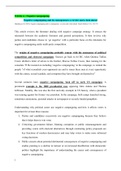
Negative campaigning and its consequences: a review and a look ahead
Haselmayer, M. (2019). Negative campaigning and its consequences: a review and a look ahead. French Politics,17(3), 355-372.
This article reviews the literature dealing with negative campaign strategy. It stresses the
mismatch between the academic literature and general perceptions. It then reviews why
parties and candidates choose to ‘go negative’ with a particular focus on the rationales for
negative campaigning under multi-party competition.
The origins of negative campaigning probably concur with the emergence of political
competition and electoral campaigns. Sources go back to 64 BC, when Quintus Tullius
Cicero drafted a letter of advice to his brother, Marcus Tullius Cicero, then running for the
consulate He insisted on including ‘negative campaigning’ in the campaign, to remind the
people “of what scoundrels your opponents are and to smear these men at every opportunity
with the crimes, sexual scandals, and corruption they have brought on themselves”
Several centuries later, negative campaigning ‘took off’ in early US campaigns. A
prominent example is the 1800 presidential race opposing John Adams and Thomas
Jefferson. Notably, this was also the first and only example in US history, when a president
was running against his former vice president. In the campaign, both camps launched strong,
sometimes anonymous, personal attacks in newspapers or secretly funded pamphlets
Understanding why political actors use negative campaigning and how it affects voters is
important for at least three reasons:
1. Parties and candidates excessively use negative campaigning because they believe
that it helps them to win votes
2. Criticizing government failure, blaming corruption or public mismanagement and
providing voters with electoral alternatives through contrasting policy proposals are
key functions of modern democracies and may help voters to make more informed
voting decisions
3. Public concern about potential detrimental consequences of negative campaigning and
studies pointing to a decline in turnout or an increased disaffection with democratic
politics highlight the importance of understanding the causes and consequences of
negative campaigning
1
, Defining negative campaigning
The majority of studies on negative campaigning define it as ‘attacking’ an opponent. Geer
(2006) argues that his definition of negative campaigning is too simple and straightforward:
negativity is any criticism levelled by one candidate against another during a campaign.
Thus, any type of criticism counts as negativity
Party incentives to “go negative”
Rational parties will ‘go negative’ if the presumed benefits outweigh its potential costs
that is, they will attack if they expect the damage done to the target to be greater than the risk
of alienating (potential) voters
The risk stems from potential backlash or boomerang effects
A more general explanation for the use of negative campaigning comes from cognitive
psychology and the ‘negativity bias’ individuals pay more attention to and give more
weight to negative information, compared to positive one (Soroka 2014; Baumeister et al.
2001; Rozin and Royzman 2001)
Hence, negative campaigning is a promising strategy to raise awareness and gain
publicity
Communication research attests that the presence of negativity or conflict increases the
‘newsworthiness’ of stories and events with journalists reporting more on negative
news
The effects of negative political campaigns: A meta-analytic reassessment
Lau, R. R., Sigelman, L., & Rovner, I. B. (2007). The effects of negative political campaigns: A meta-analytic reassessment. The Journal of
Politics, 69(4), 1176-1209.
The conventional wisdom about negative political campaigning holds that it works, i.e., it has
the consequences its practitioners intend. Many observers also say that negative campaigning
has unintended but detrimental effects on the political system itself.
The overall message of research literature concerning memorability is that negative ads and
campaigns are somewhat easier to remember comparable positive ads and campaigns. Some
of the studies included in the present analysis have reported moderately large increases in
campaign interest when negative campaigning was adopted. Also, other studies have reported
2
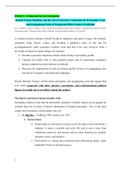
Negative campaigning and its consequences: a review and a look ahead
Haselmayer, M. (2019). Negative campaigning and its consequences: a review and a look ahead. French Politics,17(3), 355-372.
This article reviews the literature dealing with negative campaign strategy. It stresses the
mismatch between the academic literature and general perceptions. It then reviews why
parties and candidates choose to ‘go negative’ with a particular focus on the rationales for
negative campaigning under multi-party competition.
The origins of negative campaigning probably concur with the emergence of political
competition and electoral campaigns. Sources go back to 64 BC, when Quintus Tullius
Cicero drafted a letter of advice to his brother, Marcus Tullius Cicero, then running for the
consulate He insisted on including ‘negative campaigning’ in the campaign, to remind the
people “of what scoundrels your opponents are and to smear these men at every opportunity
with the crimes, sexual scandals, and corruption they have brought on themselves”
Several centuries later, negative campaigning ‘took off’ in early US campaigns. A
prominent example is the 1800 presidential race opposing John Adams and Thomas
Jefferson. Notably, this was also the first and only example in US history, when a president
was running against his former vice president. In the campaign, both camps launched strong,
sometimes anonymous, personal attacks in newspapers or secretly funded pamphlets
Understanding why political actors use negative campaigning and how it affects voters is
important for at least three reasons:
1. Parties and candidates excessively use negative campaigning because they believe
that it helps them to win votes
2. Criticizing government failure, blaming corruption or public mismanagement and
providing voters with electoral alternatives through contrasting policy proposals are
key functions of modern democracies and may help voters to make more informed
voting decisions
3. Public concern about potential detrimental consequences of negative campaigning and
studies pointing to a decline in turnout or an increased disaffection with democratic
politics highlight the importance of understanding the causes and consequences of
negative campaigning
1
, Defining negative campaigning
The majority of studies on negative campaigning define it as ‘attacking’ an opponent. Geer
(2006) argues that his definition of negative campaigning is too simple and straightforward:
negativity is any criticism levelled by one candidate against another during a campaign.
Thus, any type of criticism counts as negativity
Party incentives to “go negative”
Rational parties will ‘go negative’ if the presumed benefits outweigh its potential costs
that is, they will attack if they expect the damage done to the target to be greater than the risk
of alienating (potential) voters
The risk stems from potential backlash or boomerang effects
A more general explanation for the use of negative campaigning comes from cognitive
psychology and the ‘negativity bias’ individuals pay more attention to and give more
weight to negative information, compared to positive one (Soroka 2014; Baumeister et al.
2001; Rozin and Royzman 2001)
Hence, negative campaigning is a promising strategy to raise awareness and gain
publicity
Communication research attests that the presence of negativity or conflict increases the
‘newsworthiness’ of stories and events with journalists reporting more on negative
news
The effects of negative political campaigns: A meta-analytic reassessment
Lau, R. R., Sigelman, L., & Rovner, I. B. (2007). The effects of negative political campaigns: A meta-analytic reassessment. The Journal of
Politics, 69(4), 1176-1209.
The conventional wisdom about negative political campaigning holds that it works, i.e., it has
the consequences its practitioners intend. Many observers also say that negative campaigning
has unintended but detrimental effects on the political system itself.
The overall message of research literature concerning memorability is that negative ads and
campaigns are somewhat easier to remember comparable positive ads and campaigns. Some
of the studies included in the present analysis have reported moderately large increases in
campaign interest when negative campaigning was adopted. Also, other studies have reported
2