

Simple tenses
When we are talking about a point in time
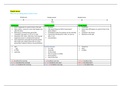
Simple past Simple present Simple Future
Now
Simple past Simple present Simple future
Action happened at a point in time in the past Routines Predictions
Main actions / events in a story that happen one Talk about things we think of permanent Action that will happen at a point in time in the
after the other States (feiten) future
Referring to a finished time period like Timetabled events (bv wanneer de bus vertrekt) Certainty in the future
‘yesterday, last week, at 5.30, on 11 may’ Future time introduced by ‘when, as soon as, Decisions on the spot
Questions with ‘when, what time, how long ago’. after, if, etc’
(expected answer is a finished time period) charasteristics
Time expressions used with the present perfect
(this week, just, today) if they refer to a time
period that is about to finish or has just finished
Last … Common phrases : Tomorrow
… ago As a rule Next…
In 1990 Generally In 2040…
yesterday On the whole
Once (a week/ in a while)
Every (winter)
Most of the time
I ate breakfast this morning I eat breakfast every day I will eat breakfast later.
Did I eat breakfast this morning? Do I eat breakfast every day? Will I eat breakfast later?
I didn’t eat breakfast this morning. I don’t eat breakfast every day. I won’t eat breakfast later.
When we are talking about a point in time
Simple past Simple present Simple Future
Now
Simple past Simple present Simple future
Action happened at a point in time in the past Routines Predictions
Main actions / events in a story that happen one Talk about things we think of permanent Action that will happen at a point in time in the
after the other States (feiten) future
Referring to a finished time period like Timetabled events (bv wanneer de bus vertrekt) Certainty in the future
‘yesterday, last week, at 5.30, on 11 may’ Future time introduced by ‘when, as soon as, Decisions on the spot
Questions with ‘when, what time, how long ago’. after, if, etc’
(expected answer is a finished time period) charasteristics
Time expressions used with the present perfect
(this week, just, today) if they refer to a time
period that is about to finish or has just finished
Last … Common phrases : Tomorrow
… ago As a rule Next…
In 1990 Generally In 2040…
yesterday On the whole
Once (a week/ in a while)
Every (winter)
Most of the time
I ate breakfast this morning I eat breakfast every day I will eat breakfast later.
Did I eat breakfast this morning? Do I eat breakfast every day? Will I eat breakfast later?
I didn’t eat breakfast this morning. I don’t eat breakfast every day. I won’t eat breakfast later.


