1.1 General Organization of Cells
Overview
• Types of Cells
• General Organization of…
○ Bacteria
○ Eukaryotic Cells
• Sub-cellular agents
○ Viruses
○ Viroids
○ Prions
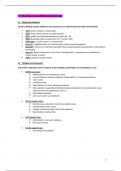
Out of all of these kingdoms, Monera is the only one that fall
the category of prokaryotes, the rest are considered eukaryo
Cellular Organization of Different Organisms?
• Living organisms can be divided into unicellular and
multicellular
○ However, the more precise classification PROKARYOTES EUKARYOT
considers their cellular organization:
prokaryotes and eukaryotes Small (<5 μm) Large (>10 μ
Always unicellular Typically mu
…so what´s the difference?
No nucleus; naked Has a nucle
loop called nucleoid DNA & histo
Small ribosomes Large riboso
• No presence of a nucleus, the genetic material is No membrane-bound Membrane-
instead a single circular chromosome, the organelles organelles
nucleoid (found in the cytoplasm).
No mitochondria Mitochondr
○ Unlike eukaryotes, the genetic material is
not associated to any histone proteins. Asexual Asexual/Sex
• These cells reproduce asexually and lack nuclei Reproduction Reproductio
and membrane-bound organelles. Division: binary Division: me
○ Tend to be quite adapted to their fission
environment because of the lack of these.
• Within prokaryotes there are 2 existing
domains…
○ Archaea (ie. Archaebacteria)
○ We don't care that much about
these as there's not that much
medical interest
○ Bacteria (ie. Eubacteria)
Overview
• Types of Cells
• General Organization of…
○ Bacteria
○ Eukaryotic Cells
• Sub-cellular agents
○ Viruses
○ Viroids
○ Prions
Out of all of these kingdoms, Monera is the only one that fall
the category of prokaryotes, the rest are considered eukaryo
Cellular Organization of Different Organisms?
• Living organisms can be divided into unicellular and
multicellular
○ However, the more precise classification PROKARYOTES EUKARYOT
considers their cellular organization:
prokaryotes and eukaryotes Small (<5 μm) Large (>10 μ
Always unicellular Typically mu
…so what´s the difference?
No nucleus; naked Has a nucle
loop called nucleoid DNA & histo
Small ribosomes Large riboso
• No presence of a nucleus, the genetic material is No membrane-bound Membrane-
instead a single circular chromosome, the organelles organelles
nucleoid (found in the cytoplasm).
No mitochondria Mitochondr
○ Unlike eukaryotes, the genetic material is
not associated to any histone proteins. Asexual Asexual/Sex
• These cells reproduce asexually and lack nuclei Reproduction Reproductio
and membrane-bound organelles. Division: binary Division: me
○ Tend to be quite adapted to their fission
environment because of the lack of these.
• Within prokaryotes there are 2 existing
domains…
○ Archaea (ie. Archaebacteria)
○ We don't care that much about
these as there's not that much
medical interest
○ Bacteria (ie. Eubacteria)