GNUR 293 - Exam 4 Study Guide.
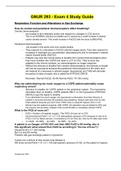
GNUR 293 - Exam 4 Study Guide/GNUR 293 - Exam 4 Study Guide. Respiratory Function and Alterations in Gas Exchange How do central and peripheral chemoreceptors affect breathing? Central chemoreceptors: - are located in the medullary center and respond to changes in CO2 and ph. - This is our NORMAL stimulus to breathe and is caused by a small increase in arterial carbon dioxide tension. This small increase in PaCO2 tells the body to BREATHE. Peripheral chemoreceptors: - are located in the aortic arch and carotid bodies. - They respond to a decrease in PaCO2 (arterial oxygen level). They also respond to increases in hydrogen ion concentration (decreased pH) and to increases in arterial carbon dioxide levels (PaCO2). - Patients may lose the normal sense to breathe from central chemoreceptors when they have condition like COPD and retain a LOT of CO2. They’re body has adapted to the chronic acidosis, so chemoreceptors no longer response. - Without the stimulus to breathe from central chemoreceptors, the stimulus to breath will now be hypoxemia because the peripheral chemoreceptors in the aortic arch will respond to a decrease in arterial oxygen (hypoxemia) and THIS will stimulate the person to take a breath; this is called the HYPOXIC DRIVE. Reminder: Normal PaCo2: 35-45/ Normal PaO2: 70-100 mmHg

Geschreven voor
- Instelling
- Loyola University Chicago
- Vak
- GNUR 293
Documentinformatie
- Geüpload op
- 26 mei 2021
- Aantal pagina's
- 29
- Geschreven in
- 2020/2021
- Type
- Tentamen (uitwerkingen)
- Bevat
- Vragen en antwoorden
Onderwerpen
-
gnur 293 exam 4 study guide

Ook beschikbaar in voordeelbundel