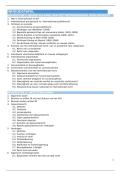
Alkanes
12.1 alkanes
12.1 Alkanes
- Single bonds, saturated hydrocarbons 12.2 fractional distillation of crude oil
- Least reactive organic compounds 12.3 industrial cracking
- Used as fuels and lubricants
- Main source is crude oil 12.4 combustion of alkanes
- General formula CnH2n+2 12.5 The formation of halogenoalkanes
- Can be branched, unbranched or have rings. Ring
alkanes have the general formula CnH2n, because
the end hydrogens are not required.
- Unbranched chains aren’t actually straight, they have a bond angle of 109.5o, the single bond that
holds them together is a sigma bond. These are formed by the overlap of orbitals along the axis of a
bond.
- The sigma bonds are weak and can easily be broken. This is why small hydrocarbon alkanes have very
low melting and boiling points.
- Due to the bonding in alkanes consisting solely of sigma bonds, the substituent groups attached to both
of the carbon atoms are able to twist around due to free rotation.
Physical properties:
- Polarity
o Alkanes are almost non-polar because the electronegativities of carbon and hydrogen are
similar.
o The only intermolecular forces between molecules are weak van de Waals.
- Boiling points
o Increasing chain length increases boiling points, shorter chains are gases at room temperature.
o Pentane is a liquid with a low boiling point (36oC).
o About 18 carbons become solids at room temperature, with a waxy feel.
o Branched chains have lower melting points because they cannot pack together as closely as
unbranched chains so van de Waals forces are not as effective.
- Solubility
o Alkanes insoluble in water because the hydrogen bonds in water are much stronger than the
van de Waals between alkane molecules.
o Alkanes do mix with other relatively non-polar liquids.
- Reactions
o Relatively unreactive
o Strong carbon-carbon and carbon-hydrogen bonds.
o Do not react with acids, bases, oxidising agents and reducing agents.
o Do burn
o React with halogens under suitable conditions.
o Burn in a plentiful supply of oxygen to form carbon dioxide and water (or in a restricted supply
of oxygen to form CO or carbon).
12.2 Fractional Distillation of Crude Oil
- Crude oil is a mixture of mostly alkanes, both branched and unbranched. Crude oils from different
sources have different compositions.
- Crude oil contains small amounts of other compounds dissolved in it. These are from the original plants
and animals the oil was formed from.
- Crude oil is separated into useful products by fractional distillation.
1. The crude oil is heated in a furnace.
2. A mixture of liquid and vapour passes into a tower that is cooler at the top than at the bottom.
, 3. The vapours pass up the tower via a series of trays containing bubble caps until they arrive at a
tray that is cool enough, where they condense to liquid.
4. The mixture of liquids that condenses on each tray is piped off. The shorter chain hydrocarbons
condense in the trays nearer to the top of the tower, where it is cooler, because they have lower
boiling points.
5. The thick tar that collects at the base is called tar or bitumen. It can be used for road surfacing
but are often further processed to give more valuable products.
Fracking:
- Almost ½ of the UK’s electricity is from natural gas. Some of this comes from the North Sea but this
is depleting.
- Many areas of the UK have natural gas resources trapped within shale rock. This gas can be extracted
by drilling into the shale and forcing pressurised water mixed with sand into the shale. This causes the
rock to break up releasing the trapped gas which flows to the surface.
- Chemicals such as hydrochloric acid are added to the water to help break up the shale.
- Many people are opposed to fracking:
o They do not like the infrastructure of wells
o There are concerns about the amount of water used.
o They worry about the chemical additives polluting water supplies.
o Occasionally fracking appears to have caused small earthquakes.
o Burning natural gas produces carbon dioxide which is a cause of global warming.
12.3 Industrial Cracking
- The shorter chain hydrocarbon from crude oil is more economically more valuable than longer chain
molecules.
- To meet the demands for shorter chain hydrocarbons, many of the longer chains are cracked into
smaller molecules.
o E.g., C10H22 à C7H16 + C3H6
- Cracking has useful results.
o Increases the amount of gasoline and other economically important fractions.
o Increases branches in chairs, an important factor for petrol.
o It produces alkenes, an important feedstock for chemicals.
- There are 2 types of cracking, thermal and catalytic.
Thermal cracking:
- Heating alkanes up to high temperature 900oC and high pressure 70 atm.
- Carbon-carbon bonds break so that one electron from each pair in the covalent bond goes to each
carbon atom.
- Two shorter chains are produced, each ending in a carbon atom with an unpaired electron, these are
called free radicals.
- Free radicals are highly reactive intermediates and react in different ways to form shorter chain
molecules.
- As there are not enough hydrogen atoms to produce two alkanes, one of the new chains has a C=C,
and so is an alkene.
Catalytic cracking:
- At 450oC and 1-2 atm pressure, using a zeolite catalyst.
- Zeolites have a honeycomb structure giving them a large surface area, they are also acidic.
- This form of cracking is mainly used to produce motor fuels.
- The products are mostly branched alkanes, cycloalkanes and aromatic compounds.
Advantages of catalytic cracking:
- Produces a higher proportion of branched alkanes, which burn more easily than straight chains and so
are an important component in petrol.
12.1 alkanes
12.1 Alkanes
- Single bonds, saturated hydrocarbons 12.2 fractional distillation of crude oil
- Least reactive organic compounds 12.3 industrial cracking
- Used as fuels and lubricants
- Main source is crude oil 12.4 combustion of alkanes
- General formula CnH2n+2 12.5 The formation of halogenoalkanes
- Can be branched, unbranched or have rings. Ring
alkanes have the general formula CnH2n, because
the end hydrogens are not required.
- Unbranched chains aren’t actually straight, they have a bond angle of 109.5o, the single bond that
holds them together is a sigma bond. These are formed by the overlap of orbitals along the axis of a
bond.
- The sigma bonds are weak and can easily be broken. This is why small hydrocarbon alkanes have very
low melting and boiling points.
- Due to the bonding in alkanes consisting solely of sigma bonds, the substituent groups attached to both
of the carbon atoms are able to twist around due to free rotation.
Physical properties:
- Polarity
o Alkanes are almost non-polar because the electronegativities of carbon and hydrogen are
similar.
o The only intermolecular forces between molecules are weak van de Waals.
- Boiling points
o Increasing chain length increases boiling points, shorter chains are gases at room temperature.
o Pentane is a liquid with a low boiling point (36oC).
o About 18 carbons become solids at room temperature, with a waxy feel.
o Branched chains have lower melting points because they cannot pack together as closely as
unbranched chains so van de Waals forces are not as effective.
- Solubility
o Alkanes insoluble in water because the hydrogen bonds in water are much stronger than the
van de Waals between alkane molecules.
o Alkanes do mix with other relatively non-polar liquids.
- Reactions
o Relatively unreactive
o Strong carbon-carbon and carbon-hydrogen bonds.
o Do not react with acids, bases, oxidising agents and reducing agents.
o Do burn
o React with halogens under suitable conditions.
o Burn in a plentiful supply of oxygen to form carbon dioxide and water (or in a restricted supply
of oxygen to form CO or carbon).
12.2 Fractional Distillation of Crude Oil
- Crude oil is a mixture of mostly alkanes, both branched and unbranched. Crude oils from different
sources have different compositions.
- Crude oil contains small amounts of other compounds dissolved in it. These are from the original plants
and animals the oil was formed from.
- Crude oil is separated into useful products by fractional distillation.
1. The crude oil is heated in a furnace.
2. A mixture of liquid and vapour passes into a tower that is cooler at the top than at the bottom.
, 3. The vapours pass up the tower via a series of trays containing bubble caps until they arrive at a
tray that is cool enough, where they condense to liquid.
4. The mixture of liquids that condenses on each tray is piped off. The shorter chain hydrocarbons
condense in the trays nearer to the top of the tower, where it is cooler, because they have lower
boiling points.
5. The thick tar that collects at the base is called tar or bitumen. It can be used for road surfacing
but are often further processed to give more valuable products.
Fracking:
- Almost ½ of the UK’s electricity is from natural gas. Some of this comes from the North Sea but this
is depleting.
- Many areas of the UK have natural gas resources trapped within shale rock. This gas can be extracted
by drilling into the shale and forcing pressurised water mixed with sand into the shale. This causes the
rock to break up releasing the trapped gas which flows to the surface.
- Chemicals such as hydrochloric acid are added to the water to help break up the shale.
- Many people are opposed to fracking:
o They do not like the infrastructure of wells
o There are concerns about the amount of water used.
o They worry about the chemical additives polluting water supplies.
o Occasionally fracking appears to have caused small earthquakes.
o Burning natural gas produces carbon dioxide which is a cause of global warming.
12.3 Industrial Cracking
- The shorter chain hydrocarbon from crude oil is more economically more valuable than longer chain
molecules.
- To meet the demands for shorter chain hydrocarbons, many of the longer chains are cracked into
smaller molecules.
o E.g., C10H22 à C7H16 + C3H6
- Cracking has useful results.
o Increases the amount of gasoline and other economically important fractions.
o Increases branches in chairs, an important factor for petrol.
o It produces alkenes, an important feedstock for chemicals.
- There are 2 types of cracking, thermal and catalytic.
Thermal cracking:
- Heating alkanes up to high temperature 900oC and high pressure 70 atm.
- Carbon-carbon bonds break so that one electron from each pair in the covalent bond goes to each
carbon atom.
- Two shorter chains are produced, each ending in a carbon atom with an unpaired electron, these are
called free radicals.
- Free radicals are highly reactive intermediates and react in different ways to form shorter chain
molecules.
- As there are not enough hydrogen atoms to produce two alkanes, one of the new chains has a C=C,
and so is an alkene.
Catalytic cracking:
- At 450oC and 1-2 atm pressure, using a zeolite catalyst.
- Zeolites have a honeycomb structure giving them a large surface area, they are also acidic.
- This form of cracking is mainly used to produce motor fuels.
- The products are mostly branched alkanes, cycloalkanes and aromatic compounds.
Advantages of catalytic cracking:
- Produces a higher proportion of branched alkanes, which burn more easily than straight chains and so
are an important component in petrol.