FIN 365
Week 5 Homework
Chapter 13
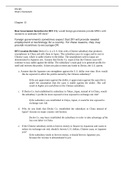
Host Government Incentives for DFI Why would foreign governments provide MNCs with
incentives to undertake DFI there?
Foreign governments sometimes expect that DFI will provide needed
employment or technology for a country. For these reasons, they may
provide incentives to encourage DFI.
DFI Location Decision Decko Co. is a U.S. firm with a Chinese subsidiary that produces
smartphones in China and sells them in Japan. This subsidiary pays its wages and its rent in
Chinese yuan, which is stable relative to the dollar. The smartphones sold to Japan are
denominated in Japanese yen. Assume that Decko Co. expects that the Chinese yuan will
continue to stay stable against the dollar. The subsidiary’s main goal is to generate profits for
itself and reinvest the profits. It does not plan to remit any funds to Decko, the U.S. parent.
a. Assume that the Japanese yen strengthens against the U.S. dollar over time. How would
this be expected to affect the profits earned by the Chinese subsidiary?
If the yen appreciates against the dollar, it appreciates against the yuan this is
under the assumption that the yuan is stable against the dollar. This will
result in higher yen cash flows to the Chinese subsidiary.
c. If Decko Co. had established its subsidiary in Tokyo, Japan, instead of in China, would
the subsidiary’s profits be more exposed or less exposed to exchange rate risk?
If the subsidiary was established in Tokyo, Japan, it would be less exposed to
exchange rate risk.
d. Why do you think that Decko Co. established the subsidiary in China instead of
Japan? Assume no major country risk barriers.
Decko Co. may have established the subsidiary in order to take advantage of the
low-cost labor in China.
e. If the Chinese subsidiary needs to borrow money to finance its expansion and wants to
reduce its exchange rate risk, should it borrow U.S. dollars, Chinese yuan, or Japanese
yen?
If the subsidiary needs to borrow money, it should borrow Japanese yen,
because the revenue is denominated in yen.
Week 5 Homework
Chapter 13
Host Government Incentives for DFI Why would foreign governments provide MNCs with
incentives to undertake DFI there?
Foreign governments sometimes expect that DFI will provide needed
employment or technology for a country. For these reasons, they may
provide incentives to encourage DFI.
DFI Location Decision Decko Co. is a U.S. firm with a Chinese subsidiary that produces
smartphones in China and sells them in Japan. This subsidiary pays its wages and its rent in
Chinese yuan, which is stable relative to the dollar. The smartphones sold to Japan are
denominated in Japanese yen. Assume that Decko Co. expects that the Chinese yuan will
continue to stay stable against the dollar. The subsidiary’s main goal is to generate profits for
itself and reinvest the profits. It does not plan to remit any funds to Decko, the U.S. parent.
a. Assume that the Japanese yen strengthens against the U.S. dollar over time. How would
this be expected to affect the profits earned by the Chinese subsidiary?
If the yen appreciates against the dollar, it appreciates against the yuan this is
under the assumption that the yuan is stable against the dollar. This will
result in higher yen cash flows to the Chinese subsidiary.
c. If Decko Co. had established its subsidiary in Tokyo, Japan, instead of in China, would
the subsidiary’s profits be more exposed or less exposed to exchange rate risk?
If the subsidiary was established in Tokyo, Japan, it would be less exposed to
exchange rate risk.
d. Why do you think that Decko Co. established the subsidiary in China instead of
Japan? Assume no major country risk barriers.
Decko Co. may have established the subsidiary in order to take advantage of the
low-cost labor in China.
e. If the Chinese subsidiary needs to borrow money to finance its expansion and wants to
reduce its exchange rate risk, should it borrow U.S. dollars, Chinese yuan, or Japanese
yen?
If the subsidiary needs to borrow money, it should borrow Japanese yen,
because the revenue is denominated in yen.