PATHO 370 Study Guide all about WEEK 2 TOPICS (CH. 9, 10, 11, 13, 14) complete docs
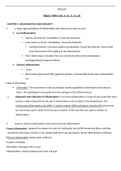
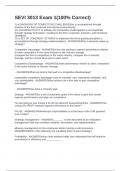
PATHO 370 Study Guide all about WEEK 2 TOPICS (CH. 9, 10, 11, 13, 14) complete docs WEEK 2 TOPICS (CH. 9, 10, 11, 13, 14) CHAPTER 9: INFLAMMATION AND IMMUNITY 1. 4 major signs/symptoms of inflammation and what causes each to occur Local Inflammation ▪ Redness (Erythema)- Vasodilation. Caused by histamine ▪ Heat (warm to touch)- Vasodilation. Caused by histamine ▪ Swelling (edema)- Increased capillary permeability. Caused by histamine. Excess fluid stop from bacteria from getting to the blood stream ▪ Pain- where injury is located. Pain can come from other chemical mediators (prostaglandins) Naproxen blocks Systemic inflammation ▪ Fever ▪ Blood valuesIncreased CRP C-Reactive Protein, Increased ESR Erythrocyte sedimentation rat 2. Role of chemotaxis Chemotaxis- The movement of cells according to chemical gradients (chemotaxins) that attracts them. The signaling for neutrophils and macrophages to the inflamed tissue. 3. Diagnostic tests indicative of inflammation: If you have inflammation in a part of your body then extra protein is often released from the site of inflammation and circulates in the bloodstream. The erythrocyte sedimentation rate (ESR), C-reactive protein (CRP) and plasma viscosity (PV) blood tests are commonly used to detect this increase in protein. In this way they are used as markers of inflammation. 4. Acute vs chronic inflammation; end result of chronic inflammation Acute inflammation- supposed to prepare the area for healing but can be life threatening (fever, swelling around the brain lung or heart). It can resolve itself but it can also lead to chronic inflammation or fibrosis. Chronic inflammation always leads to fibrosis 3 types of healing ▪ Resolution- damaged cells recover ▪ Regeneration- mitosis produces the same cell type ▪ Fibrosis (does not undergo mitosis)- scar tissue. It is a place holder (Does not maintain function) BAD. Can possibly lead to Necrosis. 5. Functions of all types of WBCs: Neutrophils- First to appear after injury, phagocytosis 60-80% Lymphocytes- Immune response 20-30% Monocytes- phagocytosis 3-8% Eosinophils- Allergic reactions, parasite infection 1-6% Basophils- Contain histamine, mediate type I allergic reactions, initiate inflammation 0-2% CHAPTER 10: ALTERATIONS IN IMMUNE FUNCTION 1. Autoimmunity: describe what is going wrong with the immune system and give examples a. Immune system attacks own tissues. The immune system recognizes its own cells as foreign. Etiology is poorly understood. Polygenic, multifactorial. 2. Define MHC and HLA, identify where they are located and give their function a. MHC- Major histocompatibility complex found on chromosome 6p21. Increase risk of autoimmune disorders. b. HLA- Human Leukocytic antigens (only found on leukocytes, does the same thing as the MHC) 3. Define autoantibodies and antinuclear antibodies (ANAs), and indicate what they each attack a. Autoantibody- an antibody produced by an organism in response to a constituent of its own tissues. Attack your own tissues. b. Antinuclear antibodies (ANAs)- The test is used as a primary test to help evaluate a person for autoimmune disorders that affect many tissues and organs throughout the body (systemic) and is most often used as one of the tests to help diagnose systemic lupus erythematosus (SLE). 4. Gender more frequently affected; triggers for onset of autoimmunity; general treatment options a. Females are at a high risk for autoimmunity. b. Environmental Triggers- chronic or multiple viral or bacterial infections. Environmental and/or occupational stress, especially I genetically susceptible individuals. c. Treatment- Individualized immunosuppressive therapy. Corticosteroids and cytotoxins. Tumor necrosis factor inhibitors and immunomodulators, therapeutic plasmapheresis. 5. Hypersensitivity: describe what is going wrong with the immune system in hypersensitivities a. Normal immune response that is inappropriately trigged, produces undesirable effects. b. Specific antigen-antibody reaction or specific antigen-lymphocyte interaction. c. Usually does not occur on the first exposure. 6. Type I: describe hypersensitivity problem, examples/causes, function/role of histamine, clinical manifestations, anaphylactic shock. a. Increased IgE, Often inherited; can change over time, usually idiopathic. S&S: target area red, swollen, vesicles/blisters, pruritic. b. Examples: hay fever, food allergies, eczema, asthma c. Anaphylaxis example: insect sting, drug and food allergies. d. Histamine: increases capillary permeability. Most important mediator. i. Increased vascular permeability ii. Vasodilation iii. Urticaria iv. Smooth Muscle Constriction v. Increased Mucus Secretion vi. Pruritus e. Clinical Manifestations- Mild: Hives, seasonal Allergic Rhinitis, Eczema. More problematic symptoms: Throat constriction, Localized Edema, Wheezing, Tachycardia.

Geschreven voor
- Instelling
- West Coast University
- Vak
- PATHO 370 (PATHO370)
Documentinformatie
- Geüpload op
- 3 mei 2021
- Aantal pagina's
- 15
- Geschreven in
- 2020/2021
- Type
- Tentamen (uitwerkingen)
- Bevat
- Vragen en antwoorden
Onderwerpen
-
patho 370
-
4 major signssymptoms of inflammation and what causes each to occur
-
chapter 9 inflammation and immunity
-
chapter 10 alterations in immune function
-
chapter 11 malignant disorders of white

Ook beschikbaar in voordeelbundel