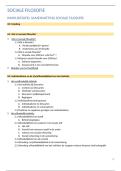
, CHAPTER LIST
PART I: Foundations of Pediatric Physical Therapy
Chapter 1: Typical Development
Chapter 2: Pediatric Assessment Tools
Chapter 3: Family-Centered Care
PART II: Examination and Intervention along the Pediatric Continuum of Care
Chapter 4: Physical Therapy in the Neonatal Intensive Care Unit
Chapter 5: Physical Therapy in the Medical Setting (Acute Care, Inpatient and Outpatient Rehabilitation)
Chapter 6: Physical Therapy in the Educational Setting: From Early Intervention to School Age
Chapter 7: Adaptive Equipment
Chapter 8: Orthotics and Prosthetics
PART III: Pediatric Neuromuscular Disorders
Chapter 9: Cerebral Palsy
Chapter 10: Spina Bifida
Chapter 11: Traumatic Brain Injury
Chapter 12: Spinal Cord Injury
Chapter 13: Muscular Dystrophy
Chapter 14: Pain and Regional Pain Disorders
PART IV: Pediatric Musculoskeletal Disorders
Chapter 15: Orthopedic Conditions
Chapter 16: Sports Injuries
Chapter 17: Juvenile Idiopathic Arthritis and Other Rheumatic Disorders
PART V: Pediatric Cardiovascular and Pulmonary Disorders
Chapter 18: Cardiac Conditions
Chapter 19: Pulmonary and Respiratory Conditions
Chapter 20: Fitness and Prevention
PART VI: Other Medical/Surgical Disorders
Chapter 21: Oncologic Disorders
Chapter 22: Burn Injuries
Chapter 23: Autism Spectrum Disorders
Chapter 24: Down Syndrome and Intellectual Disorders
PART VII: Considerations in the Provision of Pediatric Physical Therapy Services
Chapter 25: Transitioning to Adulthood
,Chapter 1: Typical Development
Context: Examines normal motor, sensory, cognitive, and social development
from infancy through adolescence, including developmental milestones and
variability in developmental trajectories.
Core Purpose: Provides the baseline for distinguishing typical vs delayed or
atypical movement, which is essential for diagnosis, prognosis, and
intervention planning.
Question type :
Milestone-timing scenarios
Developmental sequence reasoning
Typical vs delayed clinical vignettes
Primitive reflex integration questions
Q1.
A 5-month-old infant is brought to a pediatric PT clinic. The caregiver reports
the child rolls from prone to supine but cannot roll supine to prone and
requires support to sit. Physical examination shows good head control and
weight bearing through forearms in prone.
Which interpretation is MOST appropriate?
A. Development is delayed because independent sitting should be present by 5
months
B. Development is typical for age
C. Development is delayed because rolling both directions should be present by
4 months
D. Development is atypical because forearm weight bearing should not occur
until 7 months
Answer: B
Rationale:
At 5 months, rolling prone→supine is common, while rolling supine→prone
often emerges around 5–6 months. Independent sitting typically develops closer
to 6–8 months. Forearm weight bearing in prone is expected by 3–4 months
and supports later mobility. Therefore, this presentation reflects typical
variability in milestone timing.
, A is wrong: Independent sitting is not expected yet; requiring support at
5 months is normal.
C is wrong: Rolling both directions by 4 months is earlier than typical
expectations.
D is wrong: Forearm weight bearing is an earlier milestone, not a late
one.
Key words: 5-month infant, rolling sequence, sitting support, milestone
variability, prone weight bearing
Q2.
A 10-month-old infant can sit independently, transition in and out of sitting,
and crawl reciprocally but does not yet pull to stand. The caregiver is
concerned about delay.
What is the BEST clinical response?
A. Refer immediately for orthopedic evaluation
B. Reassure caregiver that development may still be within typical limits
C. Initiate strengthening to accelerate standing
D. Diagnose gross motor delay
Answer: B
Rationale:
Pulling to stand typically emerges around 9–11 months. A 10-month-old
crawling and transitioning independently is functioning within the expected
developmental sequence. Variation of several weeks or months is common.
A is wrong: No red flags or asymmetries justify referral.
C is wrong: Development follows neuromotor readiness; strengthening
alone does not accelerate milestone acquisition.
D is wrong: There is no functional lag outside normal variability.
Key words: milestone variability, crawling infant, pull to stand timing,
caregiver reassurance
Q3.
,A 14-month-old toddler stands independently and cruises along furniture but
has not yet taken independent steps.
Which conclusion is MOST accurate?
A. This represents delayed walking
B. This is within normal developmental limits
C. Walking should occur by 10 months
D. Cruising is atypical after 12 months
Answer: B
Rationale:
Independent walking typically emerges between 9–15 months. Cruising and
standing independently at 14 months are appropriate precursors, indicating
the child is on a typical trajectory.
A is wrong: Walking delay is generally considered after 18 months.
C is wrong: Walking by 10 months is early but not expected for all
children.
D is wrong: Cruising remains appropriate until independent gait
develops.
Key words: toddler walking age, cruising, variability, gait onset
Q4.
A 4-month-old infant exhibits persistent head lag during pull-to-sit testing.
What is the MOST appropriate interpretation?
A. Typical finding at this age
B. Possible motor delay requiring further monitoring
C. Indicative of visual impairment
D. Sign of primitive reflex integration
Answer: B
Rationale:
Head control should be largely established by 4 months. Persistent head lag
may indicate delayed development or hypotonia and should be monitored.
A is wrong: Head lag is typical at 1–2 months, not 4 months.
, C is wrong: Head lag reflects motor control, not primarily vision.
D is wrong: Head lag is not a primitive reflex but a postural control
milestone.
Key words: head control, pull-to-sit, motor delay screening
Q5.
A 7-month-old infant demonstrates pivoting in prone and beginning belly
crawling but cannot yet sit independently.
Which developmental principle BEST explains this pattern?
A. Development progresses strictly from proximal to distal
B. Development may vary in sequence but still be typical
C. Sitting must precede all forms of mobility
D. Crawling requires independent standing first
Answer: B
Rationale:
Developmental sequences can vary. Some infants develop prone mobility before
stable sitting. Variation does not necessarily indicate delay if functional
progress continues.
A is wrong: Proximal-distal progression exists but does not dictate strict
milestone order.
C is wrong: Sitting does not universally precede crawling attempts.
D is wrong: Crawling occurs long before standing.
Key words: developmental variability, prone mobility, sitting sequence
Q6.
A 6-month-old infant demonstrates persistent asymmetric tonic neck reflex
(ATNR) interfering with reaching in supine.
What functional consequence is MOST likely?
A. Difficulty bringing hands to midline
B. Delay in speech development
,C. Reduced visual tracking
D. Impaired swallowing
Answer: A
Rationale:
Persistent ATNR limits midline control and bilateral hand use, affecting
reaching and early play skills. Integration of ATNR supports symmetrical
movement and object manipulation.
B is wrong: Speech is not directly affected by ATNR persistence.
C is wrong: Visual tracking is not the primary limitation.
D is wrong: Swallowing is unrelated to ATNR persistence.
Key words: ATNR persistence, midline control, reaching
Q7.
A preschooler (4 years) frequently falls while running but demonstrates normal
walking and stair climbing.
Which interpretation is MOST appropriate?
A. Normal variation in motor development
B. Significant motor delay
C. Vestibular disorder
D. Muscular dystrophy
Answer: A
Rationale:
Running coordination continues to refine through early childhood. Occasional
falls without other deficits may be typical.
B is wrong: No significant functional limitations exist.
C is wrong: No signs of balance dysfunction in walking or stairs.
D is wrong: No progressive weakness or functional decline noted.
Key words: preschool coordination, running variability
Q8.
,A 9-month-old infant can sit independently but does not transition into sitting.
Which skill is MOST likely to emerge next?
A. Independent walking
B. Pull to stand
C. Sitting transitions
D. Jumping
Answer: C
Rationale:
Development typically progresses from static sitting to dynamic sitting
transitions before higher-level upright mobility.
A is wrong: Walking requires multiple preceding skills.
B is wrong: Pulling to stand may occur but transitions usually precede
it.
D is wrong: Jumping occurs years later.
Key words: sitting transitions, developmental sequence
Q9.
A 3-month-old infant shows no attempt to lift the head in prone.
What is the BEST clinical decision?
A. Immediate diagnosis of cerebral palsy
B. Provide caregiver education and monitor closely
C. Ignore because prone skills are not important
D. Begin gait training
Answer: B
Rationale:
Lack of prone head lifting at 3 months is concerning but not diagnostic;
caregiver education and monitoring are appropriate first steps.
A is wrong: Diagnosis requires broader evaluation.
C is wrong: Prone skills are foundational for development.
D is wrong: Gait training is inappropriate developmentally.
, Key words: tummy time, early motor delay, caregiver education
Q10.
A 12-month-old uses a pincer grasp and transfers objects but does not yet
scribble.
What is the MOST appropriate interpretation?
A. Fine motor delay
B. Typical development
C. Visual impairment
D. Neuromuscular disorder
Answer: B
Rationale:
Scribbling often emerges closer to 15–18 months. Pincer grasp at 12 months
indicates appropriate fine motor development.
A is wrong: Scribbling absence alone at 12 months is not delay.
C and D are wrong: No supporting signs.
Key words: fine motor milestones, pincer grasp
Q11.
A 2-month-old demonstrates strong palmar grasp reflex interfering with
voluntary grasp.
What is the BEST interpretation?
A. Typical finding
B. Abnormal persistence
C. Sign of cortical damage
D. Sensory deficit
Answer: A
Rationale:
Palmar grasp is expected in early infancy and integrates around 4–6 months.
PART I: Foundations of Pediatric Physical Therapy
Chapter 1: Typical Development
Chapter 2: Pediatric Assessment Tools
Chapter 3: Family-Centered Care
PART II: Examination and Intervention along the Pediatric Continuum of Care
Chapter 4: Physical Therapy in the Neonatal Intensive Care Unit
Chapter 5: Physical Therapy in the Medical Setting (Acute Care, Inpatient and Outpatient Rehabilitation)
Chapter 6: Physical Therapy in the Educational Setting: From Early Intervention to School Age
Chapter 7: Adaptive Equipment
Chapter 8: Orthotics and Prosthetics
PART III: Pediatric Neuromuscular Disorders
Chapter 9: Cerebral Palsy
Chapter 10: Spina Bifida
Chapter 11: Traumatic Brain Injury
Chapter 12: Spinal Cord Injury
Chapter 13: Muscular Dystrophy
Chapter 14: Pain and Regional Pain Disorders
PART IV: Pediatric Musculoskeletal Disorders
Chapter 15: Orthopedic Conditions
Chapter 16: Sports Injuries
Chapter 17: Juvenile Idiopathic Arthritis and Other Rheumatic Disorders
PART V: Pediatric Cardiovascular and Pulmonary Disorders
Chapter 18: Cardiac Conditions
Chapter 19: Pulmonary and Respiratory Conditions
Chapter 20: Fitness and Prevention
PART VI: Other Medical/Surgical Disorders
Chapter 21: Oncologic Disorders
Chapter 22: Burn Injuries
Chapter 23: Autism Spectrum Disorders
Chapter 24: Down Syndrome and Intellectual Disorders
PART VII: Considerations in the Provision of Pediatric Physical Therapy Services
Chapter 25: Transitioning to Adulthood
,Chapter 1: Typical Development
Context: Examines normal motor, sensory, cognitive, and social development
from infancy through adolescence, including developmental milestones and
variability in developmental trajectories.
Core Purpose: Provides the baseline for distinguishing typical vs delayed or
atypical movement, which is essential for diagnosis, prognosis, and
intervention planning.
Question type :
Milestone-timing scenarios
Developmental sequence reasoning
Typical vs delayed clinical vignettes
Primitive reflex integration questions
Q1.
A 5-month-old infant is brought to a pediatric PT clinic. The caregiver reports
the child rolls from prone to supine but cannot roll supine to prone and
requires support to sit. Physical examination shows good head control and
weight bearing through forearms in prone.
Which interpretation is MOST appropriate?
A. Development is delayed because independent sitting should be present by 5
months
B. Development is typical for age
C. Development is delayed because rolling both directions should be present by
4 months
D. Development is atypical because forearm weight bearing should not occur
until 7 months
Answer: B
Rationale:
At 5 months, rolling prone→supine is common, while rolling supine→prone
often emerges around 5–6 months. Independent sitting typically develops closer
to 6–8 months. Forearm weight bearing in prone is expected by 3–4 months
and supports later mobility. Therefore, this presentation reflects typical
variability in milestone timing.
, A is wrong: Independent sitting is not expected yet; requiring support at
5 months is normal.
C is wrong: Rolling both directions by 4 months is earlier than typical
expectations.
D is wrong: Forearm weight bearing is an earlier milestone, not a late
one.
Key words: 5-month infant, rolling sequence, sitting support, milestone
variability, prone weight bearing
Q2.
A 10-month-old infant can sit independently, transition in and out of sitting,
and crawl reciprocally but does not yet pull to stand. The caregiver is
concerned about delay.
What is the BEST clinical response?
A. Refer immediately for orthopedic evaluation
B. Reassure caregiver that development may still be within typical limits
C. Initiate strengthening to accelerate standing
D. Diagnose gross motor delay
Answer: B
Rationale:
Pulling to stand typically emerges around 9–11 months. A 10-month-old
crawling and transitioning independently is functioning within the expected
developmental sequence. Variation of several weeks or months is common.
A is wrong: No red flags or asymmetries justify referral.
C is wrong: Development follows neuromotor readiness; strengthening
alone does not accelerate milestone acquisition.
D is wrong: There is no functional lag outside normal variability.
Key words: milestone variability, crawling infant, pull to stand timing,
caregiver reassurance
Q3.
,A 14-month-old toddler stands independently and cruises along furniture but
has not yet taken independent steps.
Which conclusion is MOST accurate?
A. This represents delayed walking
B. This is within normal developmental limits
C. Walking should occur by 10 months
D. Cruising is atypical after 12 months
Answer: B
Rationale:
Independent walking typically emerges between 9–15 months. Cruising and
standing independently at 14 months are appropriate precursors, indicating
the child is on a typical trajectory.
A is wrong: Walking delay is generally considered after 18 months.
C is wrong: Walking by 10 months is early but not expected for all
children.
D is wrong: Cruising remains appropriate until independent gait
develops.
Key words: toddler walking age, cruising, variability, gait onset
Q4.
A 4-month-old infant exhibits persistent head lag during pull-to-sit testing.
What is the MOST appropriate interpretation?
A. Typical finding at this age
B. Possible motor delay requiring further monitoring
C. Indicative of visual impairment
D. Sign of primitive reflex integration
Answer: B
Rationale:
Head control should be largely established by 4 months. Persistent head lag
may indicate delayed development or hypotonia and should be monitored.
A is wrong: Head lag is typical at 1–2 months, not 4 months.
, C is wrong: Head lag reflects motor control, not primarily vision.
D is wrong: Head lag is not a primitive reflex but a postural control
milestone.
Key words: head control, pull-to-sit, motor delay screening
Q5.
A 7-month-old infant demonstrates pivoting in prone and beginning belly
crawling but cannot yet sit independently.
Which developmental principle BEST explains this pattern?
A. Development progresses strictly from proximal to distal
B. Development may vary in sequence but still be typical
C. Sitting must precede all forms of mobility
D. Crawling requires independent standing first
Answer: B
Rationale:
Developmental sequences can vary. Some infants develop prone mobility before
stable sitting. Variation does not necessarily indicate delay if functional
progress continues.
A is wrong: Proximal-distal progression exists but does not dictate strict
milestone order.
C is wrong: Sitting does not universally precede crawling attempts.
D is wrong: Crawling occurs long before standing.
Key words: developmental variability, prone mobility, sitting sequence
Q6.
A 6-month-old infant demonstrates persistent asymmetric tonic neck reflex
(ATNR) interfering with reaching in supine.
What functional consequence is MOST likely?
A. Difficulty bringing hands to midline
B. Delay in speech development
,C. Reduced visual tracking
D. Impaired swallowing
Answer: A
Rationale:
Persistent ATNR limits midline control and bilateral hand use, affecting
reaching and early play skills. Integration of ATNR supports symmetrical
movement and object manipulation.
B is wrong: Speech is not directly affected by ATNR persistence.
C is wrong: Visual tracking is not the primary limitation.
D is wrong: Swallowing is unrelated to ATNR persistence.
Key words: ATNR persistence, midline control, reaching
Q7.
A preschooler (4 years) frequently falls while running but demonstrates normal
walking and stair climbing.
Which interpretation is MOST appropriate?
A. Normal variation in motor development
B. Significant motor delay
C. Vestibular disorder
D. Muscular dystrophy
Answer: A
Rationale:
Running coordination continues to refine through early childhood. Occasional
falls without other deficits may be typical.
B is wrong: No significant functional limitations exist.
C is wrong: No signs of balance dysfunction in walking or stairs.
D is wrong: No progressive weakness or functional decline noted.
Key words: preschool coordination, running variability
Q8.
,A 9-month-old infant can sit independently but does not transition into sitting.
Which skill is MOST likely to emerge next?
A. Independent walking
B. Pull to stand
C. Sitting transitions
D. Jumping
Answer: C
Rationale:
Development typically progresses from static sitting to dynamic sitting
transitions before higher-level upright mobility.
A is wrong: Walking requires multiple preceding skills.
B is wrong: Pulling to stand may occur but transitions usually precede
it.
D is wrong: Jumping occurs years later.
Key words: sitting transitions, developmental sequence
Q9.
A 3-month-old infant shows no attempt to lift the head in prone.
What is the BEST clinical decision?
A. Immediate diagnosis of cerebral palsy
B. Provide caregiver education and monitor closely
C. Ignore because prone skills are not important
D. Begin gait training
Answer: B
Rationale:
Lack of prone head lifting at 3 months is concerning but not diagnostic;
caregiver education and monitoring are appropriate first steps.
A is wrong: Diagnosis requires broader evaluation.
C is wrong: Prone skills are foundational for development.
D is wrong: Gait training is inappropriate developmentally.
, Key words: tummy time, early motor delay, caregiver education
Q10.
A 12-month-old uses a pincer grasp and transfers objects but does not yet
scribble.
What is the MOST appropriate interpretation?
A. Fine motor delay
B. Typical development
C. Visual impairment
D. Neuromuscular disorder
Answer: B
Rationale:
Scribbling often emerges closer to 15–18 months. Pincer grasp at 12 months
indicates appropriate fine motor development.
A is wrong: Scribbling absence alone at 12 months is not delay.
C and D are wrong: No supporting signs.
Key words: fine motor milestones, pincer grasp
Q11.
A 2-month-old demonstrates strong palmar grasp reflex interfering with
voluntary grasp.
What is the BEST interpretation?
A. Typical finding
B. Abnormal persistence
C. Sign of cortical damage
D. Sensory deficit
Answer: A
Rationale:
Palmar grasp is expected in early infancy and integrates around 4–6 months.