Summary:
The Study of Language - George Yule
Sixth edition
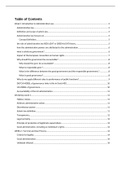
,Chapter 1: The origins of language 3
Questions chapter 1: 5
Chapter 2: Animals and Human Language 6
Questions chapter 2: 7
Chapter 5: Word formation 8
Questions chapter 5: 10
Chapter 6: Morphology 12
Questions chapter 6: 14
Chapter 7: Grammar 16
Question chapter 7 18
Chapter 8: Syntax 18
Questions chapter 8: 19
Chapter 9: Semantics 21
Questions chapter 9: 23
Chapter 10: Pragmatics 25
Chapter 11: Discourse analysis 27
Chapter 12: Language and the brain 30
Chapter 13: First Language Acquisition 33
Chapter 14: Second Language Acquisition / Learning 36
Chapter 16: Written language 39
Questions chapter 16: 41
Chapter 18: Regional variation in language 43
Chapter 19: Social Variation in Language 45
Chapter 20: Language and culture 47
,Chapter 1: The origins of language
We simply do not know how language originated, but there are a lot of different speculations
and theories. We do know that the ability to produce sounds and simple vocal patterning is
part of an ancient part of the brain.
The Divine Source
In most religions there appears to be a divine source who provides humans with language.
Multiple experiments have been done. Withholding children from language while growing up
gave conflicting results. In one experiment the children started to utter, in other experiments
the children produced no speech at all.
If human language did come from a divine source, there is no way of reconstructing that
original language.
The Natural Sound Source
Based on the concept of natural sounds. The idea that the first words were derived from
imitations of natural sounds that early men and women heard around them.
Bow-Wow Theory
Proposed humans tried imitating sounds of objects (e.g. something flying by) and then used
them to refer to those objects when they weren’t present.
Words that sound similar to the noise they describe are called onomatopeia (splash, bang,
buzz). It is difficult to see how other soundless things as well as concepts could have been
referred to in a language simply echoing natural sounds.
Pooh-Pooh Theory
Proposed that speech developed from instinctive sounds people make in emotional
circumstances (pain, anger, joy).
But such words (Ah, Ooh!, Phew!, Ouch!) are produced with sudden intakes of breath.
Language is produced while breathing out. The sounds we use as emotional reaction
contain sounds we do not use in normal speech.
The Social Interaction Source
The yo-he-yo theory
The idea that people involved in physical effort could be the source of language, especially
when it involved multiple people and had to be coordinated.
It placed the development of human language in a social context. Early people lived in
groups, so a sort of communication was required. But why have apes living in groups not
developed speech then?
The Physical Adaptation Source
Looking at physical features humans possess to produce speech. Such as making the
transition to an upright posture. For two-legged creatures the rhythm of breathing is not tied
to the rhythm of walking.
, Teeth and lips
Human teeth are upright, not outwards and even in height. This is helpful in making sounds
such as F or V. Human lips have more muscles, making sounds like P, B and M possible.
Mouth and tongue
Humans have a relatively small mouth that can be opened and closed rapidly and it’s part of
an extended vocal tract that has an L-shape instead of a straight one like other mammals.
Humans have a thicker and more muscular tongue that can be used to make a variety of
sounds.
Larynx and pharynx
In the transition to an upright posture, the larynx dropped to a lower position. This created a
longer cavity called the pharynx. This acts as a resonator for increased range and clarity of
sounds. Other primates have almost no pharynx.
The Tool-Making Source
Manual gestures may have been a precursor of language.
The human brain
The human brain is relatively large to human body size and it has specialized functions in
each of the two hemispheres. The functions that control the movements involved in complex
vocalization are very close to the functions of object manipulation (making / using tools).
It may be that there is a connection between language-using and tool-using abilities of
humans and that both were involved in the development of the speaking brain.
The Genetic Source
Supposing it is in our nature / it is natural that our language capacity is genetically
hard-wired in human babies.
The Innateness Hypothesis
Pointing towards human genetics as a source. Believing genetic changes caused humans to
be the only species with the capacity for language.
The Study of Language - George Yule
Sixth edition
,Chapter 1: The origins of language 3
Questions chapter 1: 5
Chapter 2: Animals and Human Language 6
Questions chapter 2: 7
Chapter 5: Word formation 8
Questions chapter 5: 10
Chapter 6: Morphology 12
Questions chapter 6: 14
Chapter 7: Grammar 16
Question chapter 7 18
Chapter 8: Syntax 18
Questions chapter 8: 19
Chapter 9: Semantics 21
Questions chapter 9: 23
Chapter 10: Pragmatics 25
Chapter 11: Discourse analysis 27
Chapter 12: Language and the brain 30
Chapter 13: First Language Acquisition 33
Chapter 14: Second Language Acquisition / Learning 36
Chapter 16: Written language 39
Questions chapter 16: 41
Chapter 18: Regional variation in language 43
Chapter 19: Social Variation in Language 45
Chapter 20: Language and culture 47
,Chapter 1: The origins of language
We simply do not know how language originated, but there are a lot of different speculations
and theories. We do know that the ability to produce sounds and simple vocal patterning is
part of an ancient part of the brain.
The Divine Source
In most religions there appears to be a divine source who provides humans with language.
Multiple experiments have been done. Withholding children from language while growing up
gave conflicting results. In one experiment the children started to utter, in other experiments
the children produced no speech at all.
If human language did come from a divine source, there is no way of reconstructing that
original language.
The Natural Sound Source
Based on the concept of natural sounds. The idea that the first words were derived from
imitations of natural sounds that early men and women heard around them.
Bow-Wow Theory
Proposed humans tried imitating sounds of objects (e.g. something flying by) and then used
them to refer to those objects when they weren’t present.
Words that sound similar to the noise they describe are called onomatopeia (splash, bang,
buzz). It is difficult to see how other soundless things as well as concepts could have been
referred to in a language simply echoing natural sounds.
Pooh-Pooh Theory
Proposed that speech developed from instinctive sounds people make in emotional
circumstances (pain, anger, joy).
But such words (Ah, Ooh!, Phew!, Ouch!) are produced with sudden intakes of breath.
Language is produced while breathing out. The sounds we use as emotional reaction
contain sounds we do not use in normal speech.
The Social Interaction Source
The yo-he-yo theory
The idea that people involved in physical effort could be the source of language, especially
when it involved multiple people and had to be coordinated.
It placed the development of human language in a social context. Early people lived in
groups, so a sort of communication was required. But why have apes living in groups not
developed speech then?
The Physical Adaptation Source
Looking at physical features humans possess to produce speech. Such as making the
transition to an upright posture. For two-legged creatures the rhythm of breathing is not tied
to the rhythm of walking.
, Teeth and lips
Human teeth are upright, not outwards and even in height. This is helpful in making sounds
such as F or V. Human lips have more muscles, making sounds like P, B and M possible.
Mouth and tongue
Humans have a relatively small mouth that can be opened and closed rapidly and it’s part of
an extended vocal tract that has an L-shape instead of a straight one like other mammals.
Humans have a thicker and more muscular tongue that can be used to make a variety of
sounds.
Larynx and pharynx
In the transition to an upright posture, the larynx dropped to a lower position. This created a
longer cavity called the pharynx. This acts as a resonator for increased range and clarity of
sounds. Other primates have almost no pharynx.
The Tool-Making Source
Manual gestures may have been a precursor of language.
The human brain
The human brain is relatively large to human body size and it has specialized functions in
each of the two hemispheres. The functions that control the movements involved in complex
vocalization are very close to the functions of object manipulation (making / using tools).
It may be that there is a connection between language-using and tool-using abilities of
humans and that both were involved in the development of the speaking brain.
The Genetic Source
Supposing it is in our nature / it is natural that our language capacity is genetically
hard-wired in human babies.
The Innateness Hypothesis
Pointing towards human genetics as a source. Believing genetic changes caused humans to
be the only species with the capacity for language.