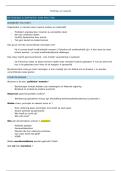
, CHAPTER LIST
Chapter 1: Health Versus Disease and Disability
Chapter 2: Mechanisms of Disease
Chapter 3: Cell Injury and Cell Death
Chapter 4: Genetic and Congenital Disorders
Chapter 5: Oncology
Unit II: Infection, Inflammation, and Repair
Chapter 6: Infectious Disease
Chapter 7: Inflammation and Healing
Chapter 8: Immune Response, Hypersensitivity, and Autoimmune Disorders
Unit III: Pathology of the Body Systems
Chapter 9: Skeletal Disorders
Chapter 10: Musculoskeletal Disorders
Chapter 11: Joint and Soft Tissue Disorders
Chapter 12: Central Nervous System Disorders
Chapter 13: Peripheral Nervous System Disorders
Chapter 14: Cardiovascular Disorders
Chapter 15: Blood Disorders
Chapter 16: Lymphatic Disorders
Chapter 17: Integumentary System Disorders
Chapter 18: Respiratory System Disorders
Chapter 19: Digestive System Disorders
Chapter 20: Urinary System Disorders
Chapter 21: Fluid, Electrolyte, and Acid-Base Imbalances
Chapter 22: Endocrine System Disorders
Chapter 23: Male Reproductive System Disorders
Chapter 24: Female Reproductive System Disorders
Unit IV: Environmental Hazards
Chapter 25: Occupational Disorders and Injuries
Chapter 26: Psychological Disorders and the Influence of Stress
Chapter 27: Substance Abuse
Chapter 28: Effects of Immobility
Unit V: Special Populations
Chapter 29: Pediatric Disorders
Chapter 30: Aging and Disease Processes
,Chapter 1: Health Versus Disease and Disability
— Test Bank (20 Advanced MCQs)
1) ICF chain identification
A 62-year-old with knee osteoarthritis reports morning stiffness and knee pain.
On exam: reduced knee extension ROM and quadriceps weakness. They avoid
stairs and have stopped attending church because the building has steps.
Which option best maps the case using ICF (Health condition → Impairment →
Activity limitation → Participation restriction)?
A. OA → avoids church → stairs difficulty → weak quadriceps
B. OA → weak quadriceps/limited ROM → stairs difficulty → stopped attending
church
C. OA → stairs difficulty → weak quadriceps → avoids church
D. OA → pain → stopped attending church → reduced ROM
Answer: B
Rationale: ICF proceeds from health condition (OA) to body
structure/function impairments (weakness, ROM limits), to activity
limitations (stairs), then to participation restrictions (church attendance).
Options A/C scramble the correct order; D mixes impairment and participation
without clear activity mapping.
Key words: ICF sequence, impairment, activity limitation, participation
restriction, osteoarthritis
2) Distinguishing activity vs participation
A patient post-stroke can walk 20 meters with a quad cane but cannot safely
cross a busy street to reach the local market and has stopped shopping
independently. In ICF terms, “stopped shopping independently” is best
classified as:
A. Impairment
B. Activity limitation
C. Participation restriction
D. Personal factor
Answer: C
Rationale: Shopping independently reflects involvement in a life situation
,(community living), which is participation. The walking deficit (distance,
safety) is typically the activity component; stroke-related hemiparesis is an
impairment.
Key words: participation, community role, stroke, mobility, ICF classification
3) Choosing a functional goal over diagnosis
A 48-year-old with chronic low back pain asks, “What’s wrong with my spine?”
The PTA wants to reinforce function-focused care while staying within scope.
Which goal statement best matches ICF and PTA clinical translation?
A. “Eliminate disc degeneration seen on imaging within 4 weeks.”
B. “Reduce L4–L5 joint irritation by manual mobilization.”
C. “Improve tolerance for sitting 45 minutes to complete work tasks with pain
≤3/10.”
D. “Normalize lumbar MRI findings by the end of treatment.”
Answer: C
Rationale: PTA goals should emphasize functional performance
(activity/participation) and measurable outcomes. A/D are inappropriate
(imaging-focused, unrealistic). B implies autonomous manual
diagnosis/intervention framing and targets pathology rather than functional
limitation.
Key words: functional goals, scope, chronic low back pain, activity tolerance,
ICF
4) Environmental factor identification
A patient with COPD can ambulate 100 meters indoors but struggles outdoors
because heat and air pollution trigger dyspnea and they avoid walking to the
bus stop. “Heat and air pollution” are best classified as:
A. Impairments
B. Environmental factors
C. Activity limitations
D. Participation restrictions
Answer: B
Rationale: Climate and air quality are environmental factors in ICF that can
facilitate or hinder function. Dyspnea is an impairment; walking distance is
,activity; using public transport is participation.
Key words: COPD, environmental factors, barriers, dyspnea, ICF
5) Personal factor vs impairment
A 35-year-old with ACL reconstruction demonstrates adequate strength and
ROM but refuses to participate in agility drills, stating fear of re-injury. In ICF,
fear of re-injury is best categorized as:
A. Impairment
B. Activity limitation
C. Participation restriction
D. Personal factor
Answer: D
Rationale: Fear-avoidance beliefs are personal factors influencing function
and adherence. The patient may still show activity limitations, but the
described barrier is psychological and individual-level, not a body impairment.
Key words: fear avoidance, personal factors, ACL rehab, adherence, ICF
6) Impairment selection
A patient with diabetic peripheral neuropathy reports numbness and burning
pain in both feet and demonstrates reduced protective sensation. Which is the
primary impairment?
A. Inability to walk to work
B. Reduced protective sensation in feet
C. Loss of employment
D. Avoids community events
Answer: B
Rationale: Impairments are problems in body function/structure. Reduced
sensation is an impairment; inability to walk is an activity limitation; loss of
employment/avoidance of events are participation restrictions.
Key words: impairment, neuropathy, sensation, diabetes, ICF domains
7) Best “activity limitation” wording
,Which statement most clearly represents an activity limitation?
A. “Has reduced ankle dorsiflexion ROM.”
B. “Cannot climb one flight of stairs without resting.”
C. “No longer attends weekly family gatherings upstairs.”
D. “Has severe COPD.”
Answer: B
Rationale: Activities are tasks (e.g., stair climbing). A is impairment; C is
participation; D is health condition.
Key words: activity limitation, stairs, task performance, ICF
8) ICF-based plan prioritization
A 70-year-old with heart failure presents with fatigue, reduced endurance, and
difficulty completing grocery shopping. The clinic has a 4-week plan of care.
Which prioritization best reflects function-first and ICF logic?
A. Focus only on ejection fraction education and medication details.
B. Target impairments (endurance) with monitored aerobic training to improve
walking tolerance for shopping.
C. Avoid exertion to prevent symptoms; focus solely on bed exercises.
D. Train advanced plyometrics to restore “fitness.”
Answer: B
Rationale: Impairment-directed training (endurance) is justified when it links
to meaningful activities/participation (shopping). A is outside PTA focus; C
under-doses and may worsen deconditioning; D is unsafe/inappropriate.
Key words: heart failure, endurance, activity tolerance, goal linkage, ICF
9) Participation restriction nuance
A 22-year-old with a spinal cord injury can propel a wheelchair independently
on level surfaces. They cannot attend university lectures because the building
lacks ramps and elevators. The primary driver of the participation restriction
is:
A. Muscle weakness
B. Environmental barrier
C. Personal factor
D. Pain catastrophizing
, Answer: B
Rationale: The key barrier is inaccessible architecture, an environmental
factor directly limiting participation (attending lectures). Weakness may exist
but is not the limiting factor given independence on level surfaces.
Key words: spinal cord injury, accessibility, participation, environmental
barrier, ICF
10) Scope-consistent communication
A patient asks the PTA to “tell me what disease I have” after reading online
about multiple sclerosis. What is the best PTA response aligned with Chapter 1
principles?
A. “You likely have MS—let’s start neuro rehab.”
B. “Diagnosis isn’t important; ignore it.”
C. “I can’t diagnose, but I can assess how your symptoms affect movement and
daily activities and share those findings with the PT.”
D. “I’ll order imaging to confirm.”
Answer: C
Rationale: PTAs do not diagnose or order tests. The appropriate approach is to
focus on functional impact, document impairments/activity limits, and
communicate to the supervising PT.
Key words: PTA scope, diagnosis vs function, communication, MS concern,
ICF
11) Selecting the best ICF-coded outcome
A patient with rheumatoid arthritis wants to return to cooking dinner daily.
Which outcome best matches participation?
A. Increase grip strength from 18 kg to 24 kg
B. Reduce MCP joint swelling
C. Prepare a 30-minute meal independently 5 days/week using joint-protection
strategies
D. Improve wrist ROM by 10 degrees
Answer: C
Rationale: Cooking dinner regularly is a life role/activity pattern—
participation-oriented. A/D are impairments; B is a body structure/function
Chapter 1: Health Versus Disease and Disability
Chapter 2: Mechanisms of Disease
Chapter 3: Cell Injury and Cell Death
Chapter 4: Genetic and Congenital Disorders
Chapter 5: Oncology
Unit II: Infection, Inflammation, and Repair
Chapter 6: Infectious Disease
Chapter 7: Inflammation and Healing
Chapter 8: Immune Response, Hypersensitivity, and Autoimmune Disorders
Unit III: Pathology of the Body Systems
Chapter 9: Skeletal Disorders
Chapter 10: Musculoskeletal Disorders
Chapter 11: Joint and Soft Tissue Disorders
Chapter 12: Central Nervous System Disorders
Chapter 13: Peripheral Nervous System Disorders
Chapter 14: Cardiovascular Disorders
Chapter 15: Blood Disorders
Chapter 16: Lymphatic Disorders
Chapter 17: Integumentary System Disorders
Chapter 18: Respiratory System Disorders
Chapter 19: Digestive System Disorders
Chapter 20: Urinary System Disorders
Chapter 21: Fluid, Electrolyte, and Acid-Base Imbalances
Chapter 22: Endocrine System Disorders
Chapter 23: Male Reproductive System Disorders
Chapter 24: Female Reproductive System Disorders
Unit IV: Environmental Hazards
Chapter 25: Occupational Disorders and Injuries
Chapter 26: Psychological Disorders and the Influence of Stress
Chapter 27: Substance Abuse
Chapter 28: Effects of Immobility
Unit V: Special Populations
Chapter 29: Pediatric Disorders
Chapter 30: Aging and Disease Processes
,Chapter 1: Health Versus Disease and Disability
— Test Bank (20 Advanced MCQs)
1) ICF chain identification
A 62-year-old with knee osteoarthritis reports morning stiffness and knee pain.
On exam: reduced knee extension ROM and quadriceps weakness. They avoid
stairs and have stopped attending church because the building has steps.
Which option best maps the case using ICF (Health condition → Impairment →
Activity limitation → Participation restriction)?
A. OA → avoids church → stairs difficulty → weak quadriceps
B. OA → weak quadriceps/limited ROM → stairs difficulty → stopped attending
church
C. OA → stairs difficulty → weak quadriceps → avoids church
D. OA → pain → stopped attending church → reduced ROM
Answer: B
Rationale: ICF proceeds from health condition (OA) to body
structure/function impairments (weakness, ROM limits), to activity
limitations (stairs), then to participation restrictions (church attendance).
Options A/C scramble the correct order; D mixes impairment and participation
without clear activity mapping.
Key words: ICF sequence, impairment, activity limitation, participation
restriction, osteoarthritis
2) Distinguishing activity vs participation
A patient post-stroke can walk 20 meters with a quad cane but cannot safely
cross a busy street to reach the local market and has stopped shopping
independently. In ICF terms, “stopped shopping independently” is best
classified as:
A. Impairment
B. Activity limitation
C. Participation restriction
D. Personal factor
Answer: C
Rationale: Shopping independently reflects involvement in a life situation
,(community living), which is participation. The walking deficit (distance,
safety) is typically the activity component; stroke-related hemiparesis is an
impairment.
Key words: participation, community role, stroke, mobility, ICF classification
3) Choosing a functional goal over diagnosis
A 48-year-old with chronic low back pain asks, “What’s wrong with my spine?”
The PTA wants to reinforce function-focused care while staying within scope.
Which goal statement best matches ICF and PTA clinical translation?
A. “Eliminate disc degeneration seen on imaging within 4 weeks.”
B. “Reduce L4–L5 joint irritation by manual mobilization.”
C. “Improve tolerance for sitting 45 minutes to complete work tasks with pain
≤3/10.”
D. “Normalize lumbar MRI findings by the end of treatment.”
Answer: C
Rationale: PTA goals should emphasize functional performance
(activity/participation) and measurable outcomes. A/D are inappropriate
(imaging-focused, unrealistic). B implies autonomous manual
diagnosis/intervention framing and targets pathology rather than functional
limitation.
Key words: functional goals, scope, chronic low back pain, activity tolerance,
ICF
4) Environmental factor identification
A patient with COPD can ambulate 100 meters indoors but struggles outdoors
because heat and air pollution trigger dyspnea and they avoid walking to the
bus stop. “Heat and air pollution” are best classified as:
A. Impairments
B. Environmental factors
C. Activity limitations
D. Participation restrictions
Answer: B
Rationale: Climate and air quality are environmental factors in ICF that can
facilitate or hinder function. Dyspnea is an impairment; walking distance is
,activity; using public transport is participation.
Key words: COPD, environmental factors, barriers, dyspnea, ICF
5) Personal factor vs impairment
A 35-year-old with ACL reconstruction demonstrates adequate strength and
ROM but refuses to participate in agility drills, stating fear of re-injury. In ICF,
fear of re-injury is best categorized as:
A. Impairment
B. Activity limitation
C. Participation restriction
D. Personal factor
Answer: D
Rationale: Fear-avoidance beliefs are personal factors influencing function
and adherence. The patient may still show activity limitations, but the
described barrier is psychological and individual-level, not a body impairment.
Key words: fear avoidance, personal factors, ACL rehab, adherence, ICF
6) Impairment selection
A patient with diabetic peripheral neuropathy reports numbness and burning
pain in both feet and demonstrates reduced protective sensation. Which is the
primary impairment?
A. Inability to walk to work
B. Reduced protective sensation in feet
C. Loss of employment
D. Avoids community events
Answer: B
Rationale: Impairments are problems in body function/structure. Reduced
sensation is an impairment; inability to walk is an activity limitation; loss of
employment/avoidance of events are participation restrictions.
Key words: impairment, neuropathy, sensation, diabetes, ICF domains
7) Best “activity limitation” wording
,Which statement most clearly represents an activity limitation?
A. “Has reduced ankle dorsiflexion ROM.”
B. “Cannot climb one flight of stairs without resting.”
C. “No longer attends weekly family gatherings upstairs.”
D. “Has severe COPD.”
Answer: B
Rationale: Activities are tasks (e.g., stair climbing). A is impairment; C is
participation; D is health condition.
Key words: activity limitation, stairs, task performance, ICF
8) ICF-based plan prioritization
A 70-year-old with heart failure presents with fatigue, reduced endurance, and
difficulty completing grocery shopping. The clinic has a 4-week plan of care.
Which prioritization best reflects function-first and ICF logic?
A. Focus only on ejection fraction education and medication details.
B. Target impairments (endurance) with monitored aerobic training to improve
walking tolerance for shopping.
C. Avoid exertion to prevent symptoms; focus solely on bed exercises.
D. Train advanced plyometrics to restore “fitness.”
Answer: B
Rationale: Impairment-directed training (endurance) is justified when it links
to meaningful activities/participation (shopping). A is outside PTA focus; C
under-doses and may worsen deconditioning; D is unsafe/inappropriate.
Key words: heart failure, endurance, activity tolerance, goal linkage, ICF
9) Participation restriction nuance
A 22-year-old with a spinal cord injury can propel a wheelchair independently
on level surfaces. They cannot attend university lectures because the building
lacks ramps and elevators. The primary driver of the participation restriction
is:
A. Muscle weakness
B. Environmental barrier
C. Personal factor
D. Pain catastrophizing
, Answer: B
Rationale: The key barrier is inaccessible architecture, an environmental
factor directly limiting participation (attending lectures). Weakness may exist
but is not the limiting factor given independence on level surfaces.
Key words: spinal cord injury, accessibility, participation, environmental
barrier, ICF
10) Scope-consistent communication
A patient asks the PTA to “tell me what disease I have” after reading online
about multiple sclerosis. What is the best PTA response aligned with Chapter 1
principles?
A. “You likely have MS—let’s start neuro rehab.”
B. “Diagnosis isn’t important; ignore it.”
C. “I can’t diagnose, but I can assess how your symptoms affect movement and
daily activities and share those findings with the PT.”
D. “I’ll order imaging to confirm.”
Answer: C
Rationale: PTAs do not diagnose or order tests. The appropriate approach is to
focus on functional impact, document impairments/activity limits, and
communicate to the supervising PT.
Key words: PTA scope, diagnosis vs function, communication, MS concern,
ICF
11) Selecting the best ICF-coded outcome
A patient with rheumatoid arthritis wants to return to cooking dinner daily.
Which outcome best matches participation?
A. Increase grip strength from 18 kg to 24 kg
B. Reduce MCP joint swelling
C. Prepare a 30-minute meal independently 5 days/week using joint-protection
strategies
D. Improve wrist ROM by 10 degrees
Answer: C
Rationale: Cooking dinner regularly is a life role/activity pattern—
participation-oriented. A/D are impairments; B is a body structure/function