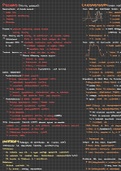
What influences
Information provided by
expenditure patterns?
Statistics South Africa
The socio-economic position of • Statistics South Africa (Stats SA) – carries out surveys
an individual/household every 5 years to gather statistics about income and
spending patterns.
• Individuals in the low-income group prioritise • CPI – list of products and services that South African’s
basic necessities. mostly buy and is used to measure inflation.
• The middle-income group values basic • Stats SA compares income and expenditure of
necessities, education, and investment in their different races, ages, income groups and sexes, urban
children's futures, with lifestyle goods as and rural dwellers and people in different provinces.
secondary priorities. • .
• The middle- to high-income group allocates C1: Income and
more resources to luxury goods and services. expenditure of •
Sample
•
•
The highest income group indulges in ultra-
luxury goods and services.
.
South African
households
•
Sources of income of
South African households
Summaries after sample
• • Non-financial income - products and services
Type of household and stage in acquired without using money.
• family life cycle • Financial income – money that a person/
household receives within a specific period.
• Families with children in school spend a large • .
amount of money on school fees, sports
equipment, coaching and transport. Other factors influencing •
• Families with grown children can spend more expenditure patterns
money on personal interests and hobbies. •
• . • Cultural and religious practices influence buying behaviour and
consumption of products and services.
• • Cost of living varies between residential areas - impacts property
Age tax, home insurance, and maintenance.
• Attitudes towards consumption, price changes, new product
•• The 20-24 age group spend more money on electronic
availability, higher expectations, increased literacy, brand
and home appliances.
awareness, and urban migration all affect expenditure patterns.
• The 45-48 age group spend more money on vacations.
• .
• .
• .
GR11
•
CS T3-T1 Mindmap • Focus Copyright © www.summariessa.co.za (DO NOT COPY)
, Credit information about consumers
The South African Bureau of
recorded by credit bureaus
Standards (SABS)
• Consumer credit information - credit history, financial
• Responsible for developing, maintaining, and promoting
history and other information, such as their employment.
South African National Standards (SANS).
• Retention period - the time for which a credit bureau may
• Protect human health, safety, and the environment
keep information about a consumer’s credit record.
through standardised quality.
• SABS focuses on the development of standards and
voluntary certification.
• NRCS focuses on the legal enforcement of compulsory Consumer rights and what to do if
specifications to protect the public. C5: Consumer you are incorrectly listed
protection • Credit providers must give you 20 business days'
Sample
Main areas that the CPA covers
policies and
practices (B) •
notice before submitting any negative (adverse)
information to a credit bureau.
You have the right to know exactly what information
is being listed.
Summaries after sample
•
•
Everyone is entitled to the same price, quality, and service terms.
Repair work requires a quote that the consumer must approve
before work begins.
•
•
You have the legal right to challenge any incorrect
information held by a credit bureau.
Once notified, the bureau must immediately hide
the disputed information from public view.
• Bait marketing, negative option marketing, and referral selling are
illegal.
• Companies are prohibited from overbooking or over-selling.
• Marketing campaigns and competitions must be fair and honest.
Consumer rights under the CPA
• Consumers have 5 days to change their mind about a purchase. • Protection against discrimination.
• Consumers can cancel contracts at any time or cancel lay-bys. • Consumers are protected against deceptive practices.
• Prepaid cards and vouchers must remain valid for at least 3 years. • Right to privacy.
• Defective or unsafe items can be returned within 6 months for a • Right to choose.
repair, replacement, or refund at the supplier's expense. • Information must be provided in plain language.
• Voetstoots – buying goods as you see them. • Fair and honest dealing.
• Ensures contracts aren’t unfair.
• Consumers have the right to safe, high-quality goods and services.
• Accountability from suppliers.
GR11 CS T3-T1 Mindmap Focus Copyright © www.summariessa.co.za (DO NOT COPY)
,Sample
Summaries after sample
,Sample
Summaries after sample
Information provided by
expenditure patterns?
Statistics South Africa
The socio-economic position of • Statistics South Africa (Stats SA) – carries out surveys
an individual/household every 5 years to gather statistics about income and
spending patterns.
• Individuals in the low-income group prioritise • CPI – list of products and services that South African’s
basic necessities. mostly buy and is used to measure inflation.
• The middle-income group values basic • Stats SA compares income and expenditure of
necessities, education, and investment in their different races, ages, income groups and sexes, urban
children's futures, with lifestyle goods as and rural dwellers and people in different provinces.
secondary priorities. • .
• The middle- to high-income group allocates C1: Income and
more resources to luxury goods and services. expenditure of •
Sample
•
•
The highest income group indulges in ultra-
luxury goods and services.
.
South African
households
•
Sources of income of
South African households
Summaries after sample
• • Non-financial income - products and services
Type of household and stage in acquired without using money.
• family life cycle • Financial income – money that a person/
household receives within a specific period.
• Families with children in school spend a large • .
amount of money on school fees, sports
equipment, coaching and transport. Other factors influencing •
• Families with grown children can spend more expenditure patterns
money on personal interests and hobbies. •
• . • Cultural and religious practices influence buying behaviour and
consumption of products and services.
• • Cost of living varies between residential areas - impacts property
Age tax, home insurance, and maintenance.
• Attitudes towards consumption, price changes, new product
•• The 20-24 age group spend more money on electronic
availability, higher expectations, increased literacy, brand
and home appliances.
awareness, and urban migration all affect expenditure patterns.
• The 45-48 age group spend more money on vacations.
• .
• .
• .
GR11
•
CS T3-T1 Mindmap • Focus Copyright © www.summariessa.co.za (DO NOT COPY)
, Credit information about consumers
The South African Bureau of
recorded by credit bureaus
Standards (SABS)
• Consumer credit information - credit history, financial
• Responsible for developing, maintaining, and promoting
history and other information, such as their employment.
South African National Standards (SANS).
• Retention period - the time for which a credit bureau may
• Protect human health, safety, and the environment
keep information about a consumer’s credit record.
through standardised quality.
• SABS focuses on the development of standards and
voluntary certification.
• NRCS focuses on the legal enforcement of compulsory Consumer rights and what to do if
specifications to protect the public. C5: Consumer you are incorrectly listed
protection • Credit providers must give you 20 business days'
Sample
Main areas that the CPA covers
policies and
practices (B) •
notice before submitting any negative (adverse)
information to a credit bureau.
You have the right to know exactly what information
is being listed.
Summaries after sample
•
•
Everyone is entitled to the same price, quality, and service terms.
Repair work requires a quote that the consumer must approve
before work begins.
•
•
You have the legal right to challenge any incorrect
information held by a credit bureau.
Once notified, the bureau must immediately hide
the disputed information from public view.
• Bait marketing, negative option marketing, and referral selling are
illegal.
• Companies are prohibited from overbooking or over-selling.
• Marketing campaigns and competitions must be fair and honest.
Consumer rights under the CPA
• Consumers have 5 days to change their mind about a purchase. • Protection against discrimination.
• Consumers can cancel contracts at any time or cancel lay-bys. • Consumers are protected against deceptive practices.
• Prepaid cards and vouchers must remain valid for at least 3 years. • Right to privacy.
• Defective or unsafe items can be returned within 6 months for a • Right to choose.
repair, replacement, or refund at the supplier's expense. • Information must be provided in plain language.
• Voetstoots – buying goods as you see them. • Fair and honest dealing.
• Ensures contracts aren’t unfair.
• Consumers have the right to safe, high-quality goods and services.
• Accountability from suppliers.
GR11 CS T3-T1 Mindmap Focus Copyright © www.summariessa.co.za (DO NOT COPY)
,Sample
Summaries after sample
,Sample
Summaries after sample