[Type the company name]
DVA4805 Assignment 3
(COMPLETE ANSWERS)
Semester 1 2025 - DUE 23
July 2025
NO PLAGIARIM
[Year]
, Course
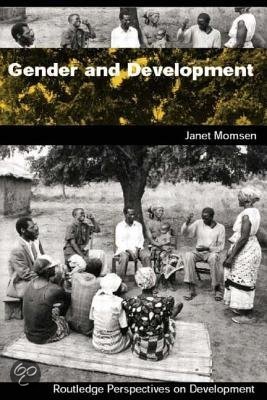
Gender and Development
Book
Gender and Development
DVA4805 Assignment 3 (COMPLETE ANSWERS) Semester 1 2025 - DUE 23
July 2025; 100% correct solutions and explanations.
Find five (5) women working in the informal sector. Ask them to share the
major challenges and obstacles they encounter in their work environment.
Present and analyse your findings according to the main themes identified.
Propose policy guidelines and solutions to address the plight of women
working in the informal sector to increase their empowerment.
Title: Challenges Faced by Women in the Informal Sector and Policy Recommendations
for Empowerment
Introduction
The informal sector in many developing countries, including Kenya and South Africa, plays a
vital role in economic survival for millions. Women form a significant portion of this sector,
engaging in small-scale retail, domestic work, street vending, agriculture, and more. However,
their contributions often go unrecognised, and they face multiple challenges that hinder
economic progress and personal empowerment.
Participants
Interviews were conducted with five women working in various areas of the informal sector:
1. Mary Achieng – Street food vendor in Nairobi.
2. Lydia Ndlovu – Domestic worker in Johannesburg.
3. Amina Yusuf – Second-hand clothes trader in Mombasa.
4. Thandiwe Dube – Hair braider in a township in Durban.
5. Joyce Mutua – Urban farmer and vegetable seller in Nairobi.
Key Challenges Identified
The findings were analysed under the following main themes:
1. Lack of Social Protection and Labour Rights
, Most women reported no access to health insurance, maternity leave, or pension schemes.
Domestic workers like Lydia highlighted long hours with no overtime or job security.
Quote: “If I get sick or injured, I cannot work and I don't get paid. No one supports me,” –
Lydia.
2. Insecure Workspaces
Mary and Amina noted constant harassment by city council officers and police,
particularly when selling in undesignated areas.
Informal traders operate in unsafe environments without proper sanitation or shelter.
Quote: “Sometimes they come and take my goods. I have to pay a fine to get them back,” –
Mary.
3. Limited Access to Credit and Finance
All five women reported being excluded from formal financial services.
They rely on informal savings groups (chamas or stokvels) but struggle to expand
businesses due to lack of capital.
Quote: “No bank will give me a loan without security. I only have my word,” – Amina.
4. Gender-Based Discrimination and Violence
Thandiwe shared stories of harassment by male clients and law enforcement.
Many women noted they are underpaid or forced to accept lower prices due to their
gender and desperation.
Quote: “Men in the market intimidate us. They take our spots or push us out,” – Thandiwe.
5. Lack of Training and Business Skills
Women like Joyce expressed interest in growing their businesses but lacked knowledge
in budgeting, pricing, and marketing.
Many entered the sector due to lack of education or job alternatives.
Quote: “I wish I knew how to keep better records or use mobile money properly,” – Joyce.
DVA4805 Assignment 3
(COMPLETE ANSWERS)
Semester 1 2025 - DUE 23
July 2025
NO PLAGIARIM
[Year]
, Course
Gender and Development
Book
Gender and Development
DVA4805 Assignment 3 (COMPLETE ANSWERS) Semester 1 2025 - DUE 23
July 2025; 100% correct solutions and explanations.
Find five (5) women working in the informal sector. Ask them to share the
major challenges and obstacles they encounter in their work environment.
Present and analyse your findings according to the main themes identified.
Propose policy guidelines and solutions to address the plight of women
working in the informal sector to increase their empowerment.
Title: Challenges Faced by Women in the Informal Sector and Policy Recommendations
for Empowerment
Introduction
The informal sector in many developing countries, including Kenya and South Africa, plays a
vital role in economic survival for millions. Women form a significant portion of this sector,
engaging in small-scale retail, domestic work, street vending, agriculture, and more. However,
their contributions often go unrecognised, and they face multiple challenges that hinder
economic progress and personal empowerment.
Participants
Interviews were conducted with five women working in various areas of the informal sector:
1. Mary Achieng – Street food vendor in Nairobi.
2. Lydia Ndlovu – Domestic worker in Johannesburg.
3. Amina Yusuf – Second-hand clothes trader in Mombasa.
4. Thandiwe Dube – Hair braider in a township in Durban.
5. Joyce Mutua – Urban farmer and vegetable seller in Nairobi.
Key Challenges Identified
The findings were analysed under the following main themes:
1. Lack of Social Protection and Labour Rights
, Most women reported no access to health insurance, maternity leave, or pension schemes.
Domestic workers like Lydia highlighted long hours with no overtime or job security.
Quote: “If I get sick or injured, I cannot work and I don't get paid. No one supports me,” –
Lydia.
2. Insecure Workspaces
Mary and Amina noted constant harassment by city council officers and police,
particularly when selling in undesignated areas.
Informal traders operate in unsafe environments without proper sanitation or shelter.
Quote: “Sometimes they come and take my goods. I have to pay a fine to get them back,” –
Mary.
3. Limited Access to Credit and Finance
All five women reported being excluded from formal financial services.
They rely on informal savings groups (chamas or stokvels) but struggle to expand
businesses due to lack of capital.
Quote: “No bank will give me a loan without security. I only have my word,” – Amina.
4. Gender-Based Discrimination and Violence
Thandiwe shared stories of harassment by male clients and law enforcement.
Many women noted they are underpaid or forced to accept lower prices due to their
gender and desperation.
Quote: “Men in the market intimidate us. They take our spots or push us out,” – Thandiwe.
5. Lack of Training and Business Skills
Women like Joyce expressed interest in growing their businesses but lacked knowledge
in budgeting, pricing, and marketing.
Many entered the sector due to lack of education or job alternatives.
Quote: “I wish I knew how to keep better records or use mobile money properly,” – Joyce.