Garantie de satisfaction à 100% Disponible immédiatement après paiement En ligne et en PDF Tu n'es attaché à rien 4.2 TrustPilot
logo-home
Examen

HED4809 Assignment 1 Memo | Due 27 May 2025

Note
-
Vendu
2
Pages
12
Qualité
A+
Publié le
01-05-2025
Écrit en
2024/2025

HED4809 Assignment 1 Memo | Due 27 May 2025. All questions fully answered. QUESTION 1 Multiple Choice Questions To answer the question, write e.g. 10 B 1. Do you agree that the hidden curriculum primarily serves to uphold existing power structures, as suggested by Conflict Theory? Why or why not? (2) a) Yes, because the hidden curriculum transmits dominant cultural values that reinforce existing social hierarchies. b) No, because the hidden curriculum mainly helps students understand societal norms rather than enforce power dynamics. c) Yes, because the hidden curriculum is intentionally designed to prioritize individual achievement over collective values. d) No, because the hidden curriculum promotes only educational standards without any influence on societal power structures. 2. How would you evaluate the effectiveness of role differentiation in achieving social solidarity versus encouraging individualism in students? (2) a) Role differentiation promotes social solidarity by teaching students to work in groups toward common goals. b) Role differentiation encourages individualism by assigning specific roles that may limit collaborative learning. c) Role differentiation strikes a balance by encouraging students to develop individual skills that contribute to collective goals. d) Role differentiation has no impact on either social solidarity or individualism in educational settings. 3. What criteria would you use to assess whether Robert Dreeben’s concept of achievement is equally applicable to all students, regardless of background? (2) a) Evaluating whether achievement is measured by standardized tests. b) Assessing whether all students, regardless of background, have equal access to resources that support achievement. c) Measuring if students from different backgrounds feel motivated to meet achievement standards. d) Determining if students are primarily assessed on individual merit rather than group work. 4. Can you assess the validity of the interpretivist approach in uncovering the implicit messages of the hidden curriculum in multicultural classrooms? (2) a) The interpretivist approach is limited because it relies solely on quantitative data. b) The interpretivist approach is valid as it focuses on understanding students' perspectives and cultural contexts. c) The interpretivist approach is ineffective because it does not account for the structural factors in education. d) The interpretivist approach is irrelevant as it disregards objective standards in the curriculum. 5. How would you design a curriculum that balances political socialization with critical thinking, using ideas from Functionalism and Conflict Theory? (2) a) By integrating role differentiation that encourages critical analysis of social and political systems. b) By eliminating topics related to political systems to focus on universal education standards. c) By incorporating modules that discourage questioning of existing social structures. d) By emphasizing rote memorization of government systems. 6. Can you propose an alternative model to the hidden curriculum that aligns more closely with Robert Dreeben’s values of independence and specificity? (2) a) A model that emphasizes universal achievement standards without considering individual learning needs. b) A model where students choose personalized learning paths that foster independence while meeting specific learning goals. c) A model that discourages individualized learning in favor of group-based assessments. d) A model that follows a strict, predetermined curriculum that minimizes individual expression. 7. What changes would you make to current educational practices to promote Wilbert Moore’s Stage Theory ideals while addressing issues of assimilation and cultural diversity? (2) a) Introduce culturally relevant examples in each stage to reflect diverse backgrounds. b) Limit curriculum stages to topics that are universally applicable to all students. c) Ensure each educational stage includes a focus on conformity to a dominant cultural perspective. d) Replace Stages Theory with an individualized, unstructured curriculum. 8. How might you construct a new approach to role differentiation that enhances both social solidarity and individual achievement? (2) a) Assign students the same roles to promote uniformity and solidarity. b) Allow students to rotate through different roles, encouraging both teamwork and personal growth. c) Focus exclusively on competitive roles that highlight individual achievements. d) Restrict role differentiation to advanced learners only. 9. How would you assess the impact of political socialization within the curriculum on students’ critical thinking skills? (2) a) Political socialization strengthens critical thinking by encouraging students to unquestioningly accept national values. b) Political socialization weakens critical thinking by promoting conformity over independent analysis. c) Political socialization is neutral, having no effect on critical thinking skills. d) Political socialization has a mixed impact; it encourages understanding of national values but may limit questioning of these values. 10. How would you design an assessment method that evaluates both individual achievement and social solidarity within a multicultural classroom? (2) a) A standardized test that emphasizes content recall for individual assessment. b) Group projects that assign each student an equal role without individual performance measures. c) A portfolio that includes both individual work and contributions to group activities, with feedback on collaboration and individual insight. d) An exam based solely on each student’s understanding of national cultural values. (20) Essay type questions QUESTION 2 2.1 What are the primary differences between Functionalism, Conflict Theory, and the Interpretivist Approach in understanding educational systems? (5) 2.2 Who was Wilbert Moore, and what are the main ideas behind his Stage Theory? (5) 2.3 What does Robert Dreeben identify as core functions of education (independence, achievement, universalism, specificity)? (5) 2.4 How does the concept of the hidden curriculum differ from the explicit curriculum in schools? (5) (20) QUESTION 3 3.1 Explain how role differentiation contributes to social solidarity in schools, according to Functionalist theory? (5) 3.2 How would you summarise Robert Dreeben’s ideas on independence and achievement in educational settings? (5) 3.3 What examples of hidden curriculum can you find in typical school systems, and how might these examples reinforce societal norms? (5) 3.4 How does political socialization through education contribute to the modernization process, according to conflict theory? (5) (20) QUESTION 4 4.1 How would you apply Wilbert Moore’s Stage Theory to the structure of education in a developing country? (5) 4.2 In what ways might role differentiation within classrooms be used to promote both individual achievement and social cohesion? (5) 4.3 What approach would an interpretivist take to analyze how students understand and interact with the hidden curriculum? (5) 4.4 How could you use Robert Dreeben’s concepts of universalism and specificity to assess a standardised testing system? (5) (20) QUESTION 5 5.1 What are the components of the hidden curriculum, and how do they align with functionalist ideas about social solidarity? (5) 5.2 How does the concept of assimilation in education intersect with Robert Dreeben’s idea of universalism and specificity? (5) 5.3 Can you identify the assumptions behind Conflict Theory when analyzing the political socialization function of education? (5) 5.4 How would you categorize the different aspects of role differentiation, such as teaching methods, curriculum design, and student roles, in fostering educational goals? (5) (20) TOTAL :[100]

Montrer plus Lire moins
Établissement
Cours


Oups ! Impossible de charger votre document. Réessayez ou contactez le support.

Livre connecté

École, étude et sujet

Établissement
Cours

Infos sur le Document

Publié le
1 mai 2025
Nombre de pages
12
Écrit en
2024/2025
Type
Examen
Contenu
Questions et réponses

Sujets

Aperçu du contenu

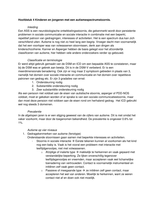
, PLEASE USE THIS DOCUMENT AS A GUIDE TO ANSWER YOUR ASSIGNMENT

 QUESTION 1 - MULTIPLE CHOICE QUESTIONS

1. Do you agree that the hidden curriculum primarily serves to uphold existing power structures,
as suggested by Conflict Theory? Why or why not?
A) Yes, because the hidden curriculum transmits dominant cultural values that reinforce existing
social hierarchies.
B) No, because the hidden curriculum mainly helps students understand societal norms rather than
enforce power dynamics.
C) Yes, because the hidden curriculum is intentionally designed to prioritize individual
achievement over collective values.
D) No, because the hidden curriculum promotes only educational standards without any influence
on societal power structures.

2. How would you evaluate the effectiveness of role differentiation in achieving social solidarity
versus encouraging individualism in students?
A) Role differentiation promotes social solidarity by teaching students to work in groups toward
common goals.
B) Role differentiation encourages individualism by assigning specific roles that may limit
collaborative learning.
C) Role differentiation strikes a balance by encouraging students to develop individual
skills that contribute to collective goals.
Role differentiation has no impact on either social solidarity or individualism in educational settings.

3. What criteria would you use to assess whether Robert Dreeben’s concept of achievement is
equally applicable to all students, regardless of background?
A) Evaluating whether achievement is measured by standardized tests.
B) Assessing whether all students, regardless of background, have equal access to resources that
support achievement.
C) Measuring if students from different backgrounds feel motivated to meet achievement
standards.
D) Determining if students are primarily assessed on individual merit rather than group work.

4. Can you assess the validity of the interpretivist approach in uncovering the implicit messages
of the hidden curriculum in multicultural classrooms?
A) The interpretivist approach is limited because it relies solely on quantitative data
B) The interpretivist approach is valid as it focuses on understanding students' perspectives and
cultural contexts.
C) The interpretivist approach is ineffective because it does not account for the structural factors
in education.
D) The interpretivist approach is irrelevant as it disregards objective standards in the curriculum.

5. How would you design a curriculum that balances political socialization with critical thinking,
using ideas from Functionalism and Conflict Theory?
A) By integrating role differentiation that encourages critical analysis of social and political
systems.
B) By eliminating topics related to political systems to focus on universal education standards.
C) By incorporating modules that discourage questioning of existing social structures.
D) By emphasizing rote memorization of government systems.

2,91 €
Accéder à l'intégralité du document:

Garantie de satisfaction à 100%
Disponible immédiatement après paiement
En ligne et en PDF
Tu n'es attaché à rien

Faites connaissance avec le vendeur

Seller avatar
Les scores de réputation sont basés sur le nombre de documents qu'un vendeur a vendus contre paiement ainsi que sur les avis qu'il a reçu pour ces documents. Il y a trois niveaux: Bronze, Argent et Or. Plus la réputation est bonne, plus vous pouvez faire confiance sur la qualité du travail des vendeurs.
Aimark94 University of South Africa (Unisa)
S'abonner Vous devez être connecté afin de pouvoir suivre les étudiants ou les formations
Vendu
6579
Membre depuis
6 année
Nombre de followers
3168
Documents
1329
Dernière vente
4 jours de cela
Simple & Affordable Study Materials

Study Packs & Assignments

4,2

522 revues

5
277
4
125
3
74
2
14
1
32

Récemment consulté par vous

Pourquoi les étudiants choisissent Stuvia

Créé par d'autres étudiants, vérifié par les avis

Une qualité sur laquelle compter : rédigé par des étudiants qui ont réussi et évalué par d'autres qui ont utilisé ce document.

Le document ne convient pas ? Choisis un autre document

Aucun souci ! Tu peux sélectionner directement un autre document qui correspond mieux à ce que tu cherches.

Paye comme tu veux, apprends aussitôt

Aucun abonnement, aucun engagement. Paye selon tes habitudes par carte de crédit et télécharge ton document PDF instantanément.

Student with book image

“Acheté, téléchargé et réussi. C'est aussi simple que ça.”

Alisha Student

Foire aux questions