Garantie de satisfaction à 100% Disponible immédiatement après paiement En ligne et en PDF Tu n'es attaché à rien 4.2 TrustPilot
logo-home
Examen

TAM2601 Assignment 1 (QUALITY ANSWERS) 2025

Note
-
Vendu
-
Pages
10
Qualité
A+
Publié le
28-03-2025
Écrit en
2024/2025

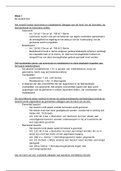
This document contains workings, explanations and solutions to the TAM2601 Assignment 1 (QUALITY ANSWERS) 2025. For assistance whats-app us on 0.6.8..8.1.2..0.9.3.4.. Question 1 Read the extract below and answer the following questions: When educators get together to talk about their work, the conversation inevitably comes round to the learners they are teaching – their habits, the challenges they are facing and the challenges they pose as learners. One of the best resources on this topic is the video by Michael Wesch, a cultural anthropologist at Kansas State University. In this video (Wesch 2007), Michael asked his students a simple question: “What is it like being a student today?” Student responses – at once provocative and disturbing – say a lot about the current generation of college and university students and how educators can create environments that would help them learn. Students seem to feel that they are not being taught in the ways best suited to help them achieve deep, meaningful learning. They seek engagement and connection…”. 1.1 Mention and describe the five characteristics of the millennial generation learners. (10) 1.2 Identify and explain five ways in which learners can use technology to establish a community of practice. (10) Question 2 Read the extract below and answer the following questions: “Teaching is not an easy profession – the educator must be a mature person to be able to handle all the emotions involved in educating learners in an intelligent way – you have to handle the feelings of colleagues and learners, who experience similar emotions, as well as your own feelings, on a daily basis.” 2.1 Mention and discuss five abilities of an emotionally intelligent educator. (10) 2.2 Identify and describe five possible negative behaviours that may be displayed by educators in their classes in order to deal with anger. (10) Downloaded by Corona Virus () lOMoARcPSD| TAM2601 OCT/NOV 2024 5 Question 3 Read the extract below and answer the following questions: “The way an educator arranges a classroom communicates messages about his or her expectations of how the room should be used. Careful use of the physical space could make a considerable difference to classroom behaviour (Unisa 2006, 34).” 3.1 Critically discuss the abovementioned extract by referring to five considerations that the educator must keep in mind when organising the physical layout of the classroom. (10) 3.2 Critically discuss five aspects that are involved in creating good educator-learner relationships. (10) Question 4 Read the extract below and answer the following questions: “Researchers have evidence of the positive effects of parent involvement on children, families and schools, when schools and parents continuously support and encourage the children’s learning and development.” 4.1 Discuss specific five activities that parents can do to get involved in classroom or educational activities. (10) 4.2 Mention and discuss five instances where a classroom manager may be found guilty of negligence. (10) The agendas that you set at this stage wholly determine your success in implementing a classroom management plan. A. By establishing rapport, you are making a connection with your learners at emotional level. B. It will set the daily climate for the academic and social growth of your learners. C One cannot expect all to be fine just because there is a set of published rules. This phase is characterised by strong relational ties with the class and a positive working knowledge of the class and its individual dynamics. A. This means that your learners are comfortable with you and have developed a measure of trust in you. B. The educator aims at minimising unnecessary disruptions by having a thoughtful balance of rights, responsibilities, rules, and routines. C. The educator aims at minimizing unnecessary disruptions by having a thoughtful balance of rights, responsibilities, rules, and routines Answer 2 One cannot expect all to be fine just because there is a set of published rules. A. a thoughtful balance of rights, responsibilities, rules and routines B. The educator plays the role of the motivator. C. During the cohesive phase, cooperative learning, classroom meetings and peer-teaching are the norm. Classroom management has now moved into a rational phase. A. Through the establishment and consolidation phases learners were enabled to control many aspects of their own behaviour and learning. B. It is important that the educator continue to teach, encourage and maintain what was established. C. During this phase, the focus is preventative. The educator aims at minimising unnecessary disruptions Another concern is that learners do not take on the responsibility of watching the lessons and thus cannot participate effectively in the classroom. A. In this aspect, flipped classrooms use a learner-centred approach as it focuses on learners’ learning and it places the responsibility for learning. B. There are, however, also a number of limitations to the flipped classroom approach. C. implementing a flipped classroom for a large class size may boost the learners’ academic attainment as it generally enables more focused teaching and learning to take place in the classroom despite the class size. It was found that engaging the learners together is a challenge in large classrooms. A. This is even more so when using technologically driven approaches to teaching, which research has demonstrated to be less. B. implementing a flipped classroom for a large class size may boost the learners’ academic attainment as it generally enables more focused teaching and learning to take place. C Another way to manage large classes is to apply the traditional approach to teaching, which is becoming popular, mostly due to the advancement of technology in the classroom Answer 6 Flipped classroom’s online material enables educators A. Coach large classes B. Out-of-class learning need to be carefully disintegrated. C. enables more focused teaching and learning to take place in the classroom A flipped classroom means: A. Out-of-class and in-class learning need to be carefully integrated. B. Learners watch the lesson (prerecorded) at home, and then do the applications or homework in class. C. concerns about learners’ access to the internet (cost of data). Answer 8 Limitations to the flipped classroom: A. Prerecording lessons requires skill and time. B. Small-group discussions, peer-learning and enquiry-learning can be used to engage learners. C. An environment that increases the interaction between the learners and educators. A technology-infused lesson: A approach could empower educators to take charge of their teaching B. Educators may have one-on-one teaching. C Does not facilitate peer learning Communication technologies in teaching: A. create integrated learning environments, especially as learners have already adopted technology. B. increases the interaction between the educators. C. In this way the learners can also help each other Building Empathy: A. maintain a “wise” approach to learning relationships. B. the learner “feeling understood”. C. supports the different dimensions of self-esteem. Negative behaviour: A. a “skill” that he or she (a teacher) has been refining and practicing for many years. B is the picture that learners have of themselves. C. engages in a power struggle with such a learner Answer 13 Leaving the ego at the door: A. is the feeling that learners experience from their self-image and self-concept. B. emotions are usually well managed, but the responsibility for the learning taking place lies with the educator. C.Put emotions away for later) his or her own issues as they arise Answer 14 Multicultural connections: A. The ability to manage one’s own culture as it arises is one of the educator’s most. demanding skills. B. the skills an educator needs to create a learning environment that supports the different dimensions of self-esteem. C. an educator should acknowledge the culture that the learner has worked so hard to develop - and then redirect it Work-orientated classrooms A. Learners comply with instructions carefully to complete their tasks. B. the first, the focus is on creativity. C. the responsibility for the learning taking place lies with the learner. Answer 16 Learning-orientated classrooms A. Learners follow instructions carefully to complete their tasks. B. The objectives aimed for are the educators’ valued knowledge, skills, and attitudes. C. These classrooms are usually noisy Critical attitudes A. the foundation of such a learning-orientated classroom is a system of critical learning. B Educators who are incredible practice what they preach. C. educators who hold themselves and their learners accountable Educator intervention A. addressing disciplinary problems requires the sole intervention of the classroom educator. B. some interventions an individual educator could use ensure more effective discipline. C. Effective discipline is a combination of effective intervention at the school level and effective management at the classroom level Answer 19 Discipline A. the decreasing amount of disruptive behaviour substantially interferes with their teaching. B. disciplinary problems impact the school as a whole; the classroom manager is the last line of defense. C. half of all classroom time is used for instruction and that disciplinary problems occupy most of the other half. Millenium generation A Strong preference for traditional lecture-based learning B Limited use of technology in daily life C High adaptability to digital tools and collaborative learning Answer 21 Effective anger management technique A Reacting impulsively to stressors B Practicing deep breathing and mindfulness C Suppressing emotions without addressing them Answer 22 Technology enhances parental involvement A By replacing parent-teacher meetings with automated responses. B By limiting parental access to student progress reports. C By using learning management systems, online meetings, class newsletters, and real-time progress tracking. Answer 23 Misconception about Millennials A They are highly dependent on technology B They are less committed to work and learning C They prefer interactive and flexible learning environments Answer 24 Common Challenges: classroom administration A Time constraints, paperwork overload, and balancing administrative duties with teaching. B Having too much free time due to minimal administrative work. C Avoiding interactions with parents and school leaders. Answer 25

Montrer plus Lire moins
Établissement
Cours


Oups ! Impossible de charger votre document. Réessayez ou contactez le support.

Livre connecté

École, étude et sujet

Établissement
Cours

Infos sur le Document

Publié le
28 mars 2025
Nombre de pages
10
Écrit en
2024/2025
Type
Examen
Contenu
Questions et réponses

Sujets

Aperçu du contenu

TAM2601
Assignment 1 2025

Unique number: 715314

Due Date: 21 May 2025

This document includes:

 Helpful answers and guidelines
 Detailed explanations and/ or calculations
 References


Connect with the tutor on

+27 68 812 0934

, © Study Shack 2025. All rights Reserved +27 68 812 0934

2,66 €
Accéder à l'intégralité du document:

Garantie de satisfaction à 100%
Disponible immédiatement après paiement
En ligne et en PDF
Tu n'es attaché à rien

Faites connaissance avec le vendeur

Seller avatar
Les scores de réputation sont basés sur le nombre de documents qu'un vendeur a vendus contre paiement ainsi que sur les avis qu'il a reçu pour ces documents. Il y a trois niveaux: Bronze, Argent et Or. Plus la réputation est bonne, plus vous pouvez faire confiance sur la qualité du travail des vendeurs.
StudyShack Cornerstone College, Pretoria, Gauteng
S'abonner Vous devez être connecté afin de pouvoir suivre les étudiants ou les formations
Vendu
30697
Membre depuis
9 année
Nombre de followers
13937
Documents
1800
Dernière vente
2 semaines de cela
Study Guides for Unisa Students

4,1

1780 revues

5
971
4
335
3
264
2
80
1
130

Récemment consulté par vous

Pourquoi les étudiants choisissent Stuvia

Créé par d'autres étudiants, vérifié par les avis

Une qualité sur laquelle compter : rédigé par des étudiants qui ont réussi et évalué par d'autres qui ont utilisé ce document.

Le document ne convient pas ? Choisis un autre document

Aucun souci ! Tu peux sélectionner directement un autre document qui correspond mieux à ce que tu cherches.

Paye comme tu veux, apprends aussitôt

Aucun abonnement, aucun engagement. Paye selon tes habitudes par carte de crédit et télécharge ton document PDF instantanément.

Student with book image

“Acheté, téléchargé et réussi. C'est aussi simple que ça.”

Alisha Student

Foire aux questions