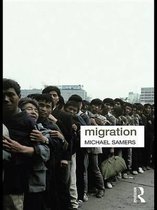
Migration
Michael Samers and Michael Collyer
Table of Content
Glossary .................................................................................................................................................. 3
Chapter 1 ................................................................................................................................................ 8
Introduction ......................................................................................................................................... 8
Migrant Stories and Key terms and Categories in the Study of Migration and Immigration .............. 8
Key Issues and Debates concerning Migration ................................................................................... 9
Global Tendencies and Estimated patterns of Migration across the Globe ....................................... 10
Social Theory, Spatial Concepts and the Study of Migration ............................................................ 10
Social concepts and the study of migration ................................................................................. 10
Some meanings of space............................................................................................................... 11
Summary questions ........................................................................................................................... 13
Chapter 2 .............................................................................................................................................. 14
The beginnings of Migration Theory: Ravenstein’s ‘laws’ ............................................................... 14
The Neo-Classical Economic approach............................................................................................. 15
The Behavioural approach................................................................................................................. 16
The New Economics approach .......................................................................................................... 16
Dual Labour Market and Labour Market Segmentation approaches................................................. 17
Structuralist approach ........................................................................................................................ 17
Neoliberalism .................................................................................................................................... 19
Conclusions ....................................................................................................................................... 20
Chapter 3 ............................................................................................................................................... 21
Social Network explanations for migration ....................................................................................... 21
Transnationalism and Migration ........................................................................................................ 22
Gender-Aware approaches to migration ............................................................................................ 23
Structurationist and Agency-Centric approaches .............................................................................. 23
The significance of temporality: another agency-centric perspective on migration.......................... 23
The migration-development nexus .................................................................................................... 24
Explaining forced Migration ............................................................................................................. 25
Environmental Change and Migration .............................................................................................. 25
Beyond Theory? A social transformation perspective ....................................................................... 26
Assessment of the Approaches: ......................................................................................................... 27
........................................................................................................................................................... 29
Towards a spatial approach to migration ........................................................................................... 30
0
, Summary questions ........................................................................................................................... 30
Chapter 4 ............................................................................................................................................... 31
Theories of migration control in the ‘global north’ ........................................................................... 31
The National Identity Approach ........................................................................................................ 32
Freeman’s ‘Client Politics’ Thesis ..................................................................................................... 33
Joppke’s ‘Self-limited Sovereignty’ Argument ................................................................................. 33
A Political Sociology of Migration Policy ........................................................................................ 34
Foucauldian and accompanying critical approaches to migration and immigration control ............. 34
The Securitization of Migration?....................................................................................................... 34
Territoriality and Migration and Immigration Policies: Beyond ‘Methodological Nationalism’ ...... 35
Is there a global governance of migration? ................................................................................. 36
The global governance of asylum and refugee protection? ........................................................ 36
Border externalization .................................................................................................................. 36
Is there a supra-nationalization of migration policies to and within the EU? ........................... 37
Do international trading blocs and institutions have an effect on national politics of
migration? ..................................................................................................................................... 37
Down-scaling migration control .................................................................................................. 38
Detentions ..................................................................................................................................... 38
Dispersals ...................................................................................................................................... 39
The localization of resistance to the criminalization and securitization of migration ............... 39
Migration Control in Poorer Countries.............................................................................................. 39
Conclusions ....................................................................................................................................... 40
Summary questions ........................................................................................................................... 40
Chapter 5 ............................................................................................................................................... 41
Understanding the Relationship between Migrants and Work .......................................................... 41
The conventional view (Human capital theory and its limitations) ............................................ 41
The Beginnings of an Alternative View: the Dual Labour Market Hypothesis as an Initial Version of
Labour Market Segmentation Theory ............................................................................................... 42
Beyond the Dual Labour Market: Labour Market Segmentation Theory ......................................... 42
Variations on labour Market Segmentation Theory: Cultural Capital, Cultural Judgements and
Embodiment ...................................................................................................................................... 42
Is labour Market segmentation theory (still) Relevant? The Labour Market literature and the
Migration literature............................................................................................................................ 43
Complicating labour market segmentation theory: the question of ethnic immigrant enclaves
and ethnic/immigrant dispersal.................................................................................................... 43
Ethnoburbs, heterolocalism, and geographical dispersal: implications for labour market
segmentation ................................................................................................................................. 44
International labour market segmentation ......................................................................................... 44
1
, A Migrant Network Approach in ‘super-diverse’ Societies ............................................................... 44
A Demonstration of a Mixed Approach in the Richer Countries ...................................................... 45
Labour demand and the segmentation of migrant workers ........................................................ 45
Global cities, urban labour demand, and migration ................................................................... 45
Constructing highly skilled migration ......................................................................................... 45
Undocumented migration and informal employment: the intersection of production
imperatives and forces of regulation............................................................................................ 46
Where do legal and undocumented migrants work? ................................................................... 46
Forces of regulation ..................................................................................................................... 46
Processes of social reproduction .................................................................................................. 47
Labour Market Segmentation and Migration in Poorer countries ..................................................... 47
Conclusions ....................................................................................................................................... 47
Chapter 6 ............................................................................................................................................... 49
Space, migration, and citizenship ...................................................................................................... 49
Citizenship as legal status (formal citizenship, nationality and naturalization) ................................ 49
National ‘models’ of formal citizenship? ..................................................................................... 49
Dual and plural nationality .......................................................................................................... 50
From national models to denizenship and jus domicile: the convergence of national models? 50
Citizenship as rights .......................................................................................................................... 50
Towards post-national forms of citizenship? ............................................................................... 50
The ’neo liberalization’ of migrants rights? ................................................................................ 51
Citizenship as belonging ................................................................................................................... 51
Assimilation .................................................................................................................................. 52
Multiculturalism ........................................................................................................................... 52
Integration .................................................................................................................................... 52
Diversity ........................................................................................................................................ 53
Transnational belonging? ............................................................................................................ 53
Citizenship as civic and political participation .................................................................................. 54
Conclusions ....................................................................................................................................... 54
Summary questions ........................................................................................................................... 55
Chapter 7 ............................................................................................................................................... 56
2
, Glossary
Assimilation – This seems to have at least three meanings: immigrants adapt to or adopt the cultural
ideas and practices of the dominant culture over time; immigrants achieve the same socio-economic
status measured in terms of some ‘average’ for the ‘native-born’ and immigrants develop a spatial
pattern in terms of residence and employment that is indistinguishable from the dominant or more
dominant cultural groups.
Asylum-seeker – Refers to a migrant who enters a country clandestinely or by legal means and then
requests asylum. An individual may also request asylum from outside the country, and thus enters a
country as an ‘asylum-seeker’. An asylum-seeker may or may not in turn be granted asylum or refugee
status by a particular national government.
Border externalization – The process of extending ‘border-like practices’ (such as migration control
and customs) beyond the cartographic or ‘physical’ border of (usually) a country.
Brain circulation – Used to describe the movement back and forth among ‘highly skilled’ migrants
between the country (or countries) of emigration and immigration. Skills are acquired in both (or
several) countries and transferred (‘circulated’) between these countries.
Brain drain – This refers to the loss of ‘skilled’ or ‘highly skilled’ migrants from a particular country of
origin. It is generally used to describe the effects of emigration from poorer countries on the
economies of these poorer countries.
Brain gain – The opposite of ‘brain drain’. It generally refers to a country of immigration which
benefits economically from an in-migration of ‘skilled’ or ‘highly skilled’ labour.
Capitalism – A now arguably global system of social relations combining at least the wide-spread use
of wage labour, private property, and the extraction of surplus value (exploitation).
Circular migration – Refers to the process by which migrants move back and forth between a country
of emigration and a country of immigration. This typically involves seasonal stays in either country,
often related to temporary or seasonal patterns of work. The term is also commonly used for
constant internal migration from rural areas to urban centres, and back again.
Denizenship – This describes the various shades of legality and access to cultural, economic, political
and social rights among migrants.
Diaspora – A highly contested term in meaning and scope, it generally refers to migrants from some
sort of ‘homeland’ who in turn spread out across the world and re-settle in various countries of
immigration and re-establish inter-linked communities.
Diversity – Seems to refer to the condition of diverse languages, religions, and ethnic groups; a
societal ‘understanding’ that organizations should not discriminate on the grounds of cultural
characteristics, but should engage those characteristics; and that cultural skills should be seen as
marketable ‘competencies’.
Forced migrant – This is a general term to describe an individual who is forced from their country or
countries of origin. ‘Forced’ is an imprecise term that may have economic, environmental, political, or
social origins, or a combination of all or any of these.
Friction of distance – The time and cost of overcoming distance.
3
Michael Samers and Michael Collyer
Table of Content
Glossary .................................................................................................................................................. 3
Chapter 1 ................................................................................................................................................ 8
Introduction ......................................................................................................................................... 8
Migrant Stories and Key terms and Categories in the Study of Migration and Immigration .............. 8
Key Issues and Debates concerning Migration ................................................................................... 9
Global Tendencies and Estimated patterns of Migration across the Globe ....................................... 10
Social Theory, Spatial Concepts and the Study of Migration ............................................................ 10
Social concepts and the study of migration ................................................................................. 10
Some meanings of space............................................................................................................... 11
Summary questions ........................................................................................................................... 13
Chapter 2 .............................................................................................................................................. 14
The beginnings of Migration Theory: Ravenstein’s ‘laws’ ............................................................... 14
The Neo-Classical Economic approach............................................................................................. 15
The Behavioural approach................................................................................................................. 16
The New Economics approach .......................................................................................................... 16
Dual Labour Market and Labour Market Segmentation approaches................................................. 17
Structuralist approach ........................................................................................................................ 17
Neoliberalism .................................................................................................................................... 19
Conclusions ....................................................................................................................................... 20
Chapter 3 ............................................................................................................................................... 21
Social Network explanations for migration ....................................................................................... 21
Transnationalism and Migration ........................................................................................................ 22
Gender-Aware approaches to migration ............................................................................................ 23
Structurationist and Agency-Centric approaches .............................................................................. 23
The significance of temporality: another agency-centric perspective on migration.......................... 23
The migration-development nexus .................................................................................................... 24
Explaining forced Migration ............................................................................................................. 25
Environmental Change and Migration .............................................................................................. 25
Beyond Theory? A social transformation perspective ....................................................................... 26
Assessment of the Approaches: ......................................................................................................... 27
........................................................................................................................................................... 29
Towards a spatial approach to migration ........................................................................................... 30
0
, Summary questions ........................................................................................................................... 30
Chapter 4 ............................................................................................................................................... 31
Theories of migration control in the ‘global north’ ........................................................................... 31
The National Identity Approach ........................................................................................................ 32
Freeman’s ‘Client Politics’ Thesis ..................................................................................................... 33
Joppke’s ‘Self-limited Sovereignty’ Argument ................................................................................. 33
A Political Sociology of Migration Policy ........................................................................................ 34
Foucauldian and accompanying critical approaches to migration and immigration control ............. 34
The Securitization of Migration?....................................................................................................... 34
Territoriality and Migration and Immigration Policies: Beyond ‘Methodological Nationalism’ ...... 35
Is there a global governance of migration? ................................................................................. 36
The global governance of asylum and refugee protection? ........................................................ 36
Border externalization .................................................................................................................. 36
Is there a supra-nationalization of migration policies to and within the EU? ........................... 37
Do international trading blocs and institutions have an effect on national politics of
migration? ..................................................................................................................................... 37
Down-scaling migration control .................................................................................................. 38
Detentions ..................................................................................................................................... 38
Dispersals ...................................................................................................................................... 39
The localization of resistance to the criminalization and securitization of migration ............... 39
Migration Control in Poorer Countries.............................................................................................. 39
Conclusions ....................................................................................................................................... 40
Summary questions ........................................................................................................................... 40
Chapter 5 ............................................................................................................................................... 41
Understanding the Relationship between Migrants and Work .......................................................... 41
The conventional view (Human capital theory and its limitations) ............................................ 41
The Beginnings of an Alternative View: the Dual Labour Market Hypothesis as an Initial Version of
Labour Market Segmentation Theory ............................................................................................... 42
Beyond the Dual Labour Market: Labour Market Segmentation Theory ......................................... 42
Variations on labour Market Segmentation Theory: Cultural Capital, Cultural Judgements and
Embodiment ...................................................................................................................................... 42
Is labour Market segmentation theory (still) Relevant? The Labour Market literature and the
Migration literature............................................................................................................................ 43
Complicating labour market segmentation theory: the question of ethnic immigrant enclaves
and ethnic/immigrant dispersal.................................................................................................... 43
Ethnoburbs, heterolocalism, and geographical dispersal: implications for labour market
segmentation ................................................................................................................................. 44
International labour market segmentation ......................................................................................... 44
1
, A Migrant Network Approach in ‘super-diverse’ Societies ............................................................... 44
A Demonstration of a Mixed Approach in the Richer Countries ...................................................... 45
Labour demand and the segmentation of migrant workers ........................................................ 45
Global cities, urban labour demand, and migration ................................................................... 45
Constructing highly skilled migration ......................................................................................... 45
Undocumented migration and informal employment: the intersection of production
imperatives and forces of regulation............................................................................................ 46
Where do legal and undocumented migrants work? ................................................................... 46
Forces of regulation ..................................................................................................................... 46
Processes of social reproduction .................................................................................................. 47
Labour Market Segmentation and Migration in Poorer countries ..................................................... 47
Conclusions ....................................................................................................................................... 47
Chapter 6 ............................................................................................................................................... 49
Space, migration, and citizenship ...................................................................................................... 49
Citizenship as legal status (formal citizenship, nationality and naturalization) ................................ 49
National ‘models’ of formal citizenship? ..................................................................................... 49
Dual and plural nationality .......................................................................................................... 50
From national models to denizenship and jus domicile: the convergence of national models? 50
Citizenship as rights .......................................................................................................................... 50
Towards post-national forms of citizenship? ............................................................................... 50
The ’neo liberalization’ of migrants rights? ................................................................................ 51
Citizenship as belonging ................................................................................................................... 51
Assimilation .................................................................................................................................. 52
Multiculturalism ........................................................................................................................... 52
Integration .................................................................................................................................... 52
Diversity ........................................................................................................................................ 53
Transnational belonging? ............................................................................................................ 53
Citizenship as civic and political participation .................................................................................. 54
Conclusions ....................................................................................................................................... 54
Summary questions ........................................................................................................................... 55
Chapter 7 ............................................................................................................................................... 56
2
, Glossary
Assimilation – This seems to have at least three meanings: immigrants adapt to or adopt the cultural
ideas and practices of the dominant culture over time; immigrants achieve the same socio-economic
status measured in terms of some ‘average’ for the ‘native-born’ and immigrants develop a spatial
pattern in terms of residence and employment that is indistinguishable from the dominant or more
dominant cultural groups.
Asylum-seeker – Refers to a migrant who enters a country clandestinely or by legal means and then
requests asylum. An individual may also request asylum from outside the country, and thus enters a
country as an ‘asylum-seeker’. An asylum-seeker may or may not in turn be granted asylum or refugee
status by a particular national government.
Border externalization – The process of extending ‘border-like practices’ (such as migration control
and customs) beyond the cartographic or ‘physical’ border of (usually) a country.
Brain circulation – Used to describe the movement back and forth among ‘highly skilled’ migrants
between the country (or countries) of emigration and immigration. Skills are acquired in both (or
several) countries and transferred (‘circulated’) between these countries.
Brain drain – This refers to the loss of ‘skilled’ or ‘highly skilled’ migrants from a particular country of
origin. It is generally used to describe the effects of emigration from poorer countries on the
economies of these poorer countries.
Brain gain – The opposite of ‘brain drain’. It generally refers to a country of immigration which
benefits economically from an in-migration of ‘skilled’ or ‘highly skilled’ labour.
Capitalism – A now arguably global system of social relations combining at least the wide-spread use
of wage labour, private property, and the extraction of surplus value (exploitation).
Circular migration – Refers to the process by which migrants move back and forth between a country
of emigration and a country of immigration. This typically involves seasonal stays in either country,
often related to temporary or seasonal patterns of work. The term is also commonly used for
constant internal migration from rural areas to urban centres, and back again.
Denizenship – This describes the various shades of legality and access to cultural, economic, political
and social rights among migrants.
Diaspora – A highly contested term in meaning and scope, it generally refers to migrants from some
sort of ‘homeland’ who in turn spread out across the world and re-settle in various countries of
immigration and re-establish inter-linked communities.
Diversity – Seems to refer to the condition of diverse languages, religions, and ethnic groups; a
societal ‘understanding’ that organizations should not discriminate on the grounds of cultural
characteristics, but should engage those characteristics; and that cultural skills should be seen as
marketable ‘competencies’.
Forced migrant – This is a general term to describe an individual who is forced from their country or
countries of origin. ‘Forced’ is an imprecise term that may have economic, environmental, political, or
social origins, or a combination of all or any of these.
Friction of distance – The time and cost of overcoming distance.
3