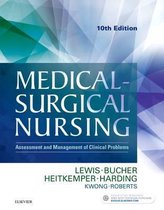
Test Bank - Lewis
Medical Surgical
Nursing, 10th
Edition (Lewis,
2017),
Chapter 1-68 | All
Chapters
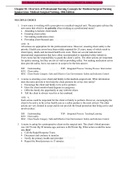
Chapter 01: Professional Nursing
Harding: Lewis’s Medical-Surgical Nursing, 10th Edition
multichoice:
• The nurse completes an admission database and
explains that the plan of care and discharge goals will
be developed with the patient‘s input. The patient asks,
, “How is this different from what the physician does?”
Which response would the nurse provide?
A. “The role of the nurse is to administer
medications and othertreatments
prescribedby your physician.”
B. “In addition to caring for you while you
are sick, the nurses willhelp you plan
tomaintain your health.”
C. “The nurse‘s job is to collect
information and communicateany
problems thatoccur to the
physician.”
D. “Nurses perform many of the same
procedures as the physician, but nurses
are with the patients for a longer time
than the physician.”
ANS: B
The American Nurses Association (ANA) definition of
nursing describes the roleof nurses inpromoting health.
The other responses describe dependent and collaborative
functions of the nursing role but do not accurately describe
the nurse‘s unique role in the health care system.
DIF: Cognitive Level: Analyze (Analysis)
TOP: Nursing Process: Implementation MSC: NCLEX:
Safe and Effective CareEnvironment
• Which statement by the nurse accurately describes the
use of evidence-basedpractice (EBP)?
A. “Patient care is based on clinical judgment, experience, and
traditions.”
B. “Data are analyzed later to show that the patient
outcomes are consistentlymet.”
C. “Research from all published articles are used as a
guide for planning patient care.”
D. “Recommendations are
based on research, clinical
expertise, and patient
preferences.”
ANS: D
Evidence-based practice (EBP) is the use of the best
research-based evidencecombined withclinician
expertise and consideration of patient preferences.
Clinical judgment based on the nurse‘s clinical
experience is part of EBP, but clinical decision making
, should also incorporate current research and research-
based guidelines. Evaluation of patient outcomes
isimportant, but data analysis is not required to use
EBP. All published articles do not provide research
evidence; interventions should be based on credible
research, preferably randomizedcontrolled studies with
a large number of subjects.
DIF: Cognitive Level: Understand (Comprehension) TOP: NursingProcess: Pl
• Which statement by the nurse provides a clear explanation of the nursing
process?
A. “The nursing process is a research
method of diagnosing thepatient‘s
health careproblems.”
B. “The nursing process is used
primarily to explain nursing
interventions to otherhealth care
professionals.”
C. “The nursing process is a problem-solving tool used to
identify and manage thepatients health record.
D. “The nursing process is based
on nursing theory that
incorporates
thebiopsychosocial nature of
humans.”
ANS: C
The nursing process is a problem-solving approach to
the identification and treatment of patients‘ problems.
Nursing process does not require research methods
for diagnosis. The primary use of the nursing process
is in patient care, not to establish nursing theory or
explainnursing interventions to otherhealth care
professionals.
DIF: Cognitive Level: Understand (Comprehension) TOP: NursingProcess: Ev
• A patient admitted to the hospital for surgery
tells the nurse, “I do not feel
comfortableleaving my children with my
parents.” Which action would the nurse take
next?
A. Reassure the patient that these feelings are common for parents.
B. Have the patient call the children to ensure that they are doing well.
, C. Gather information on the patient‘s
concerns about the child care
arrangements.
D. Call the patient‘s parents to
determine whether adequatechild
care is beingprovided.
ANS: C
Because a complete assessment is necessary in order to
identify a problem andchoose an appropriate
intervention, the nurse‘s first action should be to obtain
more information. The other actions may be appropriate,
but more assessment is needed before the best
interventioncan be chosen.
DIF: Cognitive Level: Analyze (Analysis)
TOP: Nursing Process: Assessment MSC: NCLEX: Psychosocial
Integrity
• A patient with a bacterial infection is hypovolemic
due to a fever and excessive diaphoresis.Which
expected outcome would the nurse select forthis
patient?
A. Patient has a balanced intake and output.
B. Patient‘s bedding is kept clean and free of moisture.
C. Patient understands the need for increased fluid intake.
D. Patient‘s skin remains cool and dry throughout hospitalization.
ANS: A
Balanced intake and output gives measurable data
showing resolution of theproblem ofdeficient fluid
volume. The other statements would not indicate that
the problem of hypovolemia was resolved.
DIF: Cognitive Level: Apply (Application) TOP: NursingProcess: Pl
• Which statement describes the purpose of the
evaluation phase of the nursingprocess?
A. To document the nursing care plan in the progress notes of the
health record
B. To determine if interventions have been effective in meeting patient
outcomes
C. To decide whether the patient‘s health problems
have been completelyresolved
D. To establish if the patient agrees that the
nursing care provided wassatisfactory
Medical Surgical
Nursing, 10th
Edition (Lewis,
2017),
Chapter 1-68 | All
Chapters
Chapter 01: Professional Nursing
Harding: Lewis’s Medical-Surgical Nursing, 10th Edition
multichoice:
• The nurse completes an admission database and
explains that the plan of care and discharge goals will
be developed with the patient‘s input. The patient asks,
, “How is this different from what the physician does?”
Which response would the nurse provide?
A. “The role of the nurse is to administer
medications and othertreatments
prescribedby your physician.”
B. “In addition to caring for you while you
are sick, the nurses willhelp you plan
tomaintain your health.”
C. “The nurse‘s job is to collect
information and communicateany
problems thatoccur to the
physician.”
D. “Nurses perform many of the same
procedures as the physician, but nurses
are with the patients for a longer time
than the physician.”
ANS: B
The American Nurses Association (ANA) definition of
nursing describes the roleof nurses inpromoting health.
The other responses describe dependent and collaborative
functions of the nursing role but do not accurately describe
the nurse‘s unique role in the health care system.
DIF: Cognitive Level: Analyze (Analysis)
TOP: Nursing Process: Implementation MSC: NCLEX:
Safe and Effective CareEnvironment
• Which statement by the nurse accurately describes the
use of evidence-basedpractice (EBP)?
A. “Patient care is based on clinical judgment, experience, and
traditions.”
B. “Data are analyzed later to show that the patient
outcomes are consistentlymet.”
C. “Research from all published articles are used as a
guide for planning patient care.”
D. “Recommendations are
based on research, clinical
expertise, and patient
preferences.”
ANS: D
Evidence-based practice (EBP) is the use of the best
research-based evidencecombined withclinician
expertise and consideration of patient preferences.
Clinical judgment based on the nurse‘s clinical
experience is part of EBP, but clinical decision making
, should also incorporate current research and research-
based guidelines. Evaluation of patient outcomes
isimportant, but data analysis is not required to use
EBP. All published articles do not provide research
evidence; interventions should be based on credible
research, preferably randomizedcontrolled studies with
a large number of subjects.
DIF: Cognitive Level: Understand (Comprehension) TOP: NursingProcess: Pl
• Which statement by the nurse provides a clear explanation of the nursing
process?
A. “The nursing process is a research
method of diagnosing thepatient‘s
health careproblems.”
B. “The nursing process is used
primarily to explain nursing
interventions to otherhealth care
professionals.”
C. “The nursing process is a problem-solving tool used to
identify and manage thepatients health record.
D. “The nursing process is based
on nursing theory that
incorporates
thebiopsychosocial nature of
humans.”
ANS: C
The nursing process is a problem-solving approach to
the identification and treatment of patients‘ problems.
Nursing process does not require research methods
for diagnosis. The primary use of the nursing process
is in patient care, not to establish nursing theory or
explainnursing interventions to otherhealth care
professionals.
DIF: Cognitive Level: Understand (Comprehension) TOP: NursingProcess: Ev
• A patient admitted to the hospital for surgery
tells the nurse, “I do not feel
comfortableleaving my children with my
parents.” Which action would the nurse take
next?
A. Reassure the patient that these feelings are common for parents.
B. Have the patient call the children to ensure that they are doing well.
, C. Gather information on the patient‘s
concerns about the child care
arrangements.
D. Call the patient‘s parents to
determine whether adequatechild
care is beingprovided.
ANS: C
Because a complete assessment is necessary in order to
identify a problem andchoose an appropriate
intervention, the nurse‘s first action should be to obtain
more information. The other actions may be appropriate,
but more assessment is needed before the best
interventioncan be chosen.
DIF: Cognitive Level: Analyze (Analysis)
TOP: Nursing Process: Assessment MSC: NCLEX: Psychosocial
Integrity
• A patient with a bacterial infection is hypovolemic
due to a fever and excessive diaphoresis.Which
expected outcome would the nurse select forthis
patient?
A. Patient has a balanced intake and output.
B. Patient‘s bedding is kept clean and free of moisture.
C. Patient understands the need for increased fluid intake.
D. Patient‘s skin remains cool and dry throughout hospitalization.
ANS: A
Balanced intake and output gives measurable data
showing resolution of theproblem ofdeficient fluid
volume. The other statements would not indicate that
the problem of hypovolemia was resolved.
DIF: Cognitive Level: Apply (Application) TOP: NursingProcess: Pl
• Which statement describes the purpose of the
evaluation phase of the nursingprocess?
A. To document the nursing care plan in the progress notes of the
health record
B. To determine if interventions have been effective in meeting patient
outcomes
C. To decide whether the patient‘s health problems
have been completelyresolved
D. To establish if the patient agrees that the
nursing care provided wassatisfactory