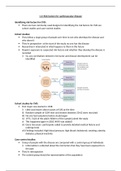
1.3: Risk factors for cardiovascular disease
Identifying risk factors for CVD:
There are two commonly used designs for identifying the risk factors for CVD are
cohort studies and case-control studies
Cohort studies:
They follow a large group of people over time to see who develops the disease and
who doesn’t
They’re perspective- at the start of the study no one has the disease
Researchers= interested in what happens to them in the future
People’s exposure to suspected risk factors and whether they develop the disease is
recorded
i) So, any correlations between risk factor and disease development can be
identified
Cohort studies for CVD:
First major one started in 1948
i) Little was known about causes of CVD at the time
ii) Random sample of 5209 men and women between 30-62 were recruited
iii) No one had symptoms before study began
iv) 1971, 5124 of the adult children of the sample joined the study
v) This happened again in 2002 (4095 was added)
vi) Every two years- participants asked to provide detailed medical history and
undergo tests
vii) Findings included: High blood pressure; high blood cholesterol; smoking; obesity;
diabetes; physical inactivity
Case-control studies:
Group of people with the disease are compared with a control group of individuals
i) Information is collected about the risk factors that they have been exposed to in
the past
They’re retrospective
The control group should be representative of the population
, Sometimes controls= individually matched to cases- known disease-risk factors like
age and sex are similar in each case and control pair
i) Allows scientists to investigate a potential role of unknown risk factors
ii) Shouldn’t match variables which could potentially turn out to be risk factors as it
can’t be tested in the test
Case-control studies and CVD:
Global case-control study= INTERHEART study
i) Screened all patients with a first heart attack in 262 hospitals in 52 countries
ii) 15152 cases and 14820 controls were matched by gender and age and included in
the study
iii) The researchers’ original hypothesis was that risk factors for CVD differ between
people varying ethnic and geographic origin
iv) But the results concluded that nine risk factors accounted for over 90% of the risk-
same for both gender in almost every region and racial/ethnic group
Study Type Details CVD study
Cohort Prospective (looks Follows a large Framingham Heart Study
at the outcomes) group to see who - Check every 2 years
develops/who - Health checks
doesn’t develop the - Questions
diseases and - Generations after
associated risk generations
factors
Case-control Retrospective Follows a group of Interheart Study
(works backwards) people with the - Hypothesis ‘risk
disease and a group factors differ with
without the disease different
(control group) and ethnicity/geographical
compares them to origin
fins correlations - Results= same with
sex, race and ethnicity
Features of a good study:
To identify correlations
Studies need to be carefully designed
When designing one- key points need to be considered: clear aim (hypothesis);
representative sample; valid and reliable results; sample size; controlling variables
Representative sample:
Must be selected from the wider population that the study will be made on
i) If not= selection is biased as not representative of it
Proportion of people who drop out must be kept to a minimum (especially in cohort)
Valid and reliable results:
Any method used must produce valid data
Data= valid if it gives measures to what it’s supposed to
Method used to collect results must be reliable
Identifying risk factors for CVD:
There are two commonly used designs for identifying the risk factors for CVD are
cohort studies and case-control studies
Cohort studies:
They follow a large group of people over time to see who develops the disease and
who doesn’t
They’re perspective- at the start of the study no one has the disease
Researchers= interested in what happens to them in the future
People’s exposure to suspected risk factors and whether they develop the disease is
recorded
i) So, any correlations between risk factor and disease development can be
identified
Cohort studies for CVD:
First major one started in 1948
i) Little was known about causes of CVD at the time
ii) Random sample of 5209 men and women between 30-62 were recruited
iii) No one had symptoms before study began
iv) 1971, 5124 of the adult children of the sample joined the study
v) This happened again in 2002 (4095 was added)
vi) Every two years- participants asked to provide detailed medical history and
undergo tests
vii) Findings included: High blood pressure; high blood cholesterol; smoking; obesity;
diabetes; physical inactivity
Case-control studies:
Group of people with the disease are compared with a control group of individuals
i) Information is collected about the risk factors that they have been exposed to in
the past
They’re retrospective
The control group should be representative of the population
, Sometimes controls= individually matched to cases- known disease-risk factors like
age and sex are similar in each case and control pair
i) Allows scientists to investigate a potential role of unknown risk factors
ii) Shouldn’t match variables which could potentially turn out to be risk factors as it
can’t be tested in the test
Case-control studies and CVD:
Global case-control study= INTERHEART study
i) Screened all patients with a first heart attack in 262 hospitals in 52 countries
ii) 15152 cases and 14820 controls were matched by gender and age and included in
the study
iii) The researchers’ original hypothesis was that risk factors for CVD differ between
people varying ethnic and geographic origin
iv) But the results concluded that nine risk factors accounted for over 90% of the risk-
same for both gender in almost every region and racial/ethnic group
Study Type Details CVD study
Cohort Prospective (looks Follows a large Framingham Heart Study
at the outcomes) group to see who - Check every 2 years
develops/who - Health checks
doesn’t develop the - Questions
diseases and - Generations after
associated risk generations
factors
Case-control Retrospective Follows a group of Interheart Study
(works backwards) people with the - Hypothesis ‘risk
disease and a group factors differ with
without the disease different
(control group) and ethnicity/geographical
compares them to origin
fins correlations - Results= same with
sex, race and ethnicity
Features of a good study:
To identify correlations
Studies need to be carefully designed
When designing one- key points need to be considered: clear aim (hypothesis);
representative sample; valid and reliable results; sample size; controlling variables
Representative sample:
Must be selected from the wider population that the study will be made on
i) If not= selection is biased as not representative of it
Proportion of people who drop out must be kept to a minimum (especially in cohort)
Valid and reliable results:
Any method used must produce valid data
Data= valid if it gives measures to what it’s supposed to
Method used to collect results must be reliable