Chapter 9
Human Development
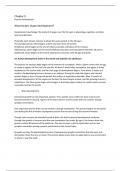
What factors shape development?
Development psychology: the study of changes over the life span in physiology, cognition, emotion,
and social behavior.
Physically, each human matures at about the same periods in the life span:
The prenatal period, which begins at birth and lasts 18 to 24 months.
Childhood, which begins at the end of infancy and lasts until about 10 to 14 years.
Adolescence, which begins at the end of childhood and lasts until somewhere between 18 and 21.
Adulthood, which begins at the end of adolescence and lasts until old age and death.
9.1 Human development starts in the womb and extends into adulthood
The process for having a baby begins at the moment of conception, when a sperm unites with an egg
to create a zygote, the first cell of a new life. At about 2 weeks after conception, the zygote is firmly
implanted in the uterine wall, and the next stage of development begins. From about 2 weeks to 2
months, the developing human is knows as an embryo. During this state the organs, and internal
systems begin to form. During this period, the embryo is especially vulnerable. After 2 months of
prenatal development, all the organs are formed, the heart begins to beat, and the growing human is
called fetus. The fetus grows larger and stronger as the body organs mature to a point where survival
is possible outside the womb.
- Brain development
Early brain growth has two important aspects. First, specific areas within the brain mature and
become functional. Second, regions of the brain learn to communicate with one another though
synaptic connections.
One important way the brain circuits mature is though myelination. This process begins on the spinal
cord during the first trimester of pregnancy and on the neurons during the second trimester.
Though most neurons are already formed at birth, the brain’s physical development continues
through the growth of neurons and the new connection they make. By age 4, the human brain has
grown to about 80 percent of the adult size. The size increase is due to myelination and to new
synaptic connection among neurons, particularly in the frontal lobes.
Synaptic pruning: the physiological process of persevering synaptic connection that ate used, and
elimination those that are not used. This process allows every brain to adapt well to any environment
in which it may find itself.
, - Early experiences can have lasting effects.
Nutrition affects aspects of brain development, such as myelination, beginning in the womb and
extending though childhood. Malnourished children might also lack the energy to interact with other
objects and people. This lack of stimulation would further undermine brain development.
When a child’s environment does not stimulate their brain, very few synaptic connections will be
made. The brain will be less sophisticated and less able to process complex information, solve
problems, or allow the child to develop advanced language skills.
Experiences such as stress, neglect, and exposure to violence that often occur in the context of
poverty can also influence the development of human brains. Stressful early life experiences can lead
to a wide range of mental and physical health disorders later in life.
Research shows that poor brain functioning associated with poverty at age 3 predicts several negative
life outcomes 40 years later, including health problems, addiction, and greater criminal activity.
- Exposure to teratogens during prenatal development
Teratogens: agents that harm the embryo or fetus. Teratogens include drugs, bacteria, and viruses, as
well as chemicals such as caffeine, alcohol. And certain prescription drugs.
Infants exposed to opioids during pregnancy can be born prematurely and experience excessive
crying, tremors, and other symptoms of distress in their first month of life.
The physical effects of exposure to teratogens such as opioids may be obvious at birth, but disorders
involving language, reasoning, social behavior, or emotional behavior may not become apparent until
the child is older. The extend of the damage depends on when the embryo of fetus is exposed, as well
as the length and amount of exposure.
The most common teratogen is alcohol drinking alcohol during pregnancy can lead to fatal alcohol
spectrum disorders (FASDs). Among the symptoms of this family of disorders are low birth weight,
face and head abnormalities, deficient brain growth, and evidence of impairment such as behavioral
of cognitive problems of low IQ.
Question
Why is synaptic pruning valuable in the developing brain?
It eliminates unused synaptic connections, which allows for adaption to the developmental
environment.
, 9.2 Biology and environment influence motor development
Newborns have various motor reflexed that aid survival. The grasping reflex is a survival mechanism
that has resisted from our primate ancestors. Young apes grasp their mothers, and this reflex is
adaptive because the offspring need to be carries from place to place. Also appearing at birth is the
tooting reflex, the turning an sucking that infants automatically engage in when an nipple or similar
object touches an area near their mouths. If they find an object, they will show the sucking reflex.
The brain at birth supports these basic reflexes, which pave the way for learning more complicated
behavior patters as the brain develops.
Most humans make eye contact quickly after they are born, display a first social smile at around 6
weeks, and learn to role over, to sit up, to crawl, to stand, to walk, and to talk, in that order.
Each person’s environment influences what happens throughout that individual’s development.
Every new development is the result of complex and consistent interplays between biology and
environment. Developmental psychologists now consider developmental milestones to be part of a
dynamic system.
Dynamic systems theory: the view that development is a self-organizing process, in which new forms
of behavior emerge through consistent interactions between a person and cultural and
environmental contexts.
From this perspective, developmental advances in any domain occur through both the person’s active
exploration of an environment and the constant feedback that environment provide.
Every new behavioral skill to emerge is the result of a complex and dynamic system of influences,
including the child’s motivation.
Question
Why do physical developmental milestones occur in a predicable sequence but sometimes vary in
timing between cultures?
Development is part of a dynamic system, guided by biology but influenced by environmental
feedback and cultural interactions.
Human Development
What factors shape development?
Development psychology: the study of changes over the life span in physiology, cognition, emotion,
and social behavior.
Physically, each human matures at about the same periods in the life span:
The prenatal period, which begins at birth and lasts 18 to 24 months.
Childhood, which begins at the end of infancy and lasts until about 10 to 14 years.
Adolescence, which begins at the end of childhood and lasts until somewhere between 18 and 21.
Adulthood, which begins at the end of adolescence and lasts until old age and death.
9.1 Human development starts in the womb and extends into adulthood
The process for having a baby begins at the moment of conception, when a sperm unites with an egg
to create a zygote, the first cell of a new life. At about 2 weeks after conception, the zygote is firmly
implanted in the uterine wall, and the next stage of development begins. From about 2 weeks to 2
months, the developing human is knows as an embryo. During this state the organs, and internal
systems begin to form. During this period, the embryo is especially vulnerable. After 2 months of
prenatal development, all the organs are formed, the heart begins to beat, and the growing human is
called fetus. The fetus grows larger and stronger as the body organs mature to a point where survival
is possible outside the womb.
- Brain development
Early brain growth has two important aspects. First, specific areas within the brain mature and
become functional. Second, regions of the brain learn to communicate with one another though
synaptic connections.
One important way the brain circuits mature is though myelination. This process begins on the spinal
cord during the first trimester of pregnancy and on the neurons during the second trimester.
Though most neurons are already formed at birth, the brain’s physical development continues
through the growth of neurons and the new connection they make. By age 4, the human brain has
grown to about 80 percent of the adult size. The size increase is due to myelination and to new
synaptic connection among neurons, particularly in the frontal lobes.
Synaptic pruning: the physiological process of persevering synaptic connection that ate used, and
elimination those that are not used. This process allows every brain to adapt well to any environment
in which it may find itself.
, - Early experiences can have lasting effects.
Nutrition affects aspects of brain development, such as myelination, beginning in the womb and
extending though childhood. Malnourished children might also lack the energy to interact with other
objects and people. This lack of stimulation would further undermine brain development.
When a child’s environment does not stimulate their brain, very few synaptic connections will be
made. The brain will be less sophisticated and less able to process complex information, solve
problems, or allow the child to develop advanced language skills.
Experiences such as stress, neglect, and exposure to violence that often occur in the context of
poverty can also influence the development of human brains. Stressful early life experiences can lead
to a wide range of mental and physical health disorders later in life.
Research shows that poor brain functioning associated with poverty at age 3 predicts several negative
life outcomes 40 years later, including health problems, addiction, and greater criminal activity.
- Exposure to teratogens during prenatal development
Teratogens: agents that harm the embryo or fetus. Teratogens include drugs, bacteria, and viruses, as
well as chemicals such as caffeine, alcohol. And certain prescription drugs.
Infants exposed to opioids during pregnancy can be born prematurely and experience excessive
crying, tremors, and other symptoms of distress in their first month of life.
The physical effects of exposure to teratogens such as opioids may be obvious at birth, but disorders
involving language, reasoning, social behavior, or emotional behavior may not become apparent until
the child is older. The extend of the damage depends on when the embryo of fetus is exposed, as well
as the length and amount of exposure.
The most common teratogen is alcohol drinking alcohol during pregnancy can lead to fatal alcohol
spectrum disorders (FASDs). Among the symptoms of this family of disorders are low birth weight,
face and head abnormalities, deficient brain growth, and evidence of impairment such as behavioral
of cognitive problems of low IQ.
Question
Why is synaptic pruning valuable in the developing brain?
It eliminates unused synaptic connections, which allows for adaption to the developmental
environment.
, 9.2 Biology and environment influence motor development
Newborns have various motor reflexed that aid survival. The grasping reflex is a survival mechanism
that has resisted from our primate ancestors. Young apes grasp their mothers, and this reflex is
adaptive because the offspring need to be carries from place to place. Also appearing at birth is the
tooting reflex, the turning an sucking that infants automatically engage in when an nipple or similar
object touches an area near their mouths. If they find an object, they will show the sucking reflex.
The brain at birth supports these basic reflexes, which pave the way for learning more complicated
behavior patters as the brain develops.
Most humans make eye contact quickly after they are born, display a first social smile at around 6
weeks, and learn to role over, to sit up, to crawl, to stand, to walk, and to talk, in that order.
Each person’s environment influences what happens throughout that individual’s development.
Every new development is the result of complex and consistent interplays between biology and
environment. Developmental psychologists now consider developmental milestones to be part of a
dynamic system.
Dynamic systems theory: the view that development is a self-organizing process, in which new forms
of behavior emerge through consistent interactions between a person and cultural and
environmental contexts.
From this perspective, developmental advances in any domain occur through both the person’s active
exploration of an environment and the constant feedback that environment provide.
Every new behavioral skill to emerge is the result of a complex and dynamic system of influences,
including the child’s motivation.
Question
Why do physical developmental milestones occur in a predicable sequence but sometimes vary in
timing between cultures?
Development is part of a dynamic system, guided by biology but influenced by environmental
feedback and cultural interactions.