Colonisation
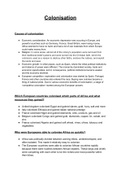
Causes of colonisation
● Economic consideration: An economic depression was occuring in Europe, and
powerful countries such as Germany, France, Great Britain, were losing money.
Africa seemed to have no harm and had a lot of raw materials from which Europe
could make money from.
● Religion: In some areas, almost all of the colony's population were removed from
their traditional belief systems and were turned into the Christian faith, which the
colonizers used as a reason to destroy other faiths, enslave the natives, and exploit
the lands and seas
● Economic growth: In other places, such as Spain, where the initial political institutions
and balance of power were different. The monarchy dominated society, trade and
economic opportunities, and in consequence, political institutions became weaker
and the economy declined.
● European competition: exploration and colonization was started by Spain, Portugal,
France and other countries also entered the race. Buying new colonies became a
thing of national pride. Due to various economic benefits of colonisation, a stage of
‘competitive colonialism’ started among the European powers.
Which European countries colonised which parts of Africa and what
resources they gained?
● United kingdom colonised Egypt and gained slaves, gold, ivory, salt and more
● Italy colonised Ethiopia and gained italian national prestige
● France colonised Niger and gained diamonds, ores, uranium, gas and oil
● Belgium colonised Congo and gained gold, diamonds, copper, tin, cobalt, and
zinc
● France colonised Algeria and gained soft wheat, vines, olives, tobacco and
vegetables
Why were Europeans able to colonise Africa so quickly?
● Africa was politically divided between warring tribes, underdeveloped, and
often isolated. This made it relatively easy to colonise.
● The European countries were able to colonise African countries rapidly
because there were rivalries between African leaders. These kings and chiefs
were competing with each other to be the richest and most powerful within
their tribes.
, ● European powers could easily take control of any source of land by using
force and violence. They achieved this by using weapons.
● They had the advantage of the newly invented machine gun called the Maxim
gun that was invented in the 1880’s
● Africans were at a military disadvantage because they could not manage to
get hold of European weapons because they were not sold to them.
Opinions on how colonisation of Africa in the 19th century contributed
to inequality OR prosperity in Africa today.
Colonisation is a major explanation behind today's differences in land and income
inequality in Africa. Income inequality has been higher in the colonies where the
percentage of European settlers to total population was higher, as long as
Europeans remained a minority. The countries where Europeans became the
majority of the population did not suffer from high inequality. These initial differences
continue to hold today. Because of colonisation people treat other people differently
according to their race, beliefs and skin colour. In my opinion, I think that colonisation
contributed to inequality.
Consequences of colonisation in Africa in the 19th century.
● An outbreak of new diseases made an appearance during the late 1890’s.
The African population had no immunity or resistance to these diseases and
this weakened the African population.
● There was separation in production of goods, markets, traders and
transportation.
● Africa was damaged economically, politically, and culturally.
● The exploration of the natural resources by foreigners which did not benefit
the local communities, but instead the colonisers.
● There were several negatives of colonialism for the Africans like resource
depletion, unfair taxation, lack of industrialization, dependence on cash crop
economy and more.
Causes of colonisation
● Economic consideration: An economic depression was occuring in Europe, and
powerful countries such as Germany, France, Great Britain, were losing money.
Africa seemed to have no harm and had a lot of raw materials from which Europe
could make money from.
● Religion: In some areas, almost all of the colony's population were removed from
their traditional belief systems and were turned into the Christian faith, which the
colonizers used as a reason to destroy other faiths, enslave the natives, and exploit
the lands and seas
● Economic growth: In other places, such as Spain, where the initial political institutions
and balance of power were different. The monarchy dominated society, trade and
economic opportunities, and in consequence, political institutions became weaker
and the economy declined.
● European competition: exploration and colonization was started by Spain, Portugal,
France and other countries also entered the race. Buying new colonies became a
thing of national pride. Due to various economic benefits of colonisation, a stage of
‘competitive colonialism’ started among the European powers.
Which European countries colonised which parts of Africa and what
resources they gained?
● United kingdom colonised Egypt and gained slaves, gold, ivory, salt and more
● Italy colonised Ethiopia and gained italian national prestige
● France colonised Niger and gained diamonds, ores, uranium, gas and oil
● Belgium colonised Congo and gained gold, diamonds, copper, tin, cobalt, and
zinc
● France colonised Algeria and gained soft wheat, vines, olives, tobacco and
vegetables
Why were Europeans able to colonise Africa so quickly?
● Africa was politically divided between warring tribes, underdeveloped, and
often isolated. This made it relatively easy to colonise.
● The European countries were able to colonise African countries rapidly
because there were rivalries between African leaders. These kings and chiefs
were competing with each other to be the richest and most powerful within
their tribes.
, ● European powers could easily take control of any source of land by using
force and violence. They achieved this by using weapons.
● They had the advantage of the newly invented machine gun called the Maxim
gun that was invented in the 1880’s
● Africans were at a military disadvantage because they could not manage to
get hold of European weapons because they were not sold to them.
Opinions on how colonisation of Africa in the 19th century contributed
to inequality OR prosperity in Africa today.
Colonisation is a major explanation behind today's differences in land and income
inequality in Africa. Income inequality has been higher in the colonies where the
percentage of European settlers to total population was higher, as long as
Europeans remained a minority. The countries where Europeans became the
majority of the population did not suffer from high inequality. These initial differences
continue to hold today. Because of colonisation people treat other people differently
according to their race, beliefs and skin colour. In my opinion, I think that colonisation
contributed to inequality.
Consequences of colonisation in Africa in the 19th century.
● An outbreak of new diseases made an appearance during the late 1890’s.
The African population had no immunity or resistance to these diseases and
this weakened the African population.
● There was separation in production of goods, markets, traders and
transportation.
● Africa was damaged economically, politically, and culturally.
● The exploration of the natural resources by foreigners which did not benefit
the local communities, but instead the colonisers.
● There were several negatives of colonialism for the Africans like resource
depletion, unfair taxation, lack of industrialization, dependence on cash crop
economy and more.