Garantie de satisfaction à 100% Disponible immédiatement après paiement En ligne et en PDF Tu n'es attaché à rien 4.2 TrustPilot
logo-home
Examen

ENPC 5th edition (2022) questions correctly answered

Note
-
Vendu
-
Pages
4
Qualité
A+
Publié le
21-12-2022
Écrit en
2022/2023

ENPC 5th edition (2022) questions correctly answeredNeonate characteristics: Birth to 4 weeks If preterm neonate until original due date plus 28 days Loses 5-10% weight by 3-4th day of life Flexion normal posture Limited glycogen store Nose breathers Infant characteristics: Nose breather until 6months And muscle to breathe Metabolic rate 2x adult (increased need for oxygen and glucose) Toddler characteristics: Babinski réflex normal until walking Plantar réflex at 2 years And muscles to breathe Most common cause of bradycardia in peds hypoxia When to begin chest compressions in peds when HR is below 60bpm Suctioning the neonate increases the risk for decreased cerebral blood flow decreased pulmonary oxygenation bradycardia suction mouth then nose Neonate first minute emphasis ventilation not intubation Lower glucose levels in Neonate associated with potential for brain injury stress of respiratory and circulatory efforts metabolize existing glucose D10 IV for glucose <40mg/dL normal heel stick at birth 30 mg/dL normal heel stick at 24h 45 mg/dL Neonatal CHD compare pulse ox from right hand to either foot (difference >3% suggest dx) considered in infant presenting with respiratory distress or shock (with absence of fever) s/s include shock, cyanosis, tachypnea, or pulmonary edema Neonatal cyanosis look inside the mouth at gum line for purple/blue color of tongue and gums - central look for hands and feet to change color - peripheral Respiratory Distress in peds patient characterized by increased respiratory rate increased heart rate skin color changes increased WOB (grunting, nasal flaring, head bobbing, accessory muscle use) wheezing diaphoresis abnormal upper airway (sounds such as stridor) change in mentation (irritable or agitated) Laryngotracheobronchitis (Croup) viral illness that account 90% peds stridor inflammation, exudates and edema of larynx l/d narrowing of upper airway tx with dexamethasone and racemic epi (nebulized epinephrine) tx with antipyretics for fever Pertussis (whooping cough) acute bacterial infection of the respiratory tract that is highly contagious characterized by spasmodic, hacking cough followed by whooping noise upon breath intake tx with erythromycin, azithromycin, clarithromycin or trimethoprim-sulfamethoxazole cystic fibrosis (CF) genetic condition r/t exocrine dysfunction result in thick mucous production persistent productive cough, hyperinflated lungs, diminished pulmonary function and increased susceptibility to ch. bacterial resp infections tx with abx, steroids for asthma-like s/s, brochodilator followed by nebulized hypertonic saline and dornase alfa Pneumothorax simple - when air enters pleural space (monitor) large - s/s hypotension, distended neck veins, pale and diaphoretic skin, decreased or absence BS on affected side, hyper-resonance to percussion (Chest tube) spontaneous - no known trauma or injury (most cases is ruptured bleb) Heart Failure in peds inadequate CO r/t ventricle unable to either fill with blood or eject blood can be result of sepsis, renal dx, inflammatory conditions, dysrythmias, muscular dystrophy, chemotherapy or blunt chest traumas tx by position of comfort, record weight daily, BB, avoid vasodilators and caution of diuretics Cardiomyopathy in peds left ventricular hypertrophy (thickened muscle wall) dilated cardiomyopathy (left ventricular enlarged and weakened) cause include coronary artery dx, HTN, obesity, drug tox and kawasaki dx tx by position of comfort, record weight daily, BB, avoid vasodilators and caution of diuretics Myocarditis inflammation of the heart muscle that has significant mortality and morbidity in peds viral, bacterial, toxic and autoimmune etiologies s/s include fever, malaise (general unwell) and myalgia (soreness/achiness in muscles); SHOB at rest and crackles on auscultation; dysrhytmias; HF; elevated enxymes; syncope Percarditis inflammation of pericardial sac of heart infectious (viral/bacterial) or dug (PCN, phenytoin), post cardiac surg, metabolic or immune mediated tx NSAIDS and possible pericardiocentesi

Montrer plus Lire moins
Établissement
ENPC
Cours
ENPC


Oups ! Impossible de charger votre document. Réessayez ou contactez le support.

Infos sur le Document

Publié le
21 décembre 2022
Nombre de pages
4
Écrit en
2022/2023
Type
Examen
Contenu
Questions et réponses

Sujets

Aperçu du contenu

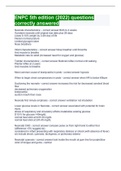
ENPC 5th edition (2022) questions
correctly answered
Neonate characteristics: - correct answer Birth to 4 weeks
If preterm neonate until original due date plus 28 days
Loses 5-10% weight by 3-4th day of life
Flexion normal posture
Limited glycogen store
Nose breathers

Infant characteristics: - correct answer Nose breather until 6months
And muscle to breathe
Metabolic rate 2x adult (increased need for oxygen and glucose)

Toddler characteristics: - correct answer Babinski réflex normal until walking
Plantar réflex at 2 years
And muscles to breathe

Most common cause of bradycardia in peds - correct answer hypoxia

When to begin chest compressions in peds - correct answer when HR is below 60bpm

Suctioning the neonate - correct answer increases the risk for decreased cerebral blood
flow
decreased pulmonary oxygenation
bradycardia
suction mouth then nose

Neonate first minute emphasis - correct answer ventilation not intubation

Lower glucose levels in Neonate - correct answer associated with potential for brain
injury
stress of respiratory and circulatory efforts metabolize existing glucose
D10 IV for glucose <40mg/dL
normal heel stick at birth 30 mg/dL
normal heel stick at 24h 45 mg/dL

Neonatal CHD - correct answer compare pulse ox from right hand to either foot
(difference >3% suggest dx)
considered in infant presenting with respiratory distress or shock (with absence of fever)
s/s include shock, cyanosis, tachypnea, or pulmonary edema

Neonatal cyanosis - correct answer look inside the mouth at gum line for purple/blue
color of tongue and gums - central

Faites connaissance avec le vendeur

Seller avatar
Les scores de réputation sont basés sur le nombre de documents qu'un vendeur a vendus contre paiement ainsi que sur les avis qu'il a reçu pour ces documents. Il y a trois niveaux: Bronze, Argent et Or. Plus la réputation est bonne, plus vous pouvez faire confiance sur la qualité du travail des vendeurs.
StuviaExamHub Havard School
Voir profil
S'abonner Vous devez être connecté afin de pouvoir suivre les étudiants ou les formations
Vendu
458
Membre depuis
3 année
Nombre de followers
355
Documents
17014
Dernière vente
2 semaines de cela
EXAM HUB (LATEST UPDATE)

QUALITY WORK OF ALL KIND OF QUIZ or EXAM WITH GUARANTEE OF AN A+ latest updates Im an expert on major courses especially; psychology,Nursing, Human resource Management &amp; Project writing. Assisting students with quality work is my first priority. I ensure scholarly standards in my documents . I assure a GOOD GRADE if you will use my work. Feel free to purchase n recommend others for 100% pass EXAMS!

3,7

85 revues

5
39
4
10
3
17
2
6
1
13

Récemment consulté par vous

Pourquoi les étudiants choisissent Stuvia

Créé par d'autres étudiants, vérifié par les avis

Une qualité sur laquelle compter : rédigé par des étudiants qui ont réussi et évalué par d'autres qui ont utilisé ce document.

Le document ne convient pas ? Choisis un autre document

Aucun souci ! Tu peux sélectionner directement un autre document qui correspond mieux à ce que tu cherches.

Paye comme tu veux, apprends aussitôt

Aucun abonnement, aucun engagement. Paye selon tes habitudes par carte de crédit et télécharge ton document PDF instantanément.

Student with book image

“Acheté, téléchargé et réussi. C'est aussi simple que ça.”

Alisha Student

Foire aux questions