SUMMARY
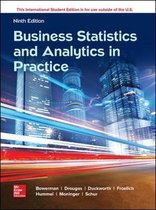
Business Statistics in Practice
Nyenrode Business Universiteit
Pre-Master Accountancy voorjaar 2021
,Table of contents
Table of contents ...................................................................................................................................0
H4 Probability and probability models (excl. §4.5) ............................................................................2
§4.1 Probability, sample spaces and probability models ....................................................................2
§4.2 Probability and events .................................................................................................................2
§4.3 Some Elementary Probability Rules............................................................................................2
§4.4 Conditional Probability and Independence..................................................................................2
§4.6 Counting rules .............................................................................................................................3
H8 Sampling Distributions (excl. §8.3) ................................................................................................4
§8.1 The Sampling Distribution of the Sample Mean ..........................................................................4
§8.2 The Sampling Distribution of the Sample Proportion ..................................................................4
H10 Hypothesis Testing (excl. §10.5 t/m 10.7) ....................................................................................5
§10.1 The Null and Alternative Hypotheses and Errors in Hypothesis Testing...................................5
§10.2 z Tests about a Population Mean: µ and s Known ...................................................................5
§10.3 t Tests about a Population Mean: µ and s Unknown ................................................................9
§10.4 z Tests about a Population Proportion ....................................................................................10
H11 Statistical Inferences Based on Two Samples (excl. §11.5) ....................................................12
§11.1 Comparing Two Population Means by Using Independent Samples ......................................12
§11.2 Paired Difference Experiments ...............................................................................................12
§11.3 Comparing Two population Proportions by Using Large, Independent Samples....................13
§11.4 The F Distribution ....................................................................................................................13
H12 Experimental Design and Analysis of Variance ........................................................................14
§12.1 Basic Concepts of Experimental Design .................................................................................14
§12.2 One-Way Analysis of Variance ...............................................................................................14
§12.3 The Randomized Block Design ...............................................................................................15
§12.4 Two-way Analysis of Variance ................................................................................................15
H14 Simple Linear Regression Analysis ...........................................................................................16
§14.1 The Simple Linear Regression model and the Least Squares Point Estimates ......................16
§14.2 Simple Coefficients of Determination and Correlation ............................................................17
§14.3 Model Assumption and the Standard Error .............................................................................18
H15 Multiple Regression and Model Building...................................................................................19
§15.1 The multiple Regression model and the Least Squares Point Estimates ...............................19
§15.2 𝑅2 and Adjusted 𝑅2.................................................................................................................19
§15.3 Model Assumption and the Standard Error (same as §14.3) ..................................................20
§15.4 Using Dummy Variables to Model Qualitative Independent Variables ....................................20
§15.5 Multicollinearity........................................................................................................................20
1
, H4 Probability and probability models (excl. §4.5)
§4.1 Probability, sample spaces and probability models
The probability of an event is always a number between 0 and 1. The closer an event’s probability is to
1, the higher is the likelihood that the event will occur. The probabilities of all of the sample space
outcomes must sum to 1.
§4.2 Probability and events
An event is a set of one or more sample space outcomes.
In general, when a sample space is finite, we can use the following method for computing the
probability of an event. If all of the sample space outcomes are equally likely, then the probability that
!"# %&'(#) *+ ,-'./# ,.-0# *&10*'#, 1"-1 0*))#,.*%2 1* 1"# #3#%1
an event will occur is equal to the ratio: !"# 1*1-/ %&'(#) *+ ,-'./# ,.-0# *&10*'#,
§4.3 Some Elementary Probability Rules
We can often calculate probabilities by using formulas called probability rules.
1. Rule of complements
2. Given an event 𝐴, the complement of 𝐴 is the event consisting all space outcomes that
do not correspond of the occurrence of 𝐴. The complement of 𝐴 is denoted 𝐴̅.
((( 𝑜𝑟 𝑃(𝐴0 ) denotes the probability that 𝐴 will not occur.
Furthermore, 𝑃(𝐴)
𝑃(𝐴) + 𝑃(𝐴̅) = 1
The probability that 𝐴 will not occur is:
𝑃(𝐴̅) = 1 − 𝑃(𝐴)
3. The intersection of two events
Consider performing an experiment a single time
Given two events 𝐴 and 𝐵, the intersection of A and B is the event that occurs if both 𝐴 and 𝐵
simultaneously occur. The intersection is denoted by 𝐴 ∩ 𝐵. Furthermore, 𝑃(𝐴 ∩ 𝐵) denotes
the probability that both 𝐴 and 𝐵 will simultaneously occur.
4. The union of two events
Consider performing an experiment a single time
The union of 𝐴 and 𝐵 is the event that occurs if 𝐴 or 𝐵 (or both) occur. The union
is denoted 𝐴 ∪ 𝐵. Furthermore, 𝑃(𝐴 ∪ 𝐵) denotes the probability that 𝑨 or 𝑩 (or
both) will occur.
5. The additional rule
Let 𝐴 and 𝐵 be events. Then, the probability that 𝑨 or 𝑩 (or both) will occur is
𝑃(𝐴 ∪ 𝐵) = 𝑃(𝐴) + 𝑃(𝐵) − 𝑃(𝐴 ∩ 𝐵)
(Reasoning behind this result is that when we compute 𝑃(𝐴) + 𝑃(𝐵), we are
counting each of the sample outcomes in 𝐴 ∩ 𝐵 twice. We correct for this
subtracting 𝑃(𝐴 ∩ 𝐵)).
6. Mutually exclusive events
Two events 𝐴 and 𝐵 are mutually exclusive if they have no sample space outcomes in
common. In this case, the events 𝐴 and 𝐵 cannot simultaneously, and thus 𝑃(𝐴 ∩ 𝐵) = 0.
7. The additional rule for two mutually exclusive events
Let 𝐴 and 𝐵 be mutually exclusive events. Then, the probability that 𝑨 or 𝑩 will occur is
𝑃(𝐴 ∪ 𝐵) = 𝑃(𝐴) + 𝑃(𝐵)
2
Business Statistics in Practice
Nyenrode Business Universiteit
Pre-Master Accountancy voorjaar 2021
,Table of contents
Table of contents ...................................................................................................................................0
H4 Probability and probability models (excl. §4.5) ............................................................................2
§4.1 Probability, sample spaces and probability models ....................................................................2
§4.2 Probability and events .................................................................................................................2
§4.3 Some Elementary Probability Rules............................................................................................2
§4.4 Conditional Probability and Independence..................................................................................2
§4.6 Counting rules .............................................................................................................................3
H8 Sampling Distributions (excl. §8.3) ................................................................................................4
§8.1 The Sampling Distribution of the Sample Mean ..........................................................................4
§8.2 The Sampling Distribution of the Sample Proportion ..................................................................4
H10 Hypothesis Testing (excl. §10.5 t/m 10.7) ....................................................................................5
§10.1 The Null and Alternative Hypotheses and Errors in Hypothesis Testing...................................5
§10.2 z Tests about a Population Mean: µ and s Known ...................................................................5
§10.3 t Tests about a Population Mean: µ and s Unknown ................................................................9
§10.4 z Tests about a Population Proportion ....................................................................................10
H11 Statistical Inferences Based on Two Samples (excl. §11.5) ....................................................12
§11.1 Comparing Two Population Means by Using Independent Samples ......................................12
§11.2 Paired Difference Experiments ...............................................................................................12
§11.3 Comparing Two population Proportions by Using Large, Independent Samples....................13
§11.4 The F Distribution ....................................................................................................................13
H12 Experimental Design and Analysis of Variance ........................................................................14
§12.1 Basic Concepts of Experimental Design .................................................................................14
§12.2 One-Way Analysis of Variance ...............................................................................................14
§12.3 The Randomized Block Design ...............................................................................................15
§12.4 Two-way Analysis of Variance ................................................................................................15
H14 Simple Linear Regression Analysis ...........................................................................................16
§14.1 The Simple Linear Regression model and the Least Squares Point Estimates ......................16
§14.2 Simple Coefficients of Determination and Correlation ............................................................17
§14.3 Model Assumption and the Standard Error .............................................................................18
H15 Multiple Regression and Model Building...................................................................................19
§15.1 The multiple Regression model and the Least Squares Point Estimates ...............................19
§15.2 𝑅2 and Adjusted 𝑅2.................................................................................................................19
§15.3 Model Assumption and the Standard Error (same as §14.3) ..................................................20
§15.4 Using Dummy Variables to Model Qualitative Independent Variables ....................................20
§15.5 Multicollinearity........................................................................................................................20
1
, H4 Probability and probability models (excl. §4.5)
§4.1 Probability, sample spaces and probability models
The probability of an event is always a number between 0 and 1. The closer an event’s probability is to
1, the higher is the likelihood that the event will occur. The probabilities of all of the sample space
outcomes must sum to 1.
§4.2 Probability and events
An event is a set of one or more sample space outcomes.
In general, when a sample space is finite, we can use the following method for computing the
probability of an event. If all of the sample space outcomes are equally likely, then the probability that
!"# %&'(#) *+ ,-'./# ,.-0# *&10*'#, 1"-1 0*))#,.*%2 1* 1"# #3#%1
an event will occur is equal to the ratio: !"# 1*1-/ %&'(#) *+ ,-'./# ,.-0# *&10*'#,
§4.3 Some Elementary Probability Rules
We can often calculate probabilities by using formulas called probability rules.
1. Rule of complements
2. Given an event 𝐴, the complement of 𝐴 is the event consisting all space outcomes that
do not correspond of the occurrence of 𝐴. The complement of 𝐴 is denoted 𝐴̅.
((( 𝑜𝑟 𝑃(𝐴0 ) denotes the probability that 𝐴 will not occur.
Furthermore, 𝑃(𝐴)
𝑃(𝐴) + 𝑃(𝐴̅) = 1
The probability that 𝐴 will not occur is:
𝑃(𝐴̅) = 1 − 𝑃(𝐴)
3. The intersection of two events
Consider performing an experiment a single time
Given two events 𝐴 and 𝐵, the intersection of A and B is the event that occurs if both 𝐴 and 𝐵
simultaneously occur. The intersection is denoted by 𝐴 ∩ 𝐵. Furthermore, 𝑃(𝐴 ∩ 𝐵) denotes
the probability that both 𝐴 and 𝐵 will simultaneously occur.
4. The union of two events
Consider performing an experiment a single time
The union of 𝐴 and 𝐵 is the event that occurs if 𝐴 or 𝐵 (or both) occur. The union
is denoted 𝐴 ∪ 𝐵. Furthermore, 𝑃(𝐴 ∪ 𝐵) denotes the probability that 𝑨 or 𝑩 (or
both) will occur.
5. The additional rule
Let 𝐴 and 𝐵 be events. Then, the probability that 𝑨 or 𝑩 (or both) will occur is
𝑃(𝐴 ∪ 𝐵) = 𝑃(𝐴) + 𝑃(𝐵) − 𝑃(𝐴 ∩ 𝐵)
(Reasoning behind this result is that when we compute 𝑃(𝐴) + 𝑃(𝐵), we are
counting each of the sample outcomes in 𝐴 ∩ 𝐵 twice. We correct for this
subtracting 𝑃(𝐴 ∩ 𝐵)).
6. Mutually exclusive events
Two events 𝐴 and 𝐵 are mutually exclusive if they have no sample space outcomes in
common. In this case, the events 𝐴 and 𝐵 cannot simultaneously, and thus 𝑃(𝐴 ∩ 𝐵) = 0.
7. The additional rule for two mutually exclusive events
Let 𝐴 and 𝐵 be mutually exclusive events. Then, the probability that 𝑨 or 𝑩 will occur is
𝑃(𝐴 ∪ 𝐵) = 𝑃(𝐴) + 𝑃(𝐵)
2