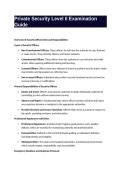
Private Security Level II Examination
Guide
Overview of Security Officer Roles and Responsibilities
Types of Security Officers
Non-Commissioned Officers: These officers do not have the authority to carry firearms
or make arrests. They primarily observe and report incidents.
Commissioned Officers: These officers have the authority to carry firearms and make
arrests, often requiring additional training and licensing.
Licensed Officers: Officers who have obtained a license to perform security duties, which
may include carrying weapons or enforcing laws.
Non-Licensed Officers: Individuals who perform security functions but do not have the
necessary licenses or certifications.
Primary Responsibilities of Security Officers
Detain and Arrest: Officers may have the authority to detain individuals suspected of
committing a crime until law enforcement arrives.
Observe and Report: A fundamental duty where officers monitor activities and report
any suspicious behavior or incidents to the appropriate authorities.
Provide Directions and Answer Questions: Officers often serve as a point of contact for
the public, providing assistance and information.
Professional Appearance and Ethics
Professional Appearance: Includes proper hygiene, good posture, and a positive
attitude, which are essential for maintaining authority and professionalism.
Personal Ethics: Defined as the moral framework guiding an individual's behavior,
including honesty and integrity.
Workplace Ethics: The values and standards expected in a professional environment,
which include respect, responsibility, and accountability.
Emergency Situations and Response Protocols
Guide
Overview of Security Officer Roles and Responsibilities
Types of Security Officers
Non-Commissioned Officers: These officers do not have the authority to carry firearms
or make arrests. They primarily observe and report incidents.
Commissioned Officers: These officers have the authority to carry firearms and make
arrests, often requiring additional training and licensing.
Licensed Officers: Officers who have obtained a license to perform security duties, which
may include carrying weapons or enforcing laws.
Non-Licensed Officers: Individuals who perform security functions but do not have the
necessary licenses or certifications.
Primary Responsibilities of Security Officers
Detain and Arrest: Officers may have the authority to detain individuals suspected of
committing a crime until law enforcement arrives.
Observe and Report: A fundamental duty where officers monitor activities and report
any suspicious behavior or incidents to the appropriate authorities.
Provide Directions and Answer Questions: Officers often serve as a point of contact for
the public, providing assistance and information.
Professional Appearance and Ethics
Professional Appearance: Includes proper hygiene, good posture, and a positive
attitude, which are essential for maintaining authority and professionalism.
Personal Ethics: Defined as the moral framework guiding an individual's behavior,
including honesty and integrity.
Workplace Ethics: The values and standards expected in a professional environment,
which include respect, responsibility, and accountability.
Emergency Situations and Response Protocols