KEY CONCEPTS
▪ Organ systems
▪ Briefly describe the organ systems of an animal.
▪ Conformers and regulators
▪ Describe the mechanism used by an animal
when subjected to external stimuli.
▪ Feedback control
▪ Define homeostasis and contrast negative and
positive feedback mechanisms.
▪ Osmoregulation
▪ Define osmoregulation and excretion and
contrast the advantages and disadvantages of
excreting ammonia, uric acid, or urea.
▪ Compare osmo-conformers and osmoregulators
▪ Freshwater and marine vertebrates
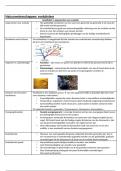
Hierarchical Organization of Body Plans
▪ Compare the adaptations to the challenges of
osmoregulation in these animals Cells → Tissues → Organs → Organ systems
Organ Systems in Mammals
Organ system Main Components Main Functions
Digestive Mouth, pharynx, esophagus, stomach, Food processing (ingestion, digestion,
intestines, liver, pancreas, anus absorption, elimination)
Circulatory Heart, blood vessels, blood Internal distribution of materials
Respiratory Lungs, trachea, other breathing tubes Gas exchange (uptake of oxygen; disposal
of carbon dioxide)
Immune & Lymphatic Bone marrow, lymph nodes, thymus, spleen, Body defense (fighting infections and virally
lymph vessels induced cancers)
Excretory Kidneys, ureters, urinary bladder, urethra Disposal of metabolic wastes; regulation of
osmotic balance of blood
Endocrine Pituitary, thyroid, pancreas, adrenal, and Coordination of body activities (such as
other hormone-secreting glands digestion and metabolism)
Reproductive Ovaries or testes and associated organs Gamete production; promotion of
fertilization; support of developing embryo
Nervous Brain, spinal cord, nerves, sensory organs Coordination of body activities; detection of
stimuli and formulation of responses to
them
Integumentary Skin and its derivatives (such as hair, claws, Protection against mechanical injury,
sweat glands) infection, dehydration; thermoregulation
Skeletal Skeleton (bones, tendons, ligaments, Body support, protection of internal organs,
cartilage) movement
Muscular Skeletal muscles Locomotion and other movement
TJW NOTES
, Feedback control maintains the internal environment in many animals
Regulating & Conforming
• An animal is a regulator~ for an environmental
variable if it uses internal mechanisms to control
internal change in the face of external
fluctuation
• An animal is a conformer~ if it allows its internal
condition to change in accordance with external
changes in the particular variable.
• An animal may regulate some internal conditions
while allowing others to conform to the
environment
• In addition, conforming does not always involve
changes in an internal variable.
Homeostasis
→ Homeostasis~ which means the maintenance of
internal balance.
→ In achieving homeostasis, animals maintain a
“steady state”—a relatively constant internal
environment— even when the external
environment changes significantly.
→ Many animals exhibit homeostasis for a range of
physical and chemical properties
→ Eg. the human body can maintain its internal
environment at a more-or-less constant
temperature of about 37℃
→ Blood pH within 0.1 pH unit of 7.4
→ A blood glucose concentration that is
predominantly in the range of 70–110 mg of
glucose per 100 mL of blood.
→ Homeostasis Dynamic equilibrium maintained by
negative feedback systems
→ Regulators respond to counteract changes caused
by stressors
→ Three models that result in relative homeostasis:
• Static equilibrium system in constant
environment (A)
• Open loop dynamic equilibrium (B)
• Feedback control loop (c)
TJW NOTES
▪ Organ systems
▪ Briefly describe the organ systems of an animal.
▪ Conformers and regulators
▪ Describe the mechanism used by an animal
when subjected to external stimuli.
▪ Feedback control
▪ Define homeostasis and contrast negative and
positive feedback mechanisms.
▪ Osmoregulation
▪ Define osmoregulation and excretion and
contrast the advantages and disadvantages of
excreting ammonia, uric acid, or urea.
▪ Compare osmo-conformers and osmoregulators
▪ Freshwater and marine vertebrates
Hierarchical Organization of Body Plans
▪ Compare the adaptations to the challenges of
osmoregulation in these animals Cells → Tissues → Organs → Organ systems
Organ Systems in Mammals
Organ system Main Components Main Functions
Digestive Mouth, pharynx, esophagus, stomach, Food processing (ingestion, digestion,
intestines, liver, pancreas, anus absorption, elimination)
Circulatory Heart, blood vessels, blood Internal distribution of materials
Respiratory Lungs, trachea, other breathing tubes Gas exchange (uptake of oxygen; disposal
of carbon dioxide)
Immune & Lymphatic Bone marrow, lymph nodes, thymus, spleen, Body defense (fighting infections and virally
lymph vessels induced cancers)
Excretory Kidneys, ureters, urinary bladder, urethra Disposal of metabolic wastes; regulation of
osmotic balance of blood
Endocrine Pituitary, thyroid, pancreas, adrenal, and Coordination of body activities (such as
other hormone-secreting glands digestion and metabolism)
Reproductive Ovaries or testes and associated organs Gamete production; promotion of
fertilization; support of developing embryo
Nervous Brain, spinal cord, nerves, sensory organs Coordination of body activities; detection of
stimuli and formulation of responses to
them
Integumentary Skin and its derivatives (such as hair, claws, Protection against mechanical injury,
sweat glands) infection, dehydration; thermoregulation
Skeletal Skeleton (bones, tendons, ligaments, Body support, protection of internal organs,
cartilage) movement
Muscular Skeletal muscles Locomotion and other movement
TJW NOTES
, Feedback control maintains the internal environment in many animals
Regulating & Conforming
• An animal is a regulator~ for an environmental
variable if it uses internal mechanisms to control
internal change in the face of external
fluctuation
• An animal is a conformer~ if it allows its internal
condition to change in accordance with external
changes in the particular variable.
• An animal may regulate some internal conditions
while allowing others to conform to the
environment
• In addition, conforming does not always involve
changes in an internal variable.
Homeostasis
→ Homeostasis~ which means the maintenance of
internal balance.
→ In achieving homeostasis, animals maintain a
“steady state”—a relatively constant internal
environment— even when the external
environment changes significantly.
→ Many animals exhibit homeostasis for a range of
physical and chemical properties
→ Eg. the human body can maintain its internal
environment at a more-or-less constant
temperature of about 37℃
→ Blood pH within 0.1 pH unit of 7.4
→ A blood glucose concentration that is
predominantly in the range of 70–110 mg of
glucose per 100 mL of blood.
→ Homeostasis Dynamic equilibrium maintained by
negative feedback systems
→ Regulators respond to counteract changes caused
by stressors
→ Three models that result in relative homeostasis:
• Static equilibrium system in constant
environment (A)
• Open loop dynamic equilibrium (B)
• Feedback control loop (c)
TJW NOTES