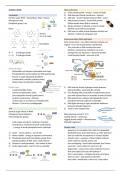
6.3.1 ECOSYSTEMS
a. ecosystems, which range in size, are dynamic and are influenced by
both biotic and abiotic factors
Ecosystem – a distinct, self-supporting system of organisms, interacting with
each other and with a physical environment. A physical area that includes all the
organisms present and their interactions with each other and with the physical
environment.
- Can be on a large scale (e.g. African grassland), a medium scale (e.g. a
playing field) or on a smaller scale (e.g. rock pool or large tree).
- The components of an ecosystem include:
o Habitat – the place in an ecosystem
where an organism lives.
o Population – all organisms of a
particular species found in an
ecosystem at any one time.
o Community – the populations of all the
species found in a particular ecosystem at any one time.
- Niche – the role an organism plays within an ecosystem.
o E.g. how and what it feeds on, what it excretes, what it reproduces.
o This includes all of its interactions with biotic and abiotic factors in the
environment.
o It is impossible for two species to occupy exactly the same niche in the
same ecosystem.
- Factors affecting ecosystems can be sorted into two categories: biotic and
abiotic.
- Ecology – the study of the interactions between organisms and their
environment.
Biotic factors – the effect a living organism has on a living system in an
ecosystem.
- Feeding and food availability:
o Producers – autotrophic organisms
that can synthesise food from
inorganic compounds.
They supply chemical
energy to all other
organisms.
They can be photoautrophic or chemoautotrophic.
o Consumers – consumers predate on organisms in lower trophic levels.
o Decomposers – bacteria and fungi that feed on waste material or dead
organisms.
- Competition – intraspecific and interspecific competition.
o E.g. native species may be outcompeted by invasive species.
- Mimicry – e.g. butterflies of one species mimic the patterns of another,
inedible species.
- Mutualism – a symbiotic relationship which benefits both organisms.
- Parasitism – relationship in which one organism benefits at the expense of the
other.
, - Disease – this can be caused by pathogens and exacerbated by
overcrowding.
Abiotic factors – the effect a non-living factor has on a living system in an
ecosystem.
- E.g. soil pH, relative humidity, water availability, temperature, pollutant
concentration, light intensity, oxygen concentration, disturbances to the
ecosystem (such as by turbulence and storms), soil
particle size, mineral availability, salinity, wind
speed.
- These can vary in space and time.
- May also be influenced by the biotic components of
the ecosystem.
o E.g. forest canopy influences the temperature
and humidity of the rainforest ecosystem.
- A generalised curve depicting the effect of an abiotic factor on an organism’s
activity can be shown in graph form:
o Where there is an optimum level and there are lethal levels at both
extremes (e.g. temperature, pH).
o Where there is not a lethal level at both extremes (e.g. pollutant
concentration):
Ecosystems are dynamic – abiotic and biotic factors will change.
- Three types of change in ecosystems affect population size: cyclic, directional
and unpredictable.
- Cyclic changes – these changes repeat themselves in a rhythm.
a. ecosystems, which range in size, are dynamic and are influenced by
both biotic and abiotic factors
Ecosystem – a distinct, self-supporting system of organisms, interacting with
each other and with a physical environment. A physical area that includes all the
organisms present and their interactions with each other and with the physical
environment.
- Can be on a large scale (e.g. African grassland), a medium scale (e.g. a
playing field) or on a smaller scale (e.g. rock pool or large tree).
- The components of an ecosystem include:
o Habitat – the place in an ecosystem
where an organism lives.
o Population – all organisms of a
particular species found in an
ecosystem at any one time.
o Community – the populations of all the
species found in a particular ecosystem at any one time.
- Niche – the role an organism plays within an ecosystem.
o E.g. how and what it feeds on, what it excretes, what it reproduces.
o This includes all of its interactions with biotic and abiotic factors in the
environment.
o It is impossible for two species to occupy exactly the same niche in the
same ecosystem.
- Factors affecting ecosystems can be sorted into two categories: biotic and
abiotic.
- Ecology – the study of the interactions between organisms and their
environment.
Biotic factors – the effect a living organism has on a living system in an
ecosystem.
- Feeding and food availability:
o Producers – autotrophic organisms
that can synthesise food from
inorganic compounds.
They supply chemical
energy to all other
organisms.
They can be photoautrophic or chemoautotrophic.
o Consumers – consumers predate on organisms in lower trophic levels.
o Decomposers – bacteria and fungi that feed on waste material or dead
organisms.
- Competition – intraspecific and interspecific competition.
o E.g. native species may be outcompeted by invasive species.
- Mimicry – e.g. butterflies of one species mimic the patterns of another,
inedible species.
- Mutualism – a symbiotic relationship which benefits both organisms.
- Parasitism – relationship in which one organism benefits at the expense of the
other.
, - Disease – this can be caused by pathogens and exacerbated by
overcrowding.
Abiotic factors – the effect a non-living factor has on a living system in an
ecosystem.
- E.g. soil pH, relative humidity, water availability, temperature, pollutant
concentration, light intensity, oxygen concentration, disturbances to the
ecosystem (such as by turbulence and storms), soil
particle size, mineral availability, salinity, wind
speed.
- These can vary in space and time.
- May also be influenced by the biotic components of
the ecosystem.
o E.g. forest canopy influences the temperature
and humidity of the rainforest ecosystem.
- A generalised curve depicting the effect of an abiotic factor on an organism’s
activity can be shown in graph form:
o Where there is an optimum level and there are lethal levels at both
extremes (e.g. temperature, pH).
o Where there is not a lethal level at both extremes (e.g. pollutant
concentration):
Ecosystems are dynamic – abiotic and biotic factors will change.
- Three types of change in ecosystems affect population size: cyclic, directional
and unpredictable.
- Cyclic changes – these changes repeat themselves in a rhythm.