1
A-LEVEL
SOCIOLOGY:
CRIME AND
DEVIANCE
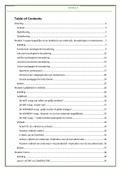
●Functionalism, strain and subcultural theories 2 -
4
●Interactionism and labelling 5 - 7
●Class, power and crime 8 - 11
●Realism 11 - 14
●Gender 15 - 18
●Ethnicity 19 - 21
●Media 21 - 25
●Globalisation, green crime human rights and
state crime 25 - 31
●Control, punishment and victims 32 - 37
, 2
Functionalism, strain and subcultural theories
● Functionalism - DURKHEIM
○ Inevitability of crime (not everyone equally socialised + complex modern
societies →diversity of lifestyles and values, different subcultures)
■ Modern society = ANOMIE - normlessness - rules governing behaviour
become weaker due to specialised division of labour which weakens
collective conscience
- ERIKSON: if deviance performs positive social functions, society may actually be
organised to promote deviance
○ Positive functions of crime:
1. Boundary maintenance - unites society in condemnation of wrongdoer
2. Adaptation and change - all starts with deviance so must allow a bit or
society will stagnate
⇒ don’t want too much or too little crime
- DAVIS: prostitution = safety valve - release of men’s sexual frustration - w/o
threatening monogamous nuclear family
- POLSKY: pornography safely ‘channels’ a variety of sexual desires away from
alternatives eg adultery
- COHEN: deviance = warning that an institution is not functioning properly
- AO3: explains function of crime but not its cause, looks at whole society not vulnerable
groups, may lead to isolation not solidarity
● Strain theory - Merton
○ Deviance = strain between 2 things - goals that a culture ENCOURAGES
individuals to achieve vs institutional structure of society ALLOWS them to
achieve legitimately
○ American Dream = meritocracy (+ achieve success at any price) - but untrue
○ Cultural goal of money success + lack of legitimate opportunities → pressure to
deviate (strain to anomie)
○ Adaptations::
1. CONFORMITY: + goals + means
2. INNOVATION: + goal - means
3. RITUALISM: - goals + means (dead-end jobs)
4. RETREATISM: - goals - means
5. REBELLION: reject goals/means + replace them with new ones (hippies)
+ AO3: explain patterns shown in official crime statistics - most crime is property crime,
lower-class crime rates are higher
- AO3: takes official crime statistics at face value, too deterministic, Marxist: ignore power
of ruling class, assumes there is value consensus, only accounts for utilitarian crime
● Subcultural strain theory - A COHEN
, 3
○ Agrees Merton: lower-class phenomenon - inability of lower classes to achieve
mainstream success by legitimate means
○ Criticises Merton: sees as an individual response strain, ignoring that deviance is
committed in groups / focuses on utilitarian crime not vandalism
○ WC boys suffer anomie in MC school system → status frustration → resolved by
rejecting MC values and forming a delinquent subculture
■ Inverts values of mainstream society
■ Function = alternative status hierarchy
- AO3: good for non-utilitarian crime, but assumes WC boys share MC success goals
● Subcultural strain theory - CLOWARD and OHLIN
○ Not everyone who is denied legitimate opportunities turns to innovation
○ Not only is there unequal access to legitimate opportunity structure (Merton +
Cohen), but unequal access to illegitimate opportunity structures
1. CRIMINAL SUBCULTURE: longstanding + stable criminal subculture
2. CONFLICT SUBCULTURE: high levels of social disorganisation prevents
stable professional criminal network developing - loosely organised
gangs
3. RETREATIST SUBCULTURE: ‘double failures’ - fail in legitimate +
illegitimate eg illegal drug use
- AO3: SOUTH; draw boundaries too sharply - drug trade = mixture of ‘disorganised’ crime
(conflict subculture) + ‘professional crime’ (criminal) / some retreatists users are also
professional dealers
- AO3: MILLER - strain theories = reactive theories - lower class has its own independent
subculture
- AO3: MATZA: most deviants are not strongly committed to their subculture - drifting in
and out of delinquency
● Recent strain theories; variety of goals - popularity with peers, autonomy from adults,
young males treated like ‘real men’
● Institutional anomie theory - MESSNER and ROSENFELD
○ American Dream: obsession with money success + winner takes all mentality →
pressure towards crime encourages an anomic cultural environment - ‘anything
goes’ mentality in pursuit of wealth
○ Societies based on free-market capitalism + lacks adequate welfare = high crime
rates are inevitable as economic goals are values above all - ‘winner takes all’
mentality
+ DOWNES + HANSEN: survey of crime rates and welfare spending - 18 countries -=
societies spent more on welfare → lower rates of imprisonment
, 4
+ SAVELSBERG: post communist societies in Eastern Europe saw a rise in crime -
communism’s collective values = replaced by new western capitalist foals of individual
‘money success’
A-LEVEL
SOCIOLOGY:
CRIME AND
DEVIANCE
●Functionalism, strain and subcultural theories 2 -
4
●Interactionism and labelling 5 - 7
●Class, power and crime 8 - 11
●Realism 11 - 14
●Gender 15 - 18
●Ethnicity 19 - 21
●Media 21 - 25
●Globalisation, green crime human rights and
state crime 25 - 31
●Control, punishment and victims 32 - 37
, 2
Functionalism, strain and subcultural theories
● Functionalism - DURKHEIM
○ Inevitability of crime (not everyone equally socialised + complex modern
societies →diversity of lifestyles and values, different subcultures)
■ Modern society = ANOMIE - normlessness - rules governing behaviour
become weaker due to specialised division of labour which weakens
collective conscience
- ERIKSON: if deviance performs positive social functions, society may actually be
organised to promote deviance
○ Positive functions of crime:
1. Boundary maintenance - unites society in condemnation of wrongdoer
2. Adaptation and change - all starts with deviance so must allow a bit or
society will stagnate
⇒ don’t want too much or too little crime
- DAVIS: prostitution = safety valve - release of men’s sexual frustration - w/o
threatening monogamous nuclear family
- POLSKY: pornography safely ‘channels’ a variety of sexual desires away from
alternatives eg adultery
- COHEN: deviance = warning that an institution is not functioning properly
- AO3: explains function of crime but not its cause, looks at whole society not vulnerable
groups, may lead to isolation not solidarity
● Strain theory - Merton
○ Deviance = strain between 2 things - goals that a culture ENCOURAGES
individuals to achieve vs institutional structure of society ALLOWS them to
achieve legitimately
○ American Dream = meritocracy (+ achieve success at any price) - but untrue
○ Cultural goal of money success + lack of legitimate opportunities → pressure to
deviate (strain to anomie)
○ Adaptations::
1. CONFORMITY: + goals + means
2. INNOVATION: + goal - means
3. RITUALISM: - goals + means (dead-end jobs)
4. RETREATISM: - goals - means
5. REBELLION: reject goals/means + replace them with new ones (hippies)
+ AO3: explain patterns shown in official crime statistics - most crime is property crime,
lower-class crime rates are higher
- AO3: takes official crime statistics at face value, too deterministic, Marxist: ignore power
of ruling class, assumes there is value consensus, only accounts for utilitarian crime
● Subcultural strain theory - A COHEN
, 3
○ Agrees Merton: lower-class phenomenon - inability of lower classes to achieve
mainstream success by legitimate means
○ Criticises Merton: sees as an individual response strain, ignoring that deviance is
committed in groups / focuses on utilitarian crime not vandalism
○ WC boys suffer anomie in MC school system → status frustration → resolved by
rejecting MC values and forming a delinquent subculture
■ Inverts values of mainstream society
■ Function = alternative status hierarchy
- AO3: good for non-utilitarian crime, but assumes WC boys share MC success goals
● Subcultural strain theory - CLOWARD and OHLIN
○ Not everyone who is denied legitimate opportunities turns to innovation
○ Not only is there unequal access to legitimate opportunity structure (Merton +
Cohen), but unequal access to illegitimate opportunity structures
1. CRIMINAL SUBCULTURE: longstanding + stable criminal subculture
2. CONFLICT SUBCULTURE: high levels of social disorganisation prevents
stable professional criminal network developing - loosely organised
gangs
3. RETREATIST SUBCULTURE: ‘double failures’ - fail in legitimate +
illegitimate eg illegal drug use
- AO3: SOUTH; draw boundaries too sharply - drug trade = mixture of ‘disorganised’ crime
(conflict subculture) + ‘professional crime’ (criminal) / some retreatists users are also
professional dealers
- AO3: MILLER - strain theories = reactive theories - lower class has its own independent
subculture
- AO3: MATZA: most deviants are not strongly committed to their subculture - drifting in
and out of delinquency
● Recent strain theories; variety of goals - popularity with peers, autonomy from adults,
young males treated like ‘real men’
● Institutional anomie theory - MESSNER and ROSENFELD
○ American Dream: obsession with money success + winner takes all mentality →
pressure towards crime encourages an anomic cultural environment - ‘anything
goes’ mentality in pursuit of wealth
○ Societies based on free-market capitalism + lacks adequate welfare = high crime
rates are inevitable as economic goals are values above all - ‘winner takes all’
mentality
+ DOWNES + HANSEN: survey of crime rates and welfare spending - 18 countries -=
societies spent more on welfare → lower rates of imprisonment
, 4
+ SAVELSBERG: post communist societies in Eastern Europe saw a rise in crime -
communism’s collective values = replaced by new western capitalist foals of individual
‘money success’