THE DIGITAL TRANSFORMATION
OF INDUSTRY
Part 1: N. Neysen
COURSE 1: DIGITAL ST RATEGY
W HAT IS “BEING DIGIT AL”? (IN TERMS OF A ST RATEGY)
- A truly digital organization would have no physical infrastructure. Everything happens
online.
- When traditional companies go fully digital, they often do so under a new brand name.
o Example: Ethias launched a digital-only insurance program called "Flora", targeted at
people under 25. This is a traditional player trying to replicate their services in the
digital space. It didn’t work very well, because the digital environment is
fundamentally different from the traditional one. transferring offline practices to
a digital setting without adapting them often leads to failure
- Some businesses are born digital, these are called pure players.
o They are digital native companies. They started online and designed their entire
business model for the digital environment (ex: Amazon, Airbnb,..)
o For them, customer support and a good helpdesk are essential. As long as
everything works, users are satisfied. But when problems arise, help is often hard to
get.
o Versus Digitally transformed companies => traditional firms adapting to digital
(often launch digital spin offs like Flora by Ethias)
- It's hard to find an organization today that doesn’t use any digital technology at all (no email,
no Google Maps presence, etc). Digital presence is now almost mandatory.
- Digitalization should be seen as a spectrum. The key question is: to what extent does a
company use digital technologies compared to its peers?
o Being digital is no longer a binary state, but is a continuum that reflects how deeply
digital technologies are embedded in an organization’s operations and strategies
JACK W ELCH QUOTE
- “If the rate of change on the outside exceeds the rate of change on the inside, the end is
near.”
o This underscores the urgency for companies to adapt to external technological
changes. In a world driven by fast-paced digital innovation, organizations must
transform internally, faster than or in step with external developments, to remain
competitive or even survive.
o companies need to be flexible and they need to anticipate in order to not lose
their competitive advantages
W HAT ARE DIGITAL TECHNOLOGIES ?
- There is no consensus about a universally accepted definition !! BUT A spectrum of
meanings
o Some people have a narrow understanding of ‘digital technologies’
Ex: All computer science components (hardware, software, OS)
, o Others have a broader and modern interpretation:
Ex: Emerging and disruptive technologies such as AI, robotics, and
blockchain
- Conclusion: digital transformation is complex and the complexity starts already with
defining the concept. The scope of what is considered ‘digital’ can vary significantly
EVOLUTIONARY PERSPECTIVE ON DIGITAL TECHNOLOGIES
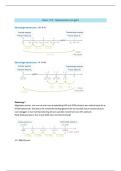
- Timeline to show how digital technologies evolved:
o About thirty years ago (1980s) computers were institutional, not personal. This
changed with the advent of personal computers (PCs), creating a 1-to-1 relationship
between user and device
digital technology entered homes and offices This created a personal
relationship with technology everyone could now own a computer.
o The World Wide Web (1990s) was the next step. While the technical foundations of
the Internet existed earlier, the Web introduced a global system where all web pages
could be accessed and linked.
It allowed people across the globe to publish and access information. This
was the birth of the digital information era.
o Then came Web 2.0 (2000s), which marked a shift from passive consumption to
interactive participation. Users could now react, comment, and collaborate online.
o The biggest shift occurred in 2008, with the launch of the first iPhone. This
transformed the way we create and interact with data, giving rise to mobile
connectivity and the app economy.
For the first time, users had a powerful, always-connected computing device
in their pocket.
It revolutionized how we generate data (photos, videos, GPS), communicate,
and access services on the go.
Mobile apps became central to digital business models (e.g., Uber,
Instagram).
, o Current era: The latest evolution involves emerging technologies like AI, IoT, AR/VR,
blockchain, etc.
These innovations blur the lines between physical and digital worlds and open
new possibilities in automation, personalization, and intelligent systems.
- Digital transformation is not one event but a cumulative evolution, with each phase
building on the previous one. Understanding this progression helps organizations and
researchers better position themselves within the current technological landscape.
- Definition of ‘digital’ changes. It depends on the phase of the evolution
- These changes can be studied from three conceptual lenses for research (3 ways to define
the technologies):
o “All computer & IT” (broadest definition)
Includes any electronic device that processes digital data
o “Post-Internet”
Technologies combining IT and connectivity (Internet)
o “Emerging only”
Focuses on new, disruptive digital tech
, - These slides illustrate how digital technologies are not static but evolve rapidly. This
historical context supports the argument that organizations must continuously adapt.
o Example:
Research to IBM-computers in the 80s "All computer & IT".
Research to e-commerce and cloud? "Post-Internet".
Working with AI or digital twins? "Emerging only".
W HEN TO TAG RESEARCH AS ‘DIGITAL’?
- 4 research hypotheses/ perspectives:
o Hypo #1: The research explores a particular digital technology, which is thus the
CORE of the study. (tech-centered approach).
o Hypo #2: The research explores the IMPACT of digital technology on individuals,
organizations or society at large (transformative approach).
o Hypo #3: Digitalization is part of the key characteristics of the environment in which
the research takes place (Part of the research context; contextual approach).
o Hypo #4: The research makes use of digital technology, though the object of study
has nothing/ little to do with digital technology (instrumental approach).
- Each hypothesis represents a way to link research with digital technologies. The goal is to
think critically about when and how to call something “digital research.”
DIGITAL: GOOD OR BAD? (ETHICAL REFLECTION)
- Digital is neither good nor bad: it is the use that one makes of it which can be either
disastrous or prodigious
o technology itself is neutral it is the use that can be positive or negative.
o This sets a moral and societal lens for digital transformation, highlighting the
importance of responsible innovation and governance.
TW O DYNAMICS OF DIGITAL TECHNOLOGIES CONNECT – ACCELERATE
OF INDUSTRY
Part 1: N. Neysen
COURSE 1: DIGITAL ST RATEGY
W HAT IS “BEING DIGIT AL”? (IN TERMS OF A ST RATEGY)
- A truly digital organization would have no physical infrastructure. Everything happens
online.
- When traditional companies go fully digital, they often do so under a new brand name.
o Example: Ethias launched a digital-only insurance program called "Flora", targeted at
people under 25. This is a traditional player trying to replicate their services in the
digital space. It didn’t work very well, because the digital environment is
fundamentally different from the traditional one. transferring offline practices to
a digital setting without adapting them often leads to failure
- Some businesses are born digital, these are called pure players.
o They are digital native companies. They started online and designed their entire
business model for the digital environment (ex: Amazon, Airbnb,..)
o For them, customer support and a good helpdesk are essential. As long as
everything works, users are satisfied. But when problems arise, help is often hard to
get.
o Versus Digitally transformed companies => traditional firms adapting to digital
(often launch digital spin offs like Flora by Ethias)
- It's hard to find an organization today that doesn’t use any digital technology at all (no email,
no Google Maps presence, etc). Digital presence is now almost mandatory.
- Digitalization should be seen as a spectrum. The key question is: to what extent does a
company use digital technologies compared to its peers?
o Being digital is no longer a binary state, but is a continuum that reflects how deeply
digital technologies are embedded in an organization’s operations and strategies
JACK W ELCH QUOTE
- “If the rate of change on the outside exceeds the rate of change on the inside, the end is
near.”
o This underscores the urgency for companies to adapt to external technological
changes. In a world driven by fast-paced digital innovation, organizations must
transform internally, faster than or in step with external developments, to remain
competitive or even survive.
o companies need to be flexible and they need to anticipate in order to not lose
their competitive advantages
W HAT ARE DIGITAL TECHNOLOGIES ?
- There is no consensus about a universally accepted definition !! BUT A spectrum of
meanings
o Some people have a narrow understanding of ‘digital technologies’
Ex: All computer science components (hardware, software, OS)
, o Others have a broader and modern interpretation:
Ex: Emerging and disruptive technologies such as AI, robotics, and
blockchain
- Conclusion: digital transformation is complex and the complexity starts already with
defining the concept. The scope of what is considered ‘digital’ can vary significantly
EVOLUTIONARY PERSPECTIVE ON DIGITAL TECHNOLOGIES
- Timeline to show how digital technologies evolved:
o About thirty years ago (1980s) computers were institutional, not personal. This
changed with the advent of personal computers (PCs), creating a 1-to-1 relationship
between user and device
digital technology entered homes and offices This created a personal
relationship with technology everyone could now own a computer.
o The World Wide Web (1990s) was the next step. While the technical foundations of
the Internet existed earlier, the Web introduced a global system where all web pages
could be accessed and linked.
It allowed people across the globe to publish and access information. This
was the birth of the digital information era.
o Then came Web 2.0 (2000s), which marked a shift from passive consumption to
interactive participation. Users could now react, comment, and collaborate online.
o The biggest shift occurred in 2008, with the launch of the first iPhone. This
transformed the way we create and interact with data, giving rise to mobile
connectivity and the app economy.
For the first time, users had a powerful, always-connected computing device
in their pocket.
It revolutionized how we generate data (photos, videos, GPS), communicate,
and access services on the go.
Mobile apps became central to digital business models (e.g., Uber,
Instagram).
, o Current era: The latest evolution involves emerging technologies like AI, IoT, AR/VR,
blockchain, etc.
These innovations blur the lines between physical and digital worlds and open
new possibilities in automation, personalization, and intelligent systems.
- Digital transformation is not one event but a cumulative evolution, with each phase
building on the previous one. Understanding this progression helps organizations and
researchers better position themselves within the current technological landscape.
- Definition of ‘digital’ changes. It depends on the phase of the evolution
- These changes can be studied from three conceptual lenses for research (3 ways to define
the technologies):
o “All computer & IT” (broadest definition)
Includes any electronic device that processes digital data
o “Post-Internet”
Technologies combining IT and connectivity (Internet)
o “Emerging only”
Focuses on new, disruptive digital tech
, - These slides illustrate how digital technologies are not static but evolve rapidly. This
historical context supports the argument that organizations must continuously adapt.
o Example:
Research to IBM-computers in the 80s "All computer & IT".
Research to e-commerce and cloud? "Post-Internet".
Working with AI or digital twins? "Emerging only".
W HEN TO TAG RESEARCH AS ‘DIGITAL’?
- 4 research hypotheses/ perspectives:
o Hypo #1: The research explores a particular digital technology, which is thus the
CORE of the study. (tech-centered approach).
o Hypo #2: The research explores the IMPACT of digital technology on individuals,
organizations or society at large (transformative approach).
o Hypo #3: Digitalization is part of the key characteristics of the environment in which
the research takes place (Part of the research context; contextual approach).
o Hypo #4: The research makes use of digital technology, though the object of study
has nothing/ little to do with digital technology (instrumental approach).
- Each hypothesis represents a way to link research with digital technologies. The goal is to
think critically about when and how to call something “digital research.”
DIGITAL: GOOD OR BAD? (ETHICAL REFLECTION)
- Digital is neither good nor bad: it is the use that one makes of it which can be either
disastrous or prodigious
o technology itself is neutral it is the use that can be positive or negative.
o This sets a moral and societal lens for digital transformation, highlighting the
importance of responsible innovation and governance.
TW O DYNAMICS OF DIGITAL TECHNOLOGIES CONNECT – ACCELERATE