Free will
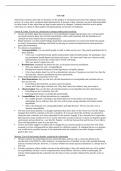
Some brain scientists claim that our decisions are the product of unconscious processes that originate from brain
activity so free will is an illusion (hard determinism) because of that, criminals can not be held responsible
for their crimes they opine that our legal system needs to be changed. Criminals should be send to prison
when they are a threat to other people (consequentialism), not because of retribution.
Greene & Cohen. For the law, neuroscience changes nothing and everything
Greene and Cohen argue that neuroscience won’t immediately change legal doctrine, but it will transform
our moral intuitions about free will and responsibility, which could eventually shift the foundations of
criminal law from retributivism to consequentialism.
Moral intuitions: our deep-seated feelings about blame and punishment are rooted in the belief that people
act freely. Neuroscience challenges this belief by showing our actions are determined by brain processes,
genes and environment.
Two theories of punishment:
1. Consequentialism: you can punish people in order to make society save. They justify punishment by its
future benefits.
▪ Critics say it could theoretically justify harsh penalties (like the death penalty for speeding). Critics
say punishment should depend on fairness and justice. Greene and Cohen say it doesn’t justify
harsh penalties, because that would reduce overall well-being.
▪ This view doesn’t require free will.
2. Retributivism: somebody has broken the law, so the person deserves punishment.
▪ This view implies free will. (compatibilism)
▪ Retributivism remains dominant in both legal theory and public opinion.
▪ Critics have doubts about free will in a deterministic universe. If people are not truly free, then the
idea that they ‘deserve’ punishment becomes questionable.
Three major philosophical responses to free will:
1. Hard determinism: they say that free will and determinism are incompatible and concludes that we
have no free will.
▪ Everything is determined by our genes and environment.
▪ Greene and Cohen agree with this view. They don’t show the evidence, they just accept it.
2. Libertarianism: they say that free will and determinism are incompatible and reject determinism.
▪ Everything we do is caused by free will.
▪ Rejecting determinism is scientifically questionable.
3. Compatibilism: free will and determinism are compatible.
▪ It’s a middle ground: everything is pre-determined (we are the product of our genes and
upbringing), but we still have free will. Free will involves acting rationally and without mental
impairment.
▪ This is the dominant view among philosophers and legal theorists. The law uses this view to
maintain responsibility.
The boys from Brazil problem is a thought experiment that shows that we don’t have free will. Mr. Puppet,
designed from birth by scientists to become a murderer. If every part of his life and brain was planned to
shape him into a criminal, is he truly responsible for his actions? Legally, if he is rational, he is responsible.
But intuitively, many would say he isn’t. Greene and Cohen say that everyone’s actions are shaped by genes,
environment and psychical law – just like Mr. Puppets’- so the line between him and the rest of us is blurry.
Thus with determinism, none of us are truly free.
Greene and Cohen suggest it would be fair to change the law, because people do not have free will. Their
proposal is to have consequential law (thus punish for a different reason). changing the law in a dramatic
way would not be possible, because of our emotional needs for retribution, but minor changes would be
good in their eyes.
Meynen. Free will and mental disorder: exploring the relationship
Meynen explores the relationship between mental disorders and free will, a connection hinted in the
introduction to the DSM-IV, which mentions ‘an important loss of freedom’ as one of the possible defining
features of mental disorder. However, it’s unclear whether this means practical limitations or a deeper loss of
free will.
Forensic psychiatry reflects similar concerns as the philosophy of free will, namely that free will is needed
for responsibility and that it can be compromised by mental illness. However, unlike in philosophy, the
forensic field emphasized that a disorder must be shown to have actually influenced the specific action in
question.
Some brain scientists claim that our decisions are the product of unconscious processes that originate from brain
activity so free will is an illusion (hard determinism) because of that, criminals can not be held responsible
for their crimes they opine that our legal system needs to be changed. Criminals should be send to prison
when they are a threat to other people (consequentialism), not because of retribution.
Greene & Cohen. For the law, neuroscience changes nothing and everything
Greene and Cohen argue that neuroscience won’t immediately change legal doctrine, but it will transform
our moral intuitions about free will and responsibility, which could eventually shift the foundations of
criminal law from retributivism to consequentialism.
Moral intuitions: our deep-seated feelings about blame and punishment are rooted in the belief that people
act freely. Neuroscience challenges this belief by showing our actions are determined by brain processes,
genes and environment.
Two theories of punishment:
1. Consequentialism: you can punish people in order to make society save. They justify punishment by its
future benefits.
▪ Critics say it could theoretically justify harsh penalties (like the death penalty for speeding). Critics
say punishment should depend on fairness and justice. Greene and Cohen say it doesn’t justify
harsh penalties, because that would reduce overall well-being.
▪ This view doesn’t require free will.
2. Retributivism: somebody has broken the law, so the person deserves punishment.
▪ This view implies free will. (compatibilism)
▪ Retributivism remains dominant in both legal theory and public opinion.
▪ Critics have doubts about free will in a deterministic universe. If people are not truly free, then the
idea that they ‘deserve’ punishment becomes questionable.
Three major philosophical responses to free will:
1. Hard determinism: they say that free will and determinism are incompatible and concludes that we
have no free will.
▪ Everything is determined by our genes and environment.
▪ Greene and Cohen agree with this view. They don’t show the evidence, they just accept it.
2. Libertarianism: they say that free will and determinism are incompatible and reject determinism.
▪ Everything we do is caused by free will.
▪ Rejecting determinism is scientifically questionable.
3. Compatibilism: free will and determinism are compatible.
▪ It’s a middle ground: everything is pre-determined (we are the product of our genes and
upbringing), but we still have free will. Free will involves acting rationally and without mental
impairment.
▪ This is the dominant view among philosophers and legal theorists. The law uses this view to
maintain responsibility.
The boys from Brazil problem is a thought experiment that shows that we don’t have free will. Mr. Puppet,
designed from birth by scientists to become a murderer. If every part of his life and brain was planned to
shape him into a criminal, is he truly responsible for his actions? Legally, if he is rational, he is responsible.
But intuitively, many would say he isn’t. Greene and Cohen say that everyone’s actions are shaped by genes,
environment and psychical law – just like Mr. Puppets’- so the line between him and the rest of us is blurry.
Thus with determinism, none of us are truly free.
Greene and Cohen suggest it would be fair to change the law, because people do not have free will. Their
proposal is to have consequential law (thus punish for a different reason). changing the law in a dramatic
way would not be possible, because of our emotional needs for retribution, but minor changes would be
good in their eyes.
Meynen. Free will and mental disorder: exploring the relationship
Meynen explores the relationship between mental disorders and free will, a connection hinted in the
introduction to the DSM-IV, which mentions ‘an important loss of freedom’ as one of the possible defining
features of mental disorder. However, it’s unclear whether this means practical limitations or a deeper loss of
free will.
Forensic psychiatry reflects similar concerns as the philosophy of free will, namely that free will is needed
for responsibility and that it can be compromised by mental illness. However, unlike in philosophy, the
forensic field emphasized that a disorder must be shown to have actually influenced the specific action in
question.