Purchasing & Supply Chain Management
Week 1 – Lecture 1
Video 1
Supply chain management is every activity associated with the transformation and flow of
goods, from the raw materials to the final user. It shows the relationship between organisations
from the beginning until the final consumer.
Purchasing zooms in on the focal firm's needs to buy from its suppliers.
Purchasing management is the management of a firm’s external resources ensuring the supply
of goods, services, knowledge and capabilities to perform the firm’s primary and support
activities.
Trends of purchasing today:
- From administrative to strategic function: this is because of the demand for
sustainability and more outsourcing. Now it is quality over the cheapest.
Supply chain management is the management of upstream and downstream relations with
suppliers and customers to deliver superior customer value at lower costs to the supply chain
as a whole. Supply chain management and purchasing both focus on relationships, activities,
and performance management. But they have different focus, scope and performance aims.
Video 2
At the foundation of purchasing and supply chain management is a company's decision to
transfer activities such as manufacturing of HR. Companies might do this to be different from
other companies so they outsource the work to suppliers.
Outsourcing is delegating functions or tasks, traditionally internal to an organisation, to
specialized external suppliers. This can apply to manufacturers or services and can involve
domestic or international markets. Decisions about outsourcing are also called make-or-buy
decisions. Outsourcing decisions need to be made at a strategic level.
Why outsource:
- Decrease production costs;
- Access to good quality suppliers;
- Gain access to different markets;
- Gain access to scarce resources;
- Etc.
, To guide make-or-buy decisions two theories can be used:
1. Transaction cost economics (TCE)
The transaction cost economics make make-or-buy decisions based on transaction
costs. With the goal to minimize them.
Two criteria are paramount:
o Asset specificity: referring to the degree to which assets required for a particular
transaction are unique to the task and can’t be repurposed to another transaction.
o Potential for opportunistic behaviour and related costs for reducing uncertainty.
Transaction cost economics supposes that transactions with high-end certainty and
those demanding significant transaction-specific investments should remain in-house.
Because companies can’t defend themselves from opportunistic behaviours in such
scenarios.
2. Resource-based view (RBV)
The resource-based view focuses on the firm’s resources and capabilities determining
if it serves as a competitive advantage. This is achieved if the resources and
capabilities fulfil the following criteria:
o Valuable, a resource adds value by enabling a firm to exploit opportunities or defend
against threats.
o Rare, resources that can only be acquired by one or very few companies.
o Inimitable, it is a resource that is hard to duplicate.
o Not substitutable, is a resource that can’t be replaced by any other resource.
Other competencies are:
o Delivering customer value;
o Differentiate firm from competitors;
o Can potentially be extended and developed.
The closer to the core, the more important to keep in-house.
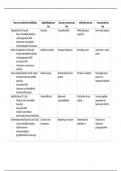
TCE and RBV can give different conclusions. In the real world, there is more complexity to
decision making.
Risk of opportunism
Low High
Resource
position
Superior RBV: in-house RBV: in-house
TCE: outsource TCE: in-house
Weak RBV: outsource RBV: outsource
TCE: outsource TCE: in-house
Outsourcing decisions lead to contracting out activities/functions to specialized suppliers which
leads to who will provide the purchasing of the activity/function demanded.
Global sourcing (global supply chain markets) can be challenging. Especially when dealing
with low-cost countries.
Video 3
Sustainability is using resources to meet the needs of the present without compromising the
ability of future generations to meet their own needs.
Triple bottom line suggests that businesses should focus on three bottom lines: profit, people
and the planet. They are the same as economic, environmental and social.
Firms engage in sustainability because:
- Political: legal demands/regulations;
- Economical: competitive advantage and reputation loss;
- Social/moral: response to stakeholders, customers, environmental and social pressure
groups and their own values, social/moral responsibility.
Adopting sustainability often adds complexity to business operations. They can have the
following challenges:
- Focus: new types of stakeholders;
Week 1 – Lecture 1
Video 1
Supply chain management is every activity associated with the transformation and flow of
goods, from the raw materials to the final user. It shows the relationship between organisations
from the beginning until the final consumer.
Purchasing zooms in on the focal firm's needs to buy from its suppliers.
Purchasing management is the management of a firm’s external resources ensuring the supply
of goods, services, knowledge and capabilities to perform the firm’s primary and support
activities.
Trends of purchasing today:
- From administrative to strategic function: this is because of the demand for
sustainability and more outsourcing. Now it is quality over the cheapest.
Supply chain management is the management of upstream and downstream relations with
suppliers and customers to deliver superior customer value at lower costs to the supply chain
as a whole. Supply chain management and purchasing both focus on relationships, activities,
and performance management. But they have different focus, scope and performance aims.
Video 2
At the foundation of purchasing and supply chain management is a company's decision to
transfer activities such as manufacturing of HR. Companies might do this to be different from
other companies so they outsource the work to suppliers.
Outsourcing is delegating functions or tasks, traditionally internal to an organisation, to
specialized external suppliers. This can apply to manufacturers or services and can involve
domestic or international markets. Decisions about outsourcing are also called make-or-buy
decisions. Outsourcing decisions need to be made at a strategic level.
Why outsource:
- Decrease production costs;
- Access to good quality suppliers;
- Gain access to different markets;
- Gain access to scarce resources;
- Etc.
, To guide make-or-buy decisions two theories can be used:
1. Transaction cost economics (TCE)
The transaction cost economics make make-or-buy decisions based on transaction
costs. With the goal to minimize them.
Two criteria are paramount:
o Asset specificity: referring to the degree to which assets required for a particular
transaction are unique to the task and can’t be repurposed to another transaction.
o Potential for opportunistic behaviour and related costs for reducing uncertainty.
Transaction cost economics supposes that transactions with high-end certainty and
those demanding significant transaction-specific investments should remain in-house.
Because companies can’t defend themselves from opportunistic behaviours in such
scenarios.
2. Resource-based view (RBV)
The resource-based view focuses on the firm’s resources and capabilities determining
if it serves as a competitive advantage. This is achieved if the resources and
capabilities fulfil the following criteria:
o Valuable, a resource adds value by enabling a firm to exploit opportunities or defend
against threats.
o Rare, resources that can only be acquired by one or very few companies.
o Inimitable, it is a resource that is hard to duplicate.
o Not substitutable, is a resource that can’t be replaced by any other resource.
Other competencies are:
o Delivering customer value;
o Differentiate firm from competitors;
o Can potentially be extended and developed.
The closer to the core, the more important to keep in-house.
TCE and RBV can give different conclusions. In the real world, there is more complexity to
decision making.
Risk of opportunism
Low High
Resource
position
Superior RBV: in-house RBV: in-house
TCE: outsource TCE: in-house
Weak RBV: outsource RBV: outsource
TCE: outsource TCE: in-house
Outsourcing decisions lead to contracting out activities/functions to specialized suppliers which
leads to who will provide the purchasing of the activity/function demanded.
Global sourcing (global supply chain markets) can be challenging. Especially when dealing
with low-cost countries.
Video 3
Sustainability is using resources to meet the needs of the present without compromising the
ability of future generations to meet their own needs.
Triple bottom line suggests that businesses should focus on three bottom lines: profit, people
and the planet. They are the same as economic, environmental and social.
Firms engage in sustainability because:
- Political: legal demands/regulations;
- Economical: competitive advantage and reputation loss;
- Social/moral: response to stakeholders, customers, environmental and social pressure
groups and their own values, social/moral responsibility.
Adopting sustainability often adds complexity to business operations. They can have the
following challenges:
- Focus: new types of stakeholders;