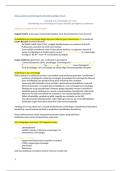
Stokburger-Sauer, N., Ratneshwar, S., & Sen, S. (2012). Drivers of consumer–brand
identification. International Journal of Research in Marketing, 29, 406–418
Introduction
The concept of Consumer-brand identification (CBI) is central to our understanding of how, when and
why brands help consumers articulate their identities. “We are what we have”, what we buy, own,
and consume define us to others as well as to ourselves. So, brands have the ability to embody,
inform, and communicate desirable consumer identities. It is important to investigate drivers of this
Consumer-Brand Identification (CBI). Now there are a lot of fragmented insights. This paper makes
three key contributions:
• Six drivers of CBI, of which five confirmed: brand–self similarity, brand distinctiveness, brand
social benefits, brand warmth, and memorable brand experiences.
• Moderator product category involvement: the drivers have stronger causal relationships with
CBI when consumers have higher involvement with the brand's product category.
• Two important pro-company consequences of CBI: brand loyalty and brand advocacy.
CBI
Consumer–brand identification: a consumer's perceived state of oneness with a brand. It is a valid
and potent expression of our quest for identity-fulfilling meaning in the marketplace of brands.
Consistent with identification: a perception of oneness with or belongingness to some human
aggregate. We assume that the state of CBI is distinct from the process of comparison of self traits
with brand traits that may contribute to CBI. CBI I also related to the construct of self-brand
connections: the extent to which an individual has incorporated a brand into his or her self-concept.
But CBI is narrower: it excludes the potential motivations guiding such self-brand connections, such
as communicating one's identity to others and achieving one's desired self. We view CBI as a
cognitive representation, different from the pure emotional bond.
Antecedents of CBI
The need for identification is thought to be motivated by higher-order self-definitional needs: (1)
know ourselves (self-continuity/self-verification); (2) feel relatively unique (self-distinctiveness); (3)
feel good about ourselves (self-enhancement). Identification with a brand is likely to be related to
the extent to which a person perceives the brand: (1) to have a personality that is similar to his or her
own (i.e., brand–self similarity); (2) to be unique or distinctive, and (3) and to be prestigious. And
why a particular brand, more affect-laden experiential of nature dimensions: (1) feel that their
interactions with a brand help them connect with important social others; (2) perceive a brand in
warm, emotional terms rather than cold, rational ones; (3) have fond memories of brand
consumption experiences.
• Brand-self similarity: the degree of overlap between a consumer's perception of his or her
own personality traits and that of the brand. Need for a stable and consistent self.
• Brand distinctiveness: the perceived uniqueness of a brand's identity in relation to its
competitors. Need for uniqueness.
• Brand prestige: the status or esteem associated with a band. Need for self-continuity/need
for self-enhancement.
• Brand social benefits: the social interaction opportunities and gains afforded by a brand.
Three streams of benefits: (1) people often consume brands used by their reference groups
to gain or strengthen their membership in such groups; (2) brand as essential device for
connecting people to one another; (3) consumers sometimes coalesce into distinct
subgroups of society on the basis of a shared commitment to a brand.
identification. International Journal of Research in Marketing, 29, 406–418
Introduction
The concept of Consumer-brand identification (CBI) is central to our understanding of how, when and
why brands help consumers articulate their identities. “We are what we have”, what we buy, own,
and consume define us to others as well as to ourselves. So, brands have the ability to embody,
inform, and communicate desirable consumer identities. It is important to investigate drivers of this
Consumer-Brand Identification (CBI). Now there are a lot of fragmented insights. This paper makes
three key contributions:
• Six drivers of CBI, of which five confirmed: brand–self similarity, brand distinctiveness, brand
social benefits, brand warmth, and memorable brand experiences.
• Moderator product category involvement: the drivers have stronger causal relationships with
CBI when consumers have higher involvement with the brand's product category.
• Two important pro-company consequences of CBI: brand loyalty and brand advocacy.
CBI
Consumer–brand identification: a consumer's perceived state of oneness with a brand. It is a valid
and potent expression of our quest for identity-fulfilling meaning in the marketplace of brands.
Consistent with identification: a perception of oneness with or belongingness to some human
aggregate. We assume that the state of CBI is distinct from the process of comparison of self traits
with brand traits that may contribute to CBI. CBI I also related to the construct of self-brand
connections: the extent to which an individual has incorporated a brand into his or her self-concept.
But CBI is narrower: it excludes the potential motivations guiding such self-brand connections, such
as communicating one's identity to others and achieving one's desired self. We view CBI as a
cognitive representation, different from the pure emotional bond.
Antecedents of CBI
The need for identification is thought to be motivated by higher-order self-definitional needs: (1)
know ourselves (self-continuity/self-verification); (2) feel relatively unique (self-distinctiveness); (3)
feel good about ourselves (self-enhancement). Identification with a brand is likely to be related to
the extent to which a person perceives the brand: (1) to have a personality that is similar to his or her
own (i.e., brand–self similarity); (2) to be unique or distinctive, and (3) and to be prestigious. And
why a particular brand, more affect-laden experiential of nature dimensions: (1) feel that their
interactions with a brand help them connect with important social others; (2) perceive a brand in
warm, emotional terms rather than cold, rational ones; (3) have fond memories of brand
consumption experiences.
• Brand-self similarity: the degree of overlap between a consumer's perception of his or her
own personality traits and that of the brand. Need for a stable and consistent self.
• Brand distinctiveness: the perceived uniqueness of a brand's identity in relation to its
competitors. Need for uniqueness.
• Brand prestige: the status or esteem associated with a band. Need for self-continuity/need
for self-enhancement.
• Brand social benefits: the social interaction opportunities and gains afforded by a brand.
Three streams of benefits: (1) people often consume brands used by their reference groups
to gain or strengthen their membership in such groups; (2) brand as essential device for
connecting people to one another; (3) consumers sometimes coalesce into distinct
subgroups of society on the basis of a shared commitment to a brand.