Pathobiology - McCance - Ch. 3 Rated 100%
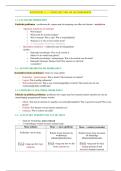
Pathobiology - McCance - Ch. 3 Total Body Water (TBW) - ANS 60% of the total body weight is water . How do you express the amount of chemicals/electrolytes that are dissolved in body fluids? - ANS mEq/L - is related to chemical activity Where is the 2/3 of the body's water located? - ANS In the intracellular fluid (ICF) Aquaporins - ANS water channel proteins that allow water to pass through the cell membrane. Excessive accumulation of fluid in the interstitial spaces. - ANS Edema What is net filtration and what is the formula? - ANS the movement of fluid back and forth across the capillary wall. Net hydrostatic pressure - Net oncotic pressure What are some pathophysiological causes of edema? - ANS Loss or diminished production of plasma albumin results in decrease in plasma oncotic pressure. Venous obstruction can cause increase in capillary hydrostatic pressure. Increased capillary permeability leads to loss of capillary oncotic pressure. Lymphatic obstruction leads to decreased absorption of interstitial fluid. What are electrolytes and some of their properties? - ANS Salts that become ionized in solution, cannot pass through membranes, affect atom concentrations across membranes, affect charge differences across membranes, can generate a membrane potential. What are the 3 hormones that effect electrolyte balance? - ANS antidiuretic hormone, aldosterone, natriuretic hormone What element is like a electrolyte, and why? - ANS Hydrogen. Can alter distribution of other electrolytes. It indirectly changes the resting membrane potential. There are 2 gradients that effect membrane potential, what are they? - ANS Ion concentration gradient: is potential energy to transport things and depolarize cell Charge gradient: affects the RMP What ions are primary in the ICF? - ANS Cations: potassium (K) and magnesium (Mg) Anions: phosphate (PO4) and proteins What ions are primarily in the ECF? - ANS Cations: Sodium (Na) Anions: Chloride (Cl) and Bicarbonate (HCO3) What ion accounts for 90% of ions in the ECF - ANS Sodium What does calcium do if allowed into the cell? - ANS Calcium binds to phosphate and precipitates therefore MUST stay out of cytosol. In the cell it also binds to enzymes and proteins and changes their functions. What are the normal concentrations of K, Na, and Ca in the blood? - ANS K =3.5-4.5 mEq/L Na = 136-144 mEq/L Ca = 8.6-10.5mg/dl What are hypokalemia, hyponatremia, hypocalcemia,? Some causes? - ANS Potassium levels below 3.5mEq/L - reduced K intake, Increased entry of K in cells, ↑ excretion of K Sodium levels below 135 mEq/L - caused by diuretics, extrarenal losses (vomiting), inadequate intake, dilution, Calcium levels below 8.5 mg/dl - inadequate intestinal absorption, deposition of ionized Ca into bone, blood admin, Most common pathophysiological effects of hypokalemia? - ANS Cardiac and neuromuscular effects. Cardiac irritiablity, dysrhythmias, vomiting, paralytic ileum, thirst, inablility to concentrate urine. And associated with metabolic alkalosis. Why is potassium so important to maintain? - ANS Maintain RMP, and action potential of neurons and muscle fibre, help maintain ICF volume and help regulate pH. Membrane excitability - ANS The difference between RMP and threshold. Resting membrane potential - ANS the difference in electrical charge from the outside of the cell (positive) to the inside of the cell (negative). And is usually about -80 milivolts. Action Potential - ANS When a cell receives a stimulus that exceeds the threshold value Depolarization - ANS stimulus cause protein channels to open and sodium rushes into the cell cause the membrane potential decreases to 0. Polarity is neutralized
Livre connecté
- 2022
- 9780323789899
- Inconnu
École, étude et sujet
- Établissement
- McCance & Huether’s Pathophysiology 9th Edition
- Cours
- McCance & Huether’s Pathophysiology 9th Edition
Infos sur le Document
- Publié le
- 29 avril 2024
- Nombre de pages
- 4
- Écrit en
- 2023/2024
- Type
- Examen
- Contient
- Questions et réponses
Sujets
-
pathobiology mccance ch 3